

Ice chunks and fibrous greens ruin morning routines fast. Choosing wrong pitcher capacity or motor wattage creates daily cleanup friction and countertop clutter.
Guide evaluates blenders for smoothies across jar volume, base footprint, and control types. Comparison helps match machine capabilities to batch requirements, cabinet clearance, and wash preferences.

Pros
- Dishwasher-safe jar, blades, and travel lid
- Built-in cord wrap simplifies compact storage
- Integrated measurement markings on blending container
- Three-year limited warranty provides motor protection

Pros
- 1400-peak-watt motor handles dense frozen ingredients
- Three automated Auto-iQ presets simplify drink prep
- Top-rack dishwasher-safe pitcher and blade assembly
- Large 64-ounce max liquid blending capacity
Cons
- Tall 17.5-inch height may challenge low upper cabinets
- Max liquid capacity capped at 64 ounces

Pros
- Compact footprint fits small counters easily
- Top-rack dishwasher-safe cups simplify cleanup
- Includes multiple cups and portable lids
- Simple push-to-blend mechanism requires no buttons
Cons
- 250-watt motor limits dense blending tasks
- Blade assembly requires manual sink washing

Pros
- Dishwasher-safe removable jar, lid, blades, and collar
- Spout design prevents counter drips and spills
- Wave Action system forces ingredients into blades
- Stainless steel blades crush ice effectively

Pros
- Includes two 16-ounce cups with to-go spout lids
- Removable components are top-rack dishwasher safe
- Three manual speeds plus pulse and single-serve functions
Cons
- Pitcher maximum liquid capacity is 64 ounces
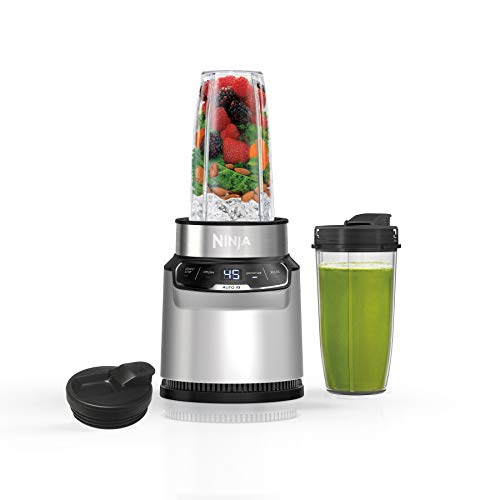
Pros
- Dishwasher-safe BPA-free cups and blades
- Two automated preset programs
- Compact countertop footprint
- Includes two 24-ounce travel cups with lids
Cons
- Limited to single-serve capacity
- Short 2.6-foot cord requires nearby outlet
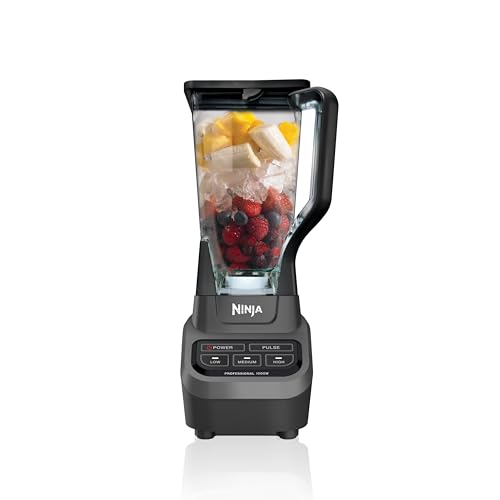
Pros
- 1000-watt motor crushes ice into snow quickly
- Large 72-ounce pitcher fits multi-serving batches
- Dishwasher-safe BPA-free pitcher simplifies cleanup
Cons
- Liquid capacity capped at 64 ounces
- Tall 15.94-inch height may challenge low cabinets

Pros
- Compact footprint fits small countertop spaces
- Top-rack dishwasher safe removable parts
- Includes two 16-ounce travel cups with lids
- 700-watt motor blends ice and frozen fruit
Cons
- 16-ounce capacity restricts blending to single servings
Key Buying Criteria for Blenders for Smoothies
Pitcher Capacity Versus Single-Serve Cups
Batch requirements dictate container selection. Full-size 72-ounce pitchers handle multiple servings for family meal prep, though maximum liquid limits stop around 64 ounces. Personal 14-ounce to 24-ounce cups blend single portions directly inside travel mugs.
Large pitchers require extra storage room, similar to storing bulk items like stainless steel cookware sets. Single cups reduce dish volume but limit prep to one person per cycle.
Motor Wattage and Frozen Ingredient Handling
Motor strength changes ingredient breakdown speed. Compact personal units provide 250 to 700 watts, suitable for soft fruit, protein powder, and light ice loads. Mid-range units supply 1000 to 1100 watts for crushing solid ice cubes into snow.
Heavy-duty 1400-watt bases process dense frozen fruit mixtures without motor strain. Higher wattage increases machine weight and electrical draw on kitchen counter circuits.
Preset Programs Versus Manual Pulse Controls
Automated cycles simplify blending steps through timed intervals. Preset programs run alternating pulses, pauses, and continuous blending cycles that pull ingredients toward spinning blades automatically. Push-button manual controls require hands-on monitoring during operation.
Manual pulse controls offer exact texture control for chunky blends. Timed auto routines allow multitasking while machine runs, freeing attention for other kitchen duties.
Blade Assembly Design and Wash Access
Removable blade assemblies affect post-blend cleaning speed. Tall, stacked blade columns process ingredients through entire pitcher depth but require careful handling during wash routines. Bottom-mount extractor assemblies twist off single-serve cups for quick rinsing.
Dishwasher compatibility matters for daily usage. Dishwasher-safe containers simplify routine cleanup much like caring for standard kitchen prep tools or non stick fry pan cookware surfaces.
Counter Footprint and Vertical Clearance
Tall pitchers with motor bases often measure 17 inches tall or higher, creating vertical clearance conflicts under low upper cabinets. Compact personal models occupy minimal counter area and store inside small drawers or pantry shelves easily.
Cord storage wraps keep small bases tidy on open prep spaces. Measure space between countertops and upper cupboards before selecting tall multi-serve models.
How We Compared These Products
Evaluation relies on published manufacturer specifications, listed motor wattages, stated container capacities, and reported customer feedback patterns. Analysis reflects research synthesis rather than hands-on laboratory testing. Assessment weighs usability trade-offs, storage profiles, component materials, and cleanup workflows across 9 models from Ninja, Hamilton Beach, Magic Bullet.
Which Option Fits Your Kitchen?
Daily single-portion commuting: Choose Hamilton Beach Portable Blender for Smoothies. Compact 14-ounce travel cup fits car cupholders, while one-touch interface minimizes morning prep steps for quick travel routines.
High-volume family batches: Choose Ninja Professional Plus Blender, Auto-iQ, 1400W. Heavy-duty 1400-watt motor, stacked blade system, and 72-ounce jar tackle large frozen batches with three hands-free automated programs.
Dual-purpose batch and personal prep: Choose Ninja Blender Pro+, 1100W, 72oz Pitcher, 2 Cups. System packages 72-ounce batch container alongside two 16-ounce travel cups, bridging single-serve morning drinks and group beverage prep.
Frequently Asked Questions
Can personal blender cups handle dense frozen fruit without liquid?
Motors require fluid to establish circulation vortex. Blending solid frozen chunks without water, milk, or juice causes cavitation around blades and risks motor overheat.
Are tall blender pitchers safe for bottom-rack dishwasher cycles?
Manufacturers specify top-rack placement for plastic pitchers and lids. Bottom-rack heating elements warp plastic edges and compromise locking lid gaskets over time.
Does higher motor wattage guarantee smoother drink textures?
Wattage supplies power for crushing tough solids, but blade geometry and jar vortex shape determine final texture smoothness. High wattage prevents motor bog-down in thick mixes.
How does stacked blade assembly differ from bottom-mounted blades?
Stacked shafts position blades at multiple container heights to crush ice across full vertical capacity. Bottom-mounted blades rely on fluid vortex motion pulling ingredients downward into spinning base knives.
Can hot liquids go inside standard smoothie blenders?
Sealed personal cups trap steam pressure, creating dangerous blow-outs upon opening. Pitchers require vented lids when processing warm ingredients for soups or sauces.



Write Your Review
No reviews yet. Be the first to share your experience!