

Choosing between metal and coated surfaces changes how you prep dinner and clean up. Stainless steel offers durable high-heat searing and lifelong wear, but food sticks without proper oiling. Ceramic cookware provides slick, easy release with minimal oil, yet the nonstick surface wears down over time. Deciding stainless steel cookware vs ceramic requires balancing high heat tolerance against quick weeknight cleanup.
This comparison examines material construction, heat limits, cooktop compatibility, and care requirements across 8 sets. You will learn which build suits your daily cooking style, whether you need heavy multi-ply metal for browning or mineral coatings for delicate eggs.

Pros
- Tri-ply construction provides even heat distribution
- Oven safe up to 500°F
- Compatible with induction and all stovetops
- Dishwasher safe for convenient cleanup

Pros
- Dishwasher-safe and oven-safe construction
- Scratch-resistant coating tolerates metal utensils
- Stay-cool ergonomic handles prevent burns
- Includes dedicated steamer insert for stock pot
Cons
- No stated induction cooktop compatibility
- No specified maximum oven temperature rating

Pros
- Includes full assortment of cookware, bakeware, and utensils
- Compatible with gas, electric, and glass stovetops
- Oven and dishwasher safe construction
- Steamer insert fits five-quart stockpot directly
Cons
- No stated induction cooktop compatibility
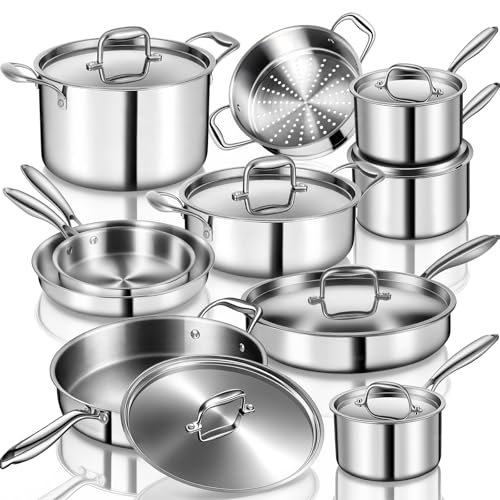
Pros
- Tri-ply clad construction provides even heating
- Compatible with induction and all standard cooktops
- Built-in pour spouts and lid straining holes
- Dishwasher-safe 304 stainless steel interior
Cons
- Heavy 34-pound combined weight demands sturdy storage

Pros
- Even heat distribution from five-ply construction
- High oven limit up to 800 degrees
- Compatible with induction and gas cooktops
- Thick 3mm warp-resistant steel body
Cons
- Hand wash recommended
- Requires preheating and oil to prevent sticking
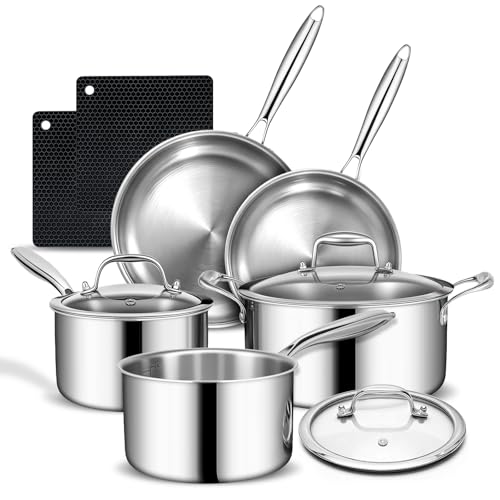
Pros
- Induction-compatible tri-ply construction for even heating
- Pots and pans oven safe up to 500 degrees
- Internal volume markings inside pots for easy measuring
- Stay-cool ergonomic handle design
Cons
- Assembly required for pot and lid handles
- Glass lids are not oven safe

Pros
- Compatible with all stovetops including induction
- Rivetless interior simplifies everyday cleaning
- Oven safe up to 550 degrees Fahrenheit
- Includes matching lids, silicone utensils, and pan protectors

Pros
- Works on induction and all standard cooktops
- Coating free of PTFE, PFOA, PFAS, and lead
- Thick 4.8mm base heats quickly and evenly
- Stay-cool Bakelite handles provide comfortable grip
Cons
- Hand washing recommended to protect nonstick surface
Buying Guide: Stainless Steel Cookware vs Ceramic
Cookware performance depends directly on materials, heat management, and day-to-day durability. Understanding these core factors helps you select pieces that fit your kitchen habits.
Core Construction and Heat Distribution
Pure stainless steel conducts heat poorly on its own, so quality metal cookware uses bonded aluminum cores. Multi-ply designs like tri-ply or five-ply spread thermal energy evenly up the pan walls to prevent hot spots. Sets like the CAROTE 18 PCS Stainless Steel Cookware Set and the LEGEND COOKWARE 5-Ply Stainless Steel Cookware rely on aluminum sandwiched between steel layers for uniform heat. Ceramic lines typically use cast or stamped aluminum bodies beneath their coatings to achieve fast, responsive warming at lower weights. Reviewing choosing stainless steel cookware sets shows how ply thickness prevents warping under sustained heat.
Cooking Surface Release and Oil Requirements
Ceramic pans provide a slick mineral coating that releases delicate foods with very little fat. Sets such as the SENSARTE Nonstick Ceramic Cookware Set allow eggs and fish to slide out smoothly with simple cleanup. Stainless steel lacks a chemical coating, meaning you must preheat the pan and use adequate fat to avoid sticking. In exchange, stainless steel lets you develop rich fond for deglazing sauces, a technique that nonstick surfaces cannot match. Exploring ceramic cookware non stick sets helps determine if effortless release outweighs traditional browning utility.
Oven Limits and Broiler Compatibility
Temperature thresholds differ sharply across cookware styles. Uncoated stainless steel handles intense oven settings, with the LEGEND COOKWARE 5-Ply Stainless Steel Cookware rated up to 800 degrees Fahrenheit, while the EWFEN Stainless Steel Cookware Set handles standard high-heat baking. Ceramic lines vary widely based on handle materials. While the SENSARTE Nonstick Ceramic Cookware Set lists an oven rating up to 550 degrees Fahrenheit, its Bakelite handles require caution, and sets like the 3 Ply Stainless Steel Cookware Set specifically note that glass lids cannot enter the oven. Always verify lid and handle limits before transferring stovetop pans under a broiler.
Stovetop Compatibility and Induction Bases
Induction burners require magnetic metal at the base. Stainless steel sets with magnetic 430-grade exterior layers, such as the EWFEN Stainless Steel Cookware Set and 3 Ply Stainless Steel Cookware Set, function directly across gas, electric, and induction ranges. Ceramic pans built with aluminum bodies need an integrated magnetic plate on the bottom to work on induction, as seen on the SENSARTE Ceramic Cookware Sets. Checking your burner requirements ensures your chosen set makes proper contact.
Cleaning, Maintenance, and Surface Longevity
Ceramic coatings clean rapidly with a warm rinse and paper towel, but nonstick coatings naturally degrade over time from heat and friction. Metal utensils, abrasive scrubbers, and dishwasher detergents can strip ceramic surfaces prematurely. In contrast, stainless steel withstands metal utensils, heavy scouring pads, and aggressive cleaning. Learning stainless steel cookware cleaning solutions will keep bare metal shiny even after scorched pan bottoms or stubborn starch buildup.
How We Compared These Products
This comparison relies on technical specifications, manufacturer documentation, and published owner reports rather than hands-on laboratory testing. We analyzed construction materials, ply counts, listed oven temperature limits, handle hardware, lid designs, and stated induction readiness across all models. We also weighed stated nonstick coating properties and durability claims against manufacturer care instructions to help buyers understand real-world upkeep.
Which Option Fits Your Kitchen?
For cooks who prioritize fast release, low-oil meal prep, and simple hand washing, ceramic pans provide convenience. The GOTHAM STEEL 12 Pc Titanium Ceramic Cookware Set delivers an ultra-smooth cooking surface with included lids and an aluminum steamer insert, making it suitable for casual daily cooking without sticking issues.
If you prefer lifetime longevity, high-heat searing, and oven versatility, multi-ply bare metal is the better choice. The LEGEND COOKWARE 5-Ply Stainless Steel Cookware features heavy 3mm thick five-ply construction and an 800-degree oven rating, offering warp-free pan performance for cooks who frequently sear meats and finish pans in the oven.
For home cooks outfitting an entire kitchen on a versatile budget, balanced multi-piece collections provide utility. The EWFEN Stainless Steel Cookware Set supplies 17 pieces featuring tri-ply bodies, stainless lids, integrated pour spouts, and built-in straining holes to handle both basic boiling and intricate meal prep.
Frequently Asked Questions
Can ceramic cookware handle high heat searing?
Ceramic nonstick coatings work best at low to medium temperatures. High heat can burn cooking fats into the micro-pores of the coating, causing the nonstick surface to deteriorate prematurely. Stainless steel is far better suited for intense searing.
Is stainless steel cookware difficult to clean?
Food sticks to stainless steel if the pan is cold or inadequately oiled. However, deglazing the pan with broth, wine, or water while hot loosens cooked residue quickly. Stubborn stains can be removed safely with baking soda or stainless steel polishing powder.
Do ceramic pans work on induction cooktops?
Only ceramic pans manufactured with a bonded magnetic stainless steel bottom plate will work on induction. You should always check the manufacturer specifications to ensure induction compatibility before purchasing ceramic lines.
Can I use metal utensils on stainless steel and ceramic?
Metal utensils can be used freely on uncoated stainless steel without damaging the pan. While some ceramic brands advertise metal utensil resistance, wooden or silicone utensils are always safer to prevent chipping or wearing down the nonstick coating.
How long do ceramic pans last compared to stainless steel?
Ceramic nonstick pans typically maintain peak slickness for one to three years depending on usage frequency and heat exposure. High-quality stainless steel pans have no coating to wear away and can easily last for decades with basic care.
Are ceramic nonstick coatings safe when overheated?
Mineral-based ceramic nonstick surfaces are made without PTFE, PFOA, lead, or cadmium. While they do not release synthetic fluoropolymer fumes if overheated, extreme temperatures can still degrade the nonstick properties and warp the underlying aluminum.



Write Your Review
No reviews yet. Be the first to share your experience!