

Home cooks choose cookware sets without forever chemicals to avoid PTFE, PFOA, and PFOS. Traditional coatings break down under excessive heat and release unwanted synthetic compounds. Switching means choosing between slick mineral ceramic layers and lifetime stainless steel builds.
This guide compares 7 sets to match pan materials with cooking habits, storage limits, and stove types. Review options below before examining core buying factors.
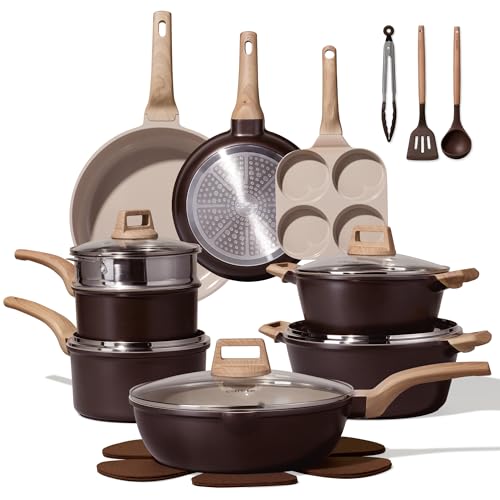
Pros
- PFOA and PFOS free ceramic nonstick coating
- Die-cast aluminum build resists daily wear
- Extensive 21-piece bundle covers most kitchen tasks
- Includes pan protectors for scratch-free storage

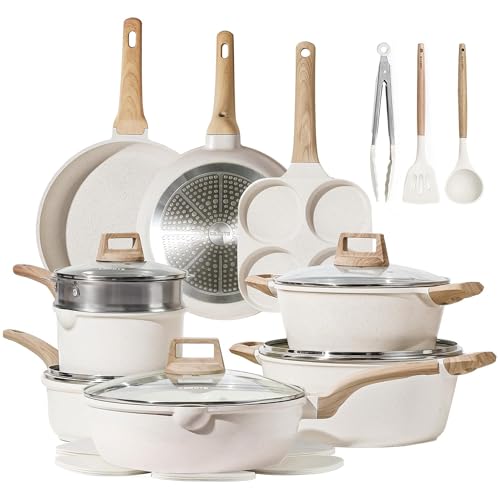
Pros
- Integrated pour spouts facilitate clean liquid draining
- Silicone-rimmed glass lids seal tightly and prevent chipping
- Dishwasher-safe construction streamlines cleanup
- Includes utensils, silicone trivets, and pan protectors

Pros
- Ceramic nonstick coating for quick food release
- Silicone-rimmed glass lids lock moisture and resist chipping
- Includes pan protectors and matching kitchen utensils
- Twelve-month manufacturer warranty included

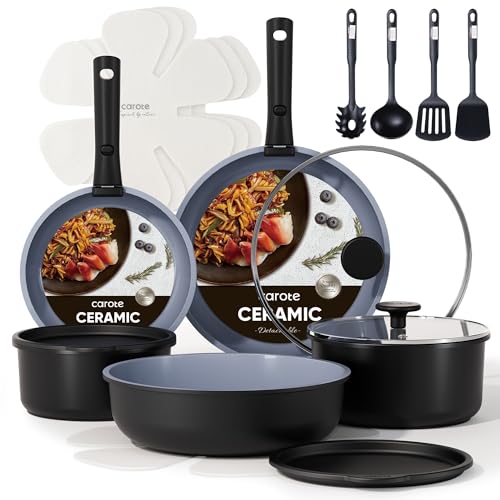
Pros
- Detachable handle enables compact nesting storage
- Compatible with induction, gas, electric, and ceramic cooktops
- Pan bodies oven-safe up to 480 degrees Fahrenheit
- PTFE-free and PFOA-free ceramic nonstick surface
Cons
- Detachable handle is not oven-safe
- Requires medium-low heat and non-metal utensils
- Handle requires removal before dishwasher cleaning

Pros
- Nesting design saves cabinet and RV storage space
- Compatible with gas, electric, ceramic, and induction cooktops
- Pans oven safe up to 500 degrees Fahrenheit
- Includes airtight storage lids and silicone cooking utensils
Cons
- Detachable handles not safe for oven use

Pros
- Oven safe up to 500 degrees Fahrenheit
- Dishwasher safe for easy cleaning
- Aluminum-encapsulated base spreads heat evenly
- Riveted stay-cool stainless steel handles
Cons
- Glass lids rated lower at 450 degrees
- Heavy 34.6-pound combined set weight
Buying Cookware Sets Without Forever Chemicals
Coating Chemistry Versus Uncoated Metal
Coating choices dictate cooking technique and care routines. Mineral-based ceramic coatings release eggs and delicate proteins without fluorinated chemistry. However, ceramic surfaces wear faster than raw metals and demand low to medium heat settings. Uncoated stainless steel contains zero nonstick chemistry, takes high searing heat, and lasts decades. Review ceramic cookware non toxic material details before deciding.
Base Construction and Heat Distribution
Pan metals determine how evenly heat spreads across cooking surfaces. Die-cast aluminum bodies distribute heat rapidly and eliminate localized hot spots during simmering. Stainless pans require bonded aluminum cores inside steel caps to transfer heat without scorching sauces. Thick aluminum bases stop base warping when temperatures change quickly.
Stovetop and Induction Compatibility
Cooktop compatibility depends on magnetic metal layers. Standard aluminum does not trigger magnetic induction burners without specialized steel base plates. Verify that selected sets explicitly include induction-ready base plates before purchasing. Explore our cookware set for induction guide for deeper stove matching rules.
Storage Footprint and Handle Mechanics
Cabinet volume determines whether full sets fit kitchen spaces. Detachable handle systems let pots nest tightly inside each other, cutting required cupboard volume substantially. Fixed cast handles require rack hanging space or wide drawers. If cabinet space is scarce, detachable mechanisms offer distinct packing advantages for compact apartments or mobile kitchens.
Oven Temperature Limits
Finishing dishes under broilers requires safe heat margins. Solid stainless steel vessels tolerate temperatures up to 500°F without breakdown. Ceramic coated pans handle moderate baking, but removable plastic latch handles melt if placed in ovens. Always remove detachable grip handles and inspect lid rim composition before stovetop-to-oven transfers.
How We Compared These Products
This comparison relies on manufacturer material specifications, verified dimensions, heat limits, and compiled customer feedback patterns. No hands-on lab testing was performed. Research focused on documented coating safety declarations, handle retention mechanisms, base layering, and real-world cleaning guidelines.
Which Option Fits Your Kitchen?
For cramped storage, compact apartments, or camping setups, select Umite Chef 21Pcs Pots and Pans Set Non Stick. Removable handle mechanisms let pots stack flat, saving up to 75% shelf space while providing induction readiness.
For heavy searing, oven roasting, and permanent hardware durability, choose Cuisinart 17-Piece Stainless Steel Cookware Set. Pure stainless construction avoids chemical coatings entirely, handles 500°F oven heat, and resists metal utensil wear.
For everyday low-fat cooking and broad pan variety, consider CAROTE 21pcs Ceramic Cookware Sets. Die-cast aluminum core delivers uniform heating, while PTFE-free ceramic surfaces allow easy food release across multiple saucepan and stockpot sizes. Browse our cookware sets best overview for broader kitchen comparisons.
Frequently Asked Questions
What chemicals do these cookware sets avoid?
These sets avoid PTFE, PFOA, and PFOS compounds often grouped under forever chemicals. Ceramic options rely on mineral silica mixtures, while stainless steel uses raw metallic alloys.
Can metal utensils damage ceramic nonstick coatings?
Yes. Metal spatulas chip and scratch mineral nonstick layers. Use silicone, nylon, or wooden cooking tools on ceramic surfaces to preserve nonstick performance. Stainless steel pans tolerate metal utensils without functional risk.
Are detachable handles safe for oven use?
Detachable handles are not oven safe. Remove handle clips before placing pans into ovens. Reattach handles only after removing vessels from hot oven racks using heat-resistant pads.
Do ceramic nonstick sets work on induction stoves?
Only sets built with magnetic steel base plates operate on induction stoves. Check base specifications directly. Solid aluminum pans without magnetic plates fail to trigger induction cooktop coils.
How should ceramic cookware be cleaned?
Hand washing with neutral liquid soap and soft non-abrasive sponges protects delicate ceramic coatings best. Harsh automatic dishwashing detergents and abrasive pads degrade nonstick slickness over time.



Write Your Review
No reviews yet. Be the first to share your experience!