

Induction cooking heats iron through magnetic fields, making thick iron skillets heat fast yet unpredictably. Home cooks often face uneven hot spots or scratch delicate glass tops when moving heavy cast iron cookware for induction burners.
Choosing proper iron pans requires balancing base flatness, total weight, raw versus enameled finishes, and handle ergonomics. Reviewing specifications across 10 options clarifies which sets match daily meal preparation without damaging glass induction surfaces.

Pros
- Pre-seasoned cooking surface ready for immediate use
- Versatile compatibility across stovetops, ovens, and campfires
- Includes three practical pan sizes for diverse tasks
- Made in the USA from durable cast iron
Cons
- Heavy total set weight of 17.35 pounds

Pros
- Works on induction, grills, ovens, and campfires
- Heat safe up to 500 degrees Fahrenheit
- Includes three practical sizes for versatile cooking
- Pre-seasoned with vegetable oil out of box
Cons
- Not dishwasher-safe and requires hand washing
- Demands periodic re-seasoning to maintain surface
- Total set weighs over 10 pounds

Pros
- Oven safe up to 500 degrees Fahrenheit
- Enamel finish eliminates regular seasoning requirements
- Generous 6.4-quart capacity for batch cooking
- Cast iron retains heat evenly for slow cooking
Cons
- Heavy 14.2-pound weight before adding food

Pros
- Even heat distribution across cooking surface
- Pre-seasoned with 100% natural vegetable oil
- Includes heat-resistant silicone handle holder
- Versatile for stovetop, oven, and campfire cooking
Cons
- Heavy 7.5-pound weight limits single-hand handling

Pros
- Oven-safe up to 500 degrees Fahrenheit
- Works on induction, gas, electric, and ceramic stovetops
- Interior lid nodes redistribute moisture during cooking
- Wide stainless steel handles include cotton potholders
Cons
- Requires 45-minute cooling period before cleaning to prevent cracking
- Preheating limited to medium-low heat to protect enamel

Pros
- Oven safe up to 500°F across multiple heat sources
- Pre-seasoned with vegetable oil without synthetic chemicals
- Shared lid fits both Dutch oven and skillet
- Includes diverse pan styles for baking, grilling, and searing
Cons
- Heavy total weight near 32 pounds complicates handling
- Requires hand washing and immediate oiling to prevent rust

Pros
- Compatible with induction, ovens, grills, and open fire
- Silicone handle grips included for heat protection
- Helper handles on ten and twelve inch skillets
- Built-in pour spouts for mess-free draining
Cons
- Hand wash only, not dishwasher safe
- Requires immediate heat drying and oil seasoning

Pros
- Induction, gas, and ceramic stovetop compatible
- Includes protective pan separators for stacked storage
- Glass lids allow easy monitoring while cooking
- Titanium nonstick surface eases food release

Pros
- Compatible with induction, ovens, grills, and campfires
- Factory seasoned with 100 percent vegetable oil
- Includes silicone handle holder and assist handle
- High heat retention for searing and frying
Cons
- Requires manual hand washing and prompt oiling
- Weighs 5.35 pounds empty

Pros
- Pre-seasoned surface ready to use
- Works on stovetops, grills, and campfires
- Includes versatile selection of everyday cookware
- Heavy cast iron retains heat evenly
Cons
- Heavy combined set weight of 28 pounds
Choosing Cast Iron Cookware for Induction Stovetops
Base Flatness and Exterior Smoothness
Induction elements transfer energy directly into magnetic metal resting flat against glass. Warped bottoms or rough heat rings reduce magnetic coupling, causing buzzing sounds and patchy searing. Smooth, flat bases maximize contact area across induction zones.
Rough raw iron bottoms risk abrading glass cooktops during vigorous pan shaking. Inspect pan underside before purchase, or choose enameled models like Nuovva Enamelled Cast Iron Dutch Oven Pot with smooth glazed exteriors to protect ceramic glass surfaces.
Pan Weight and Handling Stability
Cast iron holds mass to retain high heat, but heavy pans strain wrists during transport. Large skillets loaded with food weigh ten pounds or more, increasing risk of sudden drops onto fragile glass induction surfaces.
Assist handles provide two-handed stability when lifting hot pans off burners. Models like Lodge Pre-Seasoned Cast Iron Skillet with Hot include silicone covers and front helper handles for controlled, safe two-point grip.
Raw Seasoned Iron Versus Enamel Coating
Bare iron skillets endure high-heat searing and oven baking up to 500 degrees Fahrenheit, but require post-wash oiling to prevent rust. For complete maintenance details, review our cast iron cleaning guide.
Enamel coatings eliminate seasoning chores and withstand acidic tomato sauces without chemical reactions. However, sudden temperature swings crack enamel glaze, so users must heat enameled dutch ovens gradually on low power settings. Read our detailed enamel cast iron guide to compare coating durability.
Burner Sizing and Heat Distribution
Induction coils activate metal directly above their magnetic rings. Placing twelve-inch skillets over six-inch induction coils creates intense center heat rings while outer edges stay cold, leading to scorch marks in pan centers.
Match pan base diameter closely to induction coil dimensions. Multi-pan bundles such as Lodge Pre-Seasoned Cast Iron Skillet Set, 8 provide varied sizes, letting cooks match eight-inch or ten-inch skillets to corresponding induction burner rings.
Oven Limits and Accessory Heat Tolerance
Cast iron transitions effortlessly from induction cooktops into hot ovens for roasting or braising. Bare iron pieces endure broiler heat, whereas non-metallic handles impose lower thermal limits.
Remove silicone handle holders before placing skillets into ovens. Check lid knob composition on enameled pieces, ensuring ratings reach 500 degrees Fahrenheit before baking crusty artisan breads.
How We Compared These Products
We evaluated manufacturer technical specifications, material compositions, stated temperature thresholds, dimensions, and reported user experiences across 10 cookware pieces. Because we conducted no firsthand laboratory tests, this comparison relies strictly on published product documentation to assess induction suitability, handle configurations, base geometry, and coating types.
Which Option Fits Your Kitchen?
Small kitchens with single or dual induction burners benefit from compact multi-size bundles. EWFEN Cast Iron Skillet 3-Piece Set delivers six, eight, and ten-inch pans, allowing cooks to match varying burner rings while nesting neatly inside tight storage cabinets.
Cooks preparing slow-simmered stews or crusty sourdough loaves need deep enameled vessels with tight-fitting lids. Enameled Cast Iron Dutch Oven offers five-quart capacity with interior moisture condensation nodes, resisting acidic food corrosion without requiring seasoning layers.
Home cooks seeking heavy-duty versatility across stovetops, ovens, and outdoor grills should select Lodge Pre-Seasoned Cast Iron Skillet with Silicone. Its twelve-inch cooking surface handles large family portions, while included silicone grip dampens handle heat during stovetop searing.
Frequently Asked Questions
Does Cast Iron Scratch Glass Induction Cooktops?
Bare cast iron features rough textures that can abrade smooth glass surfaces if dragged. Lift pans straight upward instead of sliding them across heating zones. Enameled cookware bases or silicone induction protection mats reduce direct abrasive contact.
Why Does Cast Iron Heat Unevenly on Induction Elements?
Induction coils energize iron atoms directly above active magnetic zones, while cast iron conducts heat relatively slowly. Preheating cookware on medium-low settings for five minutes lets thermal energy spread evenly throughout pan bases before searing begins.
Can Enameled Cast Iron Go on Induction Stovetops?
Yes. Enamel coats magnetic iron cores that respond fully to induction fields. Keep burner power moderate during warmup, because thermal shock from instant maximum heat can crack vitreous porcelain linings.
How Do Cooks Season Raw Cast Iron Pans?
Wash clean metal, dry completely over low burner heat, wipe thin layers of neutral vegetable oil across surfaces, and bake upside down at high oven temperatures. Check our cast iron seasoning guide for step-by-step seasoning instructions.
Do Induction Cooktops Require Special Cast Iron Cleaners?
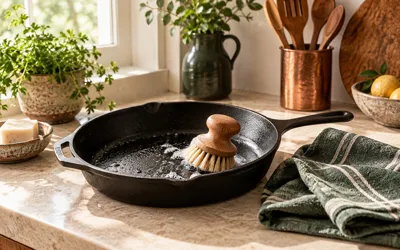
Standard warm water, mild dish soap, and non-abrasive scrub sponges clean seasoned iron safely without degrading metal or leaving residue. Avoid harsh abrasive powders that scuff glass cooktop contact surfaces.
Why Do Some Cast Iron Skillets Buzz on Induction Cookers?
Rapidly alternating magnetic fields create microscopic vibrations between metal pans and glass tops. Slightly uneven pan bottoms amplify audible buzzing, though lowering burner power levels usually eliminates vibration noise.


Write Your Review
No reviews yet. Be the first to share your experience!