

Cast iron cookware set offers unmatched heat retention for searing, baking, simmering. Heavy iron also brings storage bulk, hand-wash rules, seasoning work. Wrong bundle wastes cabinet space on redundant pan diameters or poor lid compatibility.
Guide compares raw pre-seasoned iron against enameled surfaces across 6 sets. Match pan weights, wall depths, handle styles to kitchen routines before buying.

Pros
- Works on induction, gas, electric, and ceramic stovetops
- Smooth enamel surface eliminates traditional seasoning requirements
- Delivers even heat distribution and steady retention
- Handles tasks from stovetop frying to oven baking

Pros
- Detachable handles enable compact nesting storage
- Oven, grill, and fridge compatible vessels
- Includes storage lids and pan protectors
- Nonstick coating simplifies everyday cleanup
Cons
- Only two handles provided for five cookware vessels

Pros
- Pre-seasoned cooking surface ready for immediate use
- Versatile compatibility across stovetops, ovens, and campfires
- Includes three practical pan sizes for diverse tasks
- Made in the USA from durable cast iron
Cons
- Heavy total set weight of 17.35 pounds

Pros
- Works on induction, grills, ovens, and campfires
- Heat safe up to 500 degrees Fahrenheit
- Includes three practical sizes for versatile cooking
- Pre-seasoned with vegetable oil out of box
Cons
- Not dishwasher-safe and requires hand washing
- Demands periodic re-seasoning to maintain surface
- Total set weighs over 10 pounds

Pros
- Oven safe up to 500°F across multiple heat sources
- Pre-seasoned with vegetable oil without synthetic chemicals
- Shared lid fits both Dutch oven and skillet
- Includes diverse pan styles for baking, grilling, and searing
Cons
- Heavy total weight near 32 pounds complicates handling
- Requires hand washing and immediate oiling to prevent rust
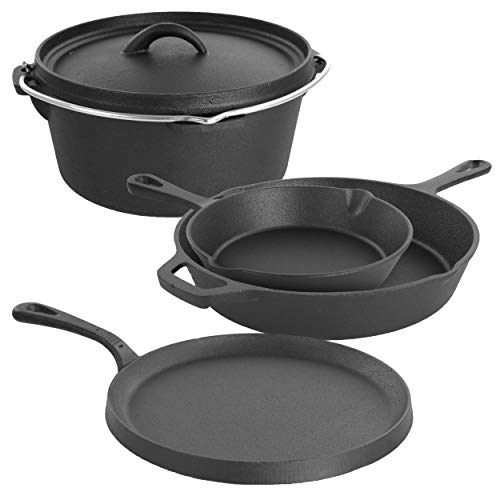
Pros
- Durable cast iron material
- Oven safe up to 450 degrees
- Includes 10.25-inch Dutch oven with lid
- Factory pre-seasoned pieces
Cons
- Heat threshold limited to 450 degrees
Raw Seasoned Iron Versus Enameled Coating
Raw iron handles metal tools, open flame, campfire coals, high oven heat up to 500 degrees Fahrenheit. Demands oil coat after wash to block rust. Bare iron reacts with high-acid food like tomato sauce during long simmers.
Enamel coating seals cast iron inside vitrified glass glaze. Eliminates oil re-seasoning tasks. Allows slow acidic braises without metallic flavor. Enamel chips under sharp metal utensils or thermal shock. Check enameled cast iron guide for enamel maintenance details. Pick bare iron for rough grill cooking, enamel for low-maintenance indoor stews.
Pan Variety and Kitchen Storage Footprint
Sets bundle varied shapes. Skillet-only collections stack tight. Multi-piece bundles add deep Dutch ovens, flat griddles, square grill pans that consume deep cabinet shelf height.
Heavy iron pans scratch glass cooktops or dent cabinet bases when stacked bare. Match piece counts to real cooking habits. Three nested skillets fit compact apartment kitchens. Six-piece setups with dedicated covers need sturdy pantry shelves capable of holding 25 to 35 total pounds.
Heat Retention and Stovetop Compatibility
Thick iron holds thermal energy long after burner shuts off. Cold steaks will not drop pan temperature during sear. Iron heats slower than thin aluminum, creating central hot spots if flame base stays small.
Cast iron bases work across gas, ceramic, electric, induction ranges. Magnetic iron bonds directly with induction coils. Smooth flat-bottom pans protect induction glass surfaces better than rough sand-cast bottoms with raised brand stamps.
Handle Design and Weight Management
Cast iron skillet weighs 4 to 8 pounds empty. Short cast handles conduct burner heat quickly. Dual helper loops on opposite pan rims give two-hand control when moving hot fats from stovetop to oven.
Teardrop handles allow secure thumb leverage. Removable handle options save shelf space, but verify locking mechanism heat limits before placing pans under oven broilers.
Cleaning Routine and Seasoning Maintenance
Raw iron needs warm water, soft sponge, thorough stove-drying, light vegetable oil wipe after cooking. Read how to clean cast iron cookware for step-by-step rust prevention. Never place raw cast iron inside automatic dishwashers.
Review how to season cast iron if factory coating wears thin or sticky food sticks to skillet floor. Enamel pans wash with standard dish soap, zero re-oiling required.
How We Compared These Products
Research uses manufacturer technical specifications, included vessel types, published temperature thresholds, public customer feedback. No laboratory tests or hands-on cooking trials performed. Analysis rates sets by material composition, oven limits, piece diversity, storage bulk, maintenance needs.
Which Option Fits Your Kitchen?
For cooks wanting traditional skillet workhorses across open grills and campfires, select Lodge Pre-Seasoned Cast Iron Skillet Set, 8. Provides 8-inch, 10.25-inch, 12-inch frying pans made in USA. Seasoned bare iron tolerates high flame without synthetic coating breakdown. Explore Lodge cast iron cookware options for single-pan additions.
For one-pot soups, acidic tomato braises, zero-seasoning maintenance, choose QuliMetal 5-Piece Navy Blue Enameled Cast Iron. Enameled interiors eliminate rust risk, handle Dutch oven bread baking, move from stovetop to dining table for serving.
For full kitchen range covering Dutch oven stews, flat griddle breakfasts, seared steaks, select Asderote Cast Iron Set 6 Piece, PFAS-Free. Includes 5-quart Dutch oven, 8-inch and 10.25-inch skillets, 10.5-inch round griddle, square grill pan, shared self-basting lid rated to 500 degrees Fahrenheit.
For compact spaces wanting small single-serving skillets at low weight, pick EWFEN Cast Iron Skillet 3-Piece Set. 6-inch, 8-inch, 10-inch pans nest tight in shallow drawers. Note: CAROTE 21pcs Pots and Pans Set Non Stick uses nonstick aluminum with detachable handles, not traditional cast iron; choose that only if light nonstick nesting pans take priority over heavy iron thermal mass.
Frequently Asked Questions
Can cast iron cookware set work on induction cooktops?
Yes. Cast iron contains dense magnetic ferrous iron. Bonds instantly with induction cooktop magnetic fields. Place pans gently on glass tops to prevent surface scratches.
What makes enameled cast iron different from bare cast iron?
Bare cast iron needs oil coats to stop rust, withstands metal utensils, handles campfire heat. Enameled iron coats metal with smooth vitreous glass glaze. Enamel needs no seasoning, resists acidic tomatoes, but chips under metal utensils.
How do you wash pre-seasoned cast iron pans without ruining surface?
Let pan cool down completely. Wash by hand with warm water, mild soap, soft sponge. Dry immediately on warm stove burner. Rub thin layer cooking oil over warm iron floor.
Why does food stick to new cast iron skillet set?
Factory pre-seasoning coat is thin protective base. Cooking with fats, searing meats, seasoning pans with vegetable oil builds slick carbonized layer over time. Preheating pan slowly before adding oil prevents food sticking.
Can cast iron cookware sets go into home ovens?
Yes. Solid cast iron skillets and cast lids handle oven heat up to 500 degrees Fahrenheit safely. Check specific listing limits for sets with silicone handles, glass lids, or detachable grips.
How should heavy cast iron cookware set be stored to avoid damage?
Stack pans with cloth protectors, silicone liners, or paper towels between iron surfaces. Stops metal rims scratching interior seasoning or chipping enamel coatings. Store only bone-dry pans in low-humidity cupboards.


Write Your Review
No reviews yet. Be the first to share your experience!