

Home cooks choose ceramic pans for slick release without traditional chemicals. Coating degrade faster under high heat than stainless steel or cast iron. Buyers face trade-off between quick cleanup and long-term surface durability.
Guide analyzes ceramic cookware pros and cons across 7 sets from CAROTE, SENSARTE. Breakdown covers heat transfer, handle design, storage footprint, and batch capacity to help pick right fit.

Pros
- Compatible with all stovetops including induction
- Coating free of PFAS, PTFE, PFOA, and lead
- Includes protective pads to prevent storage scratches
- Die-cast aluminum heats rapidly and evenly
Cons
- Hand washing recommended instead of dishwasher cleaning


Pros
- Detachable handles enable compact nesting in cabinets
- Works on all stovetops including induction
- Ceramic nonstick made without PFAS, PTFE, and PFOA
- Dishwasher safe for low-effort cleanup
Cons
- Only two detachable handles for eight pots and pans

Pros
- Dishwasher-safe ceramic nonstick surface for easy cleanup
- Includes large six-quart wok and steamer insert
- Silicone-sealed glass lids prevent chipping and lock moisture
- Supplied pan protectors guard coating during nested storage
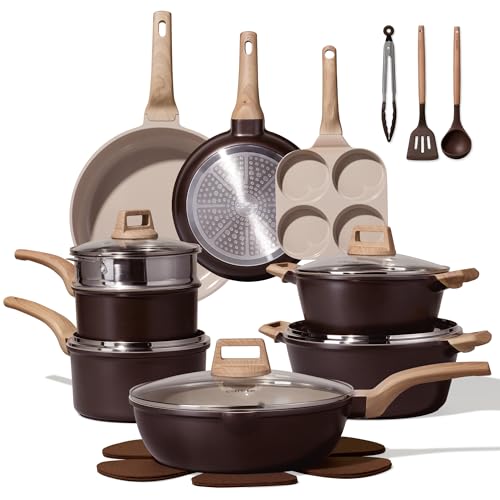
Pros
- PFOA and PFOS free ceramic nonstick coating
- Die-cast aluminum build resists daily wear
- Extensive 21-piece bundle covers most kitchen tasks
- Includes pan protectors for scratch-free storage

Pros
- Works on induction and all standard cooktops
- Coating free of PTFE, PFOA, PFAS, and lead
- Thick 4.8mm base heats quickly and evenly
- Stay-cool Bakelite handles provide comfortable grip
Cons
- Hand washing recommended to protect nonstick surface

Pros
- Integrated pour spouts facilitate clean liquid draining
- Silicone-rimmed glass lids seal tightly and prevent chipping
- Dishwasher-safe construction streamlines cleanup
- Includes utensils, silicone trivets, and pan protectors
Nonstick Release Versus Coating Longevity
Ceramic coatings use mineral sol-gel formulation. Surface release eggs, delicate fish with minimal oil. Big pro: cleanup take seconds. Big con: mineral layers lose slickness faster than bare metal. Metal utensils scratch surface quickly. Maintain release by using silicone tools and avoiding high flame. Compare durable options in our guide to nonstick ceramic sets.
Base Construction and Heat Distribution
Coating need solid core to prevent hot spots. Die-cast aluminum bodies spread thermal energy fast across pan floor. Thin stamped pans warp under sudden temperature shifts. Both SENSARTE sets use 4.8mm thick base with bonded stainless steel plates. Thick base stabilize heat, prevent thermal shock, extend nonstick life. Check stovetop compatibility in our induction ceramic cookware guide.
Detachable Handles Versus Fixed Hardware
Handle design dictate storage space and oven utility. CAROTE detachable handle sets nest tight in small cupboards. Removable grips save up to 70 percent cabinet room and clear dishwasher racks easily. Fixed Bakelite handles stay cool on stovetop without pot holders. Trade-off: fixed handles limit oven clearance, while detachable mechanisms require careful latching during heavy lifting.
Chemical Formulation Claims
Primary buying driver is material safety. Listed models specify coatings free of PTFE, PFOA, PFAS, lead, and cadmium. Ceramic surfaces do not emit toxic fumes when overheated. Con: ceramic nonstick still degrades if scorched dry. Mineral surfaces require low to medium stove settings to avoid thermal breakdown. Read detailed breakdowns in our non toxic cookware guide.
Cleaning Methods and Dishwasher Exposure
Dishwasher detergents contain harsh alkaline salts. Abrasive tablets erode ceramic gloss over repeated cycles. Hand washing with soft sponge preserves nonstick performance longest. Smooth glaze rinse clean with warm water in seconds. Treat dishwasher compatibility as occasional convenience rather than daily habit to protect slickness.
How We Compared These Products
Guide rely on manufacturer specifications, material listings, vessel capacities, and documented owner feedback. Evaluation track base thickness, handle attachment systems, piece counts, and lid construction across 7 sets. No independent laboratory testing or hands-on kitchen trials conducted for this comparison.
Which Option Fits Your Kitchen?
Small apartments, campers, tight cabinets need compact nesting. CAROTE 25pcs Ceramic Cookware Set provide removable handles and universal lids. Stacking pans directly inside drawer eliminate handle clutter and optimize tight shelving. Review more compact options in our ceramic cookware set breakdown.
Cooks preparing family meals need high-volume pans. CAROTE 31pcs Ceramic Cookware Sets include 6-quart wok, 6.5-quart stockpot, and dedicated steamer basket. Deep curved sidewalls contain oil splatters during stir-frying and vegetable steaming.
Daily meal prep with traditional handling favor fixed ergonomics. SENSARTE Ceramic Cookware Sets deliver 4.8mm heavy induction bases with wood-grain stay-cool Bakelite handles. Thick bottom plate resist warping while providing stable, secure grip without latching parts.
Frequently Asked Questions
What are main pros of ceramic cookware?
Ceramic pans provide exceptional food release with little cooking fat. Coatings contain no PTFE, PFAS, PFOA, lead, or cadmium. Smooth mineral surface clean quickly with damp cloth or warm rinse.
What are main cons of ceramic cookware?
Coatings wear faster than seasoned cast iron or bare stainless steel. High cooking heat degrade nonstick qualities. Metal utensils gouge mineral layer, requiring wood or silicone tools exclusively.
Can ceramic pans work on induction stoves?
Yes, if pan base contains magnetic steel disc. SENSARTE and CAROTE sets in this guide feature bonded stainless steel plates. Check pan underside for magnetic attraction before induction use.
How do ceramic pans compare to stainless steel?
Ceramic offer superior effortless release for delicate eggs and pancakes. Stainless steel withstand extreme heat, metal utensils, and vigorous scouring. Compare traditional metal pans in our stainless steel cookware guide.
Can ceramic cookware go inside oven?
Pans with detachable handles transition to oven safely once handles detach. Bakelite handles on fixed sets have lower thermal tolerance. Check manufacturer manual for maximum temperature limits on glass lids and handles.
Why does food stick to ceramic pans over time?
Burnt oil residue fill microscopic pores in mineral coating. Cooking spray propulsion agents bake onto surface, ruining release. Wash pans thoroughly with baking soda paste to lift oil films without scratching glaze.




Write Your Review
No reviews yet. Be the first to share your experience!