

Countertop real estate is scarce in most kitchens, yet standard toaster ovens often lack the rapid airflow required to crisp foods properly. An air fryer oven combo merges high-velocity convection fans with a traditional toaster oven cavity, but designs vary wildly between compact horizontal footprints and tall multi-rack units.
Choosing the right machine means weighing interior height against overhead cabinet clearance, assessing how crumb trays pull out for cleanup, and picking between mechanical dials and digital presets. This guide compares 8 popular options to help match equipment to your daily cooking volume and storage constraints.
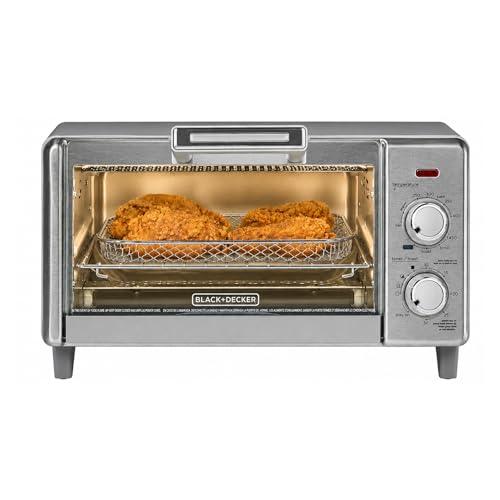
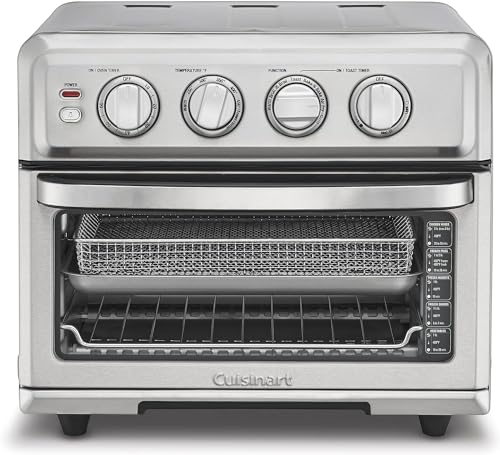
Pros
- Five cooking functions in one compact appliance
- Includes dedicated air fry mesh tray and bake pan
- EvenToast technology designed for consistent browning
- Removable crumb tray simplifies routine cleanup
Cons
- Thirty-minute timer restricts longer baking tasks
- Interior limited to nine-inch pizzas or four slices


Pros
- Flips up to reduce counter footprint when stored
- Accommodates 12-inch pizza or six bread slices
- Broad temperature range between 85 and 450 degrees
- Includes air fry basket, sheet pan, and crumb tray
Cons
- Shallow vertical clearance prevents cooking tall foods

Pros
- Flips vertically against wall to save counter space
- Fast sixty-second preheat with eighteen hundred watt power
- Wide pan fits thirteen-inch pizza or nine toast slices
- Removable crumb tray and accessible back panel ease cleaning
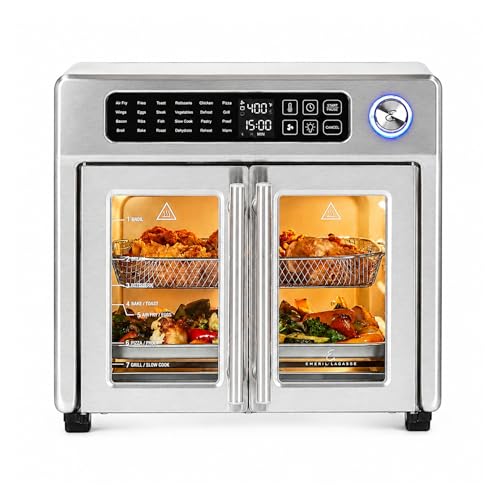
Pros
- Large 26-quart capacity accommodates batch meals
- Single-pull French doors simplify interior access
- Dual-speed fan circulates superheated air
- Dedicated toast timer with automatic shutoff
- Interior light allows monitoring during cooking
Cons
- Bulky dimensions require substantial counter space
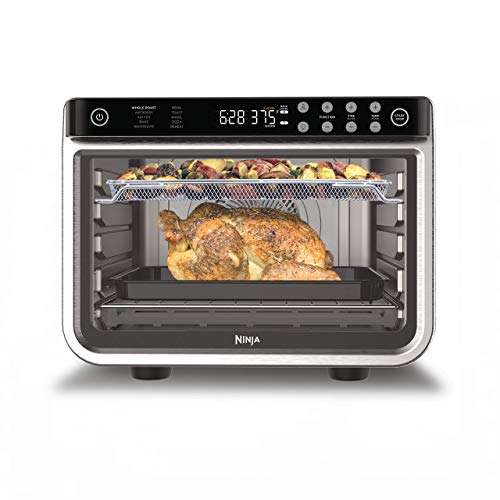
Pros
- Two-level cooking capacity fits full meals
- Handle display indicates proper rack height
- Rapid ninety-second preheat saves meal prep time
- Includes complete accessory set with two sheet pans
Cons
- Heavy thirty-three-pound frame limits portability
- Large footprint occupies significant counter space
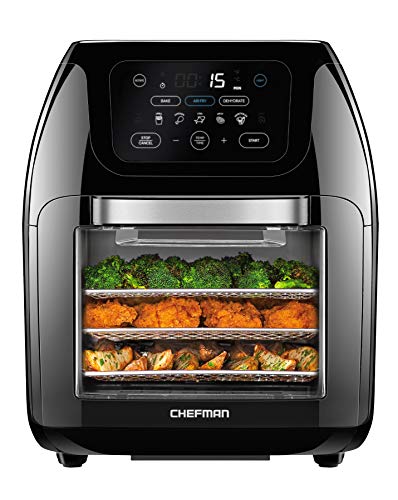
Pros
- Generous 10-liter multi-rack cooking capacity
- Includes rotisserie spit, retrieval tool, and three racks
- Seventeen one-touch digital presets for diverse tasks
- Dishwasher-safe removable accessories streamline cleanup
How to Choose an Air Fryer Oven Combo
Internal Usable Capacity and Cooking Levels
Manufacturer volume numbers do not always translate to flat surface area. Deep units with narrow racks may hold a small whole chicken, whereas wide, shallow units excel at spreading out sliced potatoes or multiple chicken breasts in a single layer. Single-layer air frying produces superior browning because hot air circulates around every edge without food trapping steam.
If you feed a household, look for multi-level cooking setups. Models like the air fryers large enough for families allow simultaneous cooking of mains and sides. Units featuring three wire rack positions or dual-level sheet pan support let you cook proteins above vegetables, though juices can drip downward if pans are not staggered carefully.
Countertop Footprint and Cabinet Clearance
Countertop appliances generate significant exterior heat during high-temperature convection cycles. You must account for upper cabinet height and rear wall clearance before committing to a tall, rotisserie-style cabinet. French door styles require room directly in front of the unit for wide-swinging double doors, while flip-up designs demand vertical space against your backsplash when stowed.
For compact spaces, horizontal ovens that fold upward cut countertop usage significantly between meals. If your workspace lacks overhead room, a low-profile footprint fits beneath standard 18-inch upper cabinetry without risking heat damage to wood finishes. Always verify total appliance depth including handles and rear cord standoffs.
Heating Elements and Convection Airflow
Air frying relies on high-speed fans moving air across exposed heating rods. Traditional toaster ovens use slow convection fans simply to redistribute heat, which softens food rather than frying it. Dedicated combo units employ larger fans and specialized air guides to mimic deep frying results without heavy oil.
Look for machines offering variable fan speeds or multiple quartz and infrared heating tubes. Units with high-velocity surround convection provide fast preheating, often reaching target cooking temperatures in under two minutes. However, intense directional airflow can blow lightweight parchment paper into the elements, requiring careful accessory placement.
Cleaning Access and Crumb Trays
Air frying creates grease mist that coats interior walls, glass doors, and heating shields. Small appliances become fire hazards and smoke heavily if grease pools around the lower elements. Look for front-accessible, pull-out crumb and drip trays that slide out smoothly without tilting grease over the kitchen counter.
Non-stick interior coatings wipe down easily with soapy damp cloths, but wire racks and mesh air fry baskets often trap stubborn charred bits. Dishwasher-safe baskets reduce cleanup friction, though washing high-heat sheet pans by hand prevents surface warping. Machines featuring removable back panels or wide-opening doors give better elbow room for wiping baked-on oil.
Controls: Presets Versus Manual Dials
Appliance interfaces fall into two camps: tactile analog dials or digital capacitive touchscreens. Analog dials allow quick time twists without cycling through digital menus, making them reliable for quick toast or reheating tasks. However, mechanical timers lack single-minute precision, which can lead to burnt food during sensitive baking cycles.
Digital displays provide accurate temperature regulation down to five-degree increments, along with dedicated dehydrator functions running below 100 degrees Fahrenheit. If you regularly switch between broiling, slow dehydrating, and crisping frozen snacks, digital presets remove the guesswork by adjusting internal fan speeds and active element banks automatically.
How We Compared These Products
This comparison is based on careful product research and technical specification analysis rather than hands-on laboratory testing. We analyzed published manufacturer specifications, heating power ratings, stated internal quart capacities, included accessory sets, and documented customer feedback. We evaluated how each appliance balances physical footprint against usable cooking surface, control responsiveness, and everyday cleaning accessibility.
Which Option Fits Your Kitchen?
For homes with tight countertop real estate where workspace is at a premium, the Ninja Digital Air Fry Countertop Oven, 8-in-1, XL is a practical solution. Its flip-away storage mechanism flips the oven vertical against the kitchen backsplash when idle, clearing valuable prep area while still accommodating a 13-inch pizza or large batches of toast.
If you frequently cook for large groups and need multi-rack utility, consider the Ninja Foodi XL Pro Air Fry Oven, 10-in-1. Its tall cavity accommodates true two-level sheet pan meals or a five-pound roast chicken without rotating trays, driven by high-convection airflow and handle-mounted digital controls that freeze settings when the door opens.
For budget-conscious shoppers needing a basic footprint without digital complexity, the BLACK+DECKER 4-Slice Air Fry Toaster Oven provides straightforward manual controls and dedicated air fry mesh racks. It occupies minimal counter width while handling small-batch crisping, 9-inch personal pizzas, and daily breakfast toasting tasks.
Frequently Asked Questions
Can an air fryer oven combo fully replace a regular toaster oven?
Yes. These appliances incorporate top and bottom heating elements designed for conventional toasting, baking, and broiling. The primary difference is the integrated high-speed convection fan, which you can leave switched off or adjust depending on whether you need gentle heat or rapid crisping.
Do countertop air fryer ovens require special electrical outlets?
Most countertop units operate between 1500 and 1800 watts, running safely on standard residential 120-volt, 15-amp kitchen circuits. However, running high-draw appliances such as electric kettles or microwaves on the same shared circuit breaker simultaneously may trip the breaker.
Why does my air fryer oven produce smoke during high-heat cooking?
Smoke occurs when rendered fat from meats drips onto exposed lower heating elements or accumulates on unwashed crumb trays. Placing a baking sheet or drip tray beneath the wire mesh basket captures grease before it makes contact with heating coils, reducing smoke considerably.
Can I use standard metal bakeware inside an air fryer combo oven?
Countertop ovens accept standard oven-safe bakeware including stainless steel, cast iron, and aluminum pans, provided they fit without touching the interior walls or heating elements. Deep baking dishes, however, block circulating airflow and will lengthen cooking times when using air fry settings.
How do French door models compare to traditional drop-down door ovens?
French door models open simultaneously with a single hand pull, providing unobstructed access to hot racks without forcing you to reach over a hot drop-down glass panel. The design trade-off is requiring clear counter clearance on both the left and right sides so the dual doors can swing outward fully.
Is aluminum foil safe to use inside an air fryer toaster oven?
You can line accessory drip trays and sheet pans with aluminum foil for easier cleanup. Never place foil directly on the oven floor or wrap the crumb tray so tightly that it blocks airflow or touches lower heating elements, as this can trap heat and damage internal electrical sensors.


Write Your Review
No reviews yet. Be the first to share your experience!