

Kneading stiff dough puts significant stress on conventional countertop equipment. Traditional overhead motor heads often vibrate across work surfaces during dense mixing jobs, leading bakers to look for bottom-drive units that maintain stability under heavy loads. Deciding on stand mixers Bosch configurations comes down to selecting the correct bowl construction, evaluating component weight, and determining how you plan to clean each piece after heavy prep work.
Both models in this comparison share identical internal drive mechanisms and motor outputs, meaning your choice centers on handling convenience and vessel materials. Understanding how stainless steel compares to lightweight plastic will help you select the configuration best suited to your bread making, whipped toppings, or everyday meal preparation.

Pros
- Handles up to 15 pounds dough
- Large 6.5-quart stainless steel bowl
- Three-year motor and transmission warranty
- Includes dough hook extender accessory
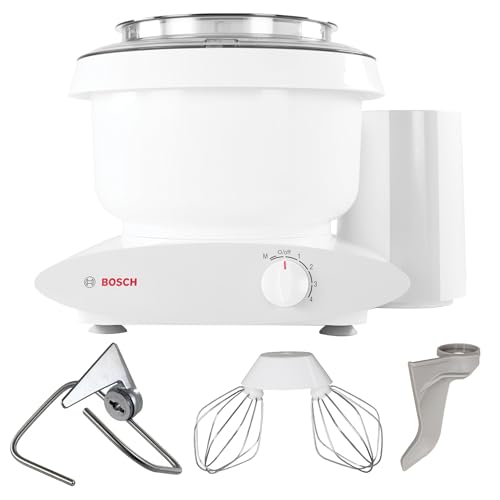
Pros
- High torque knead up to fifteen pounds dough
- Open bowl top make adding ingredients simple
- Removable drive shaft and bowl clean in dishwasher
- Dual beaters whip as little as one egg white
Cons
- Bowl build use plastic rather than stainless steel
- Specialty attachment accessories require separate purchase
Buying Guide: Choosing Stand Mixers Bosch for Your Kitchen
Bowl Material and Weight Considerations
Bowl material directly changes the weight you lift when transferring batches to the counter or sink. Stainless steel provides long-term rigidity, resists scratching from abrasive ingredients, and does not absorb lingering odors from savory recipes. However, metal vessels add heft, which can tire your wrists during frequent handling.
A BPA-free plastic bowl reduces physical strain significantly when moving large volumes of wet ingredients. The lower vessel weight makes scraping batters onto sheet pans straightforward, though plastic requires gentle cleaning sponges to prevent surface scuffs over time. Consider your lifting comfort when evaluating these structural differences, especially if you regularly prepare large recipes found in our stand mixers best suited for your counter guide.
Drive Mechanism and Countertop Stability
Unlike standard overhead mixers reviewed in our look at tilt head stand mixer options, these appliances use a bottom-mounted, belt-driven transmission. Placing the motor below the bowl creates a low center of gravity that limits rocking while working stiff bread formulations. Both models use a 500-watt power base paired with four speeds and a momentary pulse switch to maintain steady torque.
This layout gives an open top for dropping in flour and liquids without ducking around a bulky motor housing. The trade-off is an internal drive shaft opening at the bottom of the bowl, which requires proper gasket seating before loading wet mixtures to prevent leaks onto the base unit.
Batch Capacities for Small and Large Tasks
High-volume bakers often need appliances that handle family-sized holiday baking sessions without stalling. Both configurations report capacity for kneading up to 14 standard loaves of whole grain dough or blending 34 dozen cookies in one run, placing them in similar heavy-prep territory as designs shown in our heavy dough mixers compared post.
Dual whips spinning on a planetary pattern also address small portions, such as whipping a single egg white or shredding chicken breast. The included dough hook extender ensures that even tiny, single-loaf dough portions catch the kneading arm properly rather than spinning freely around the central post.
Cleaning Access and Dishwasher Compatibility
Cleanup workflows depend on how parts detach from the mixer body. The plastic bowl model features a removable center drive shaft, allowing the vessel to sit flat inside a standard dishwasher rack. Verifying whether your sink depth accommodates broad 6.5-quart mixing containers is an important step before purchasing.
Stainless steel models demand attention around the drive interface during manual washing to clear trapped starches from mounting grooves. Wire whips using plastic drive hubs should be inspected after washing to prevent moisture accumulation inside internal sockets.
How We Compared These Products
This guide relies on manufacturer-supplied technical specifications, published product manuals, and verified consumer feedback rather than firsthand testing in an appliance lab. We evaluated motor wattage ratings, transmission designs, material variations between the steel and plastic bowls, and included accessories such as the dough hook extender. Features were analyzed based on standard kitchen utility, batch limits, and routine cleaning demands.
Which Option Fits Your Kitchen?
If you prefer an odor-resistant mixing surface that handles abrasive grains and heavy mechanical use, choose the Bosch Universal Plus Stand Mixer with Stainless. Its metal vessel provides a rigid container for vigorous dough mixing and long-term durability, backed by a 3-year motor and transmission warranty.
If you need a lighter container that reduces wrist fatigue during pouring and is rated for dishwasher cleaning, select the Bosch Universal Plus Stand Mixer 500 Watt. The lightweight plastic bowl features an integrated grip handle and removable drive shaft that simplifies routine kitchen sanitation.
Frequently Asked Questions
Can these mixers handle very small ingredient quantities?
Yes. The dual wire whips are engineered to sweep close to the bowl contours, allowing you to whip as little as one egg white or small amounts of cream. For small batches of bread, the included dough hook extender ensures single-loaf dough balls remain engaged with the kneading hook.
How does the bottom drive system prevent liquid leaks?
The bowl fits over a central drive column fitted with sealing gaskets designed to keep batters, eggs, and liquids from draining into the motor cavity. Ensuring the shaft is locked securely in place prior to adding ingredients is essential for maintaining this seal.
Are the mixing bowls safe for the dishwasher?
The plastic 6.5-quart bowl is explicitly listed as dishwasher safe and includes a removable drive shaft to make rack loading easier. For the stainless steel configuration, check specific package care instructions regarding the drive collar before running automated heat cycles.
What speed settings are available on the motor base?
The 500-watt power unit provides four distinct operating speeds alongside a momentary pulse switch. This allows gradual ingredient incorporation on lower settings as well as short bursts of high-speed whipping.
Can I use optional culinary attachments with these bases?
The base unit supports auxiliary hubs for separate attachments such as citrus juicers, meat grinders, and pasta rollers. These accessories connect directly to the motorized drive ports but must be purchased individually.





Write Your Review
No reviews yet. Be the first to share your experience!