

Original stand mixer flat beaters often present two practical problems. Coated enamel versions eventually chip at the edges, flaking bits of coating straight into your batter. Standard flat beaters also leave a film of butter, sugar, and flour stuck along the curved walls of your bowl, requiring you to pause mixing repeatedly to scrape everything down manually.
Upgrading your stand mixer paddle attachment solves these headaches, but fit and material vary significantly across designs. This guide compares 10 replacement paddles to help you balance bowl-scraping action, metal durability, and model compatibility without risking motor strain or wasted ingredients.

Pros
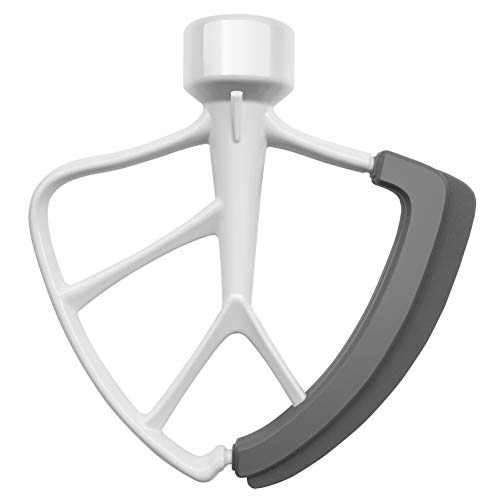
- Scrapes bowl sides continuously while mixing
- Durable metal frame with flexible silicone edges
- Fits standard 4.5 and 5-quart tilt-head models
Cons
- Incompatible with bowl-lift mixer models
- Restricted to light and medium consistency mixtures
Pros
- Scrapes bowl walls continuously while mixing
- Dishwasher-safe construction simplifies cleanup
- Sturdy die-cast aluminum frame
- Fits standard 4.5- and 5-quart tilt-head mixers
Cons
- Incompatible with bowl-lift stand mixers
- Restricted to 4.5- and 5-quart bowl sizes

Pros
- Dishwasher safe for quick cleaning
- Reinforced lower frame stabilizes mixing
- Broad compatibility across tilt-head models
Cons
- Restricted to 4.5 and 5-quart tilt-head mixers

Pros
- Solid stainless steel construction prevents chipping
- Dishwasher-safe for simple cleanup
- Thinner profile cuts through dense batters
- Direct fit for 4.5-5 quart tilt-head mixers
Cons
- Limited to 4.5 and 5 quart tilt-head models

Pros
- Solid stainless steel construction prevents paint chipping
- Dishwasher safe without surface discoloration
- Handles heavy doughs without bending
Cons
- Only compatible with select bowl-lift mixer models
Pros
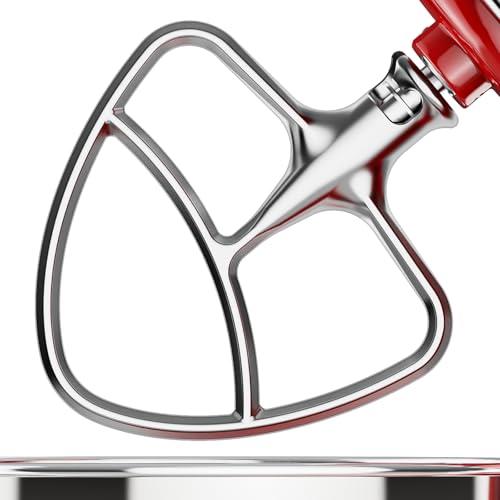
- Solid 304 stainless steel eliminates chipping paint
- Dishwasher safe construction simplifies cleanup
- Reinforced frame minimizes wobbling during mixing
Cons
- Incompatible with bowl-lift and Classic Pro mixers
- Third-party accessory not manufactured by KitchenAid

Pros
- Top-rack dishwasher safe nylon coating
- Durable food-grade aluminum core
- Includes two adhesive cord organizer wraps
Cons
- Not compatible with bowl-lift stand mixers

Pros
- Solid stainless steel eliminates flaking paint
- Dishwasher safe for low-maintenance cleanup
- Tool-free twist-lock installation on mixer shaft
- Resists rust, chipping, and bending
Cons
- Incompatible with 6-quart bowl-lift mixers
- May require adjusting mixer bowl clearance
Pros
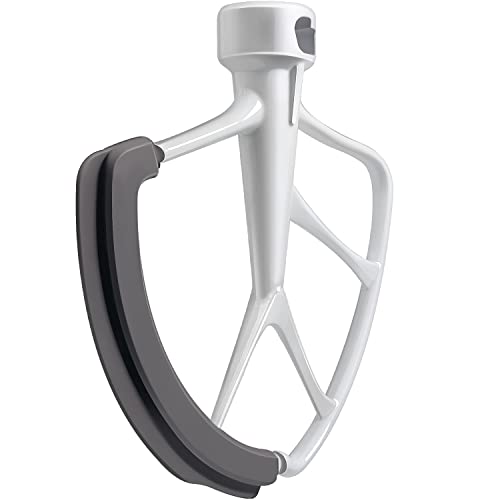
- Silicone edge scrapes bowl continuously
- Dishwasher safe for easy cleanup
- Durable coated aluminum frame
Cons
- Limited strictly to listed bowl-lift models
Pros
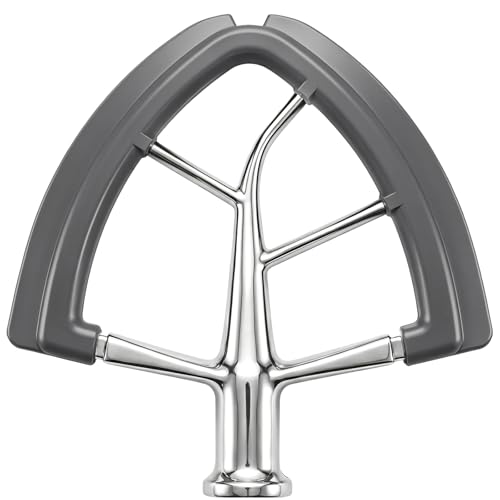
- Durable 304 stainless steel construction prevents coating chips
- Dual silicone edges continuously scrape bowl sides
- Safe for dishwasher cleaning
- Resists bending under heavy doughs
Cons
- Incompatible with bowl-lift mixer models
Mixer Mechanism: Tilt-Head Versus Bowl-Lift
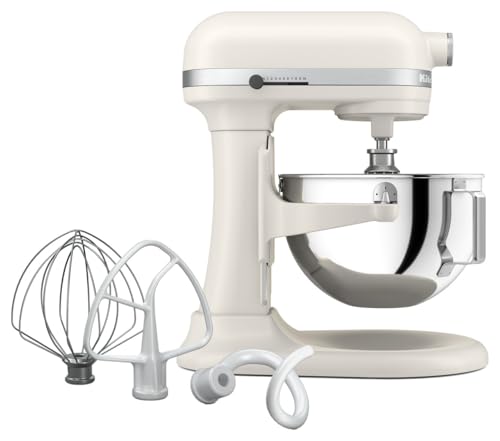
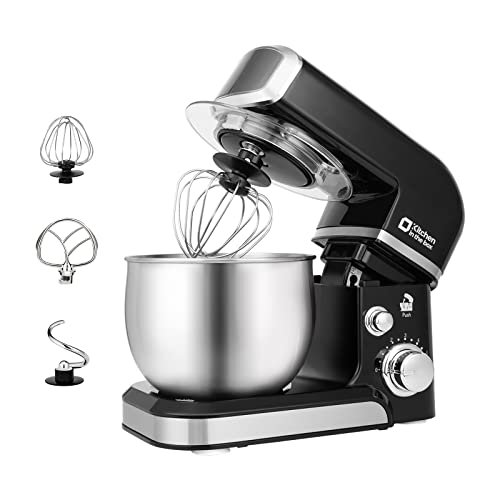
Bowl geometry differs completely between tilt-head and bowl-lift mixers. Tilt-head units rotate back on a hinge and generally take smaller, squatter attachments. Bowl-lift models keep the mixer head stationary and use crank arms to raise deeper, wider bowls to the spinning shaft. Paddles are not interchangeable across these mechanisms.
Before buying, check the model stamp on your machine. Tilt-head units such as the Artisan or Classic series typically require beaters sized for 4.5-quart to 5-quart bowls. Commercial-style bowl-lift machines, such as the Professional 5 Plus or Professional 600, require taller, broader paddles designed to reach deep into 5-quart or 6-quart lift bowls.
Material Construction: Coated Metal Versus Stainless Steel
Classic flat beaters use cast aluminum coated with food-grade nylon or enamel. They provide lightweight handling and release sticky dough easily. However, regular contact with hard sugar crystals, accidental bowl strikes, or dishwasher heat cycles can cause the white surface to chip or bubble over time, leaving bare aluminum underneath.
Solid stainless steel paddles eliminate flaking because they contain no surface paint or finish. The bare metal resists bending when plowing through cold butter or heavy doughs. The trade-off is added weight and a higher price tag. If you prefer long-term resilience over nonstick release, bare metal avoids coating contamination entirely, much like cooking with reliable pieces from stainless steel cookware sets rather than coated gear.
Edge Design: Standard Paddles Versus Flex Edge Scrapers
Flex edge beaters integrate flexible silicone wings along one or both outer rims. As the shaft rotates, the silicone blade sweeps along the interior wall of the bowl. This wipes down butter and sticky batters continuously, eliminating the need to stop the motor and grab a spatula. They work well for soft frostings, cheesecakes, and cake batters.
Rigid paddles remain superior for heavy mixtures. The continuous drag of silicone against stainless steel creates extra motor resistance, which can strain your mixer if you work with cold, dense cookie doughs or thick pastry crusts. Standard metal paddles glide through stiff doughs with minimal drag, keeping motor temperatures cooler.
Bowl Clearance and Adjustment
Third-party attachments may vary by fractions of an inch compared to factory accessories. A paddle that sits too low will scrape metal against your bowl floor, causing scratching and strain. A paddle that sits too high will leave unmixed flour resting under the blade.
Every stand mixer features a clearance adjustment screw located in the neck or lift mechanism. You can test attachment height by dropping a dime into the empty bowl and running the paddle on low. The blade should tap the dime just enough to move it roughly half an inch each rotation without dragging against the bottom metal.
Cleaning Access and Dishwasher Safety
Cleanup speed depends on how batter clings to your attachment. Solid stainless steel paddles handle high-heat dishwasher cycles without oxidizing or developing dark gray film, avoiding the hand-washing maintenance required when you clean cast iron cookware. Coated aluminum beaters are generally safe for the top rack, but harsh detergent detergents can erode coatings at stress points.
Flex edge paddles require extra attention around the silicone attachment seam. Sticky mixtures can tuck behind the flexible fins, so you must rinse the edges under running water before placing them in the dishwasher or wash them by hand to prevent dried batter buildup.
How We Compared These Products
We evaluated these mixer paddles using manufacturer design specifications, published dimensional data, material construction disclosures, and aggregated user feedback. Because we conducted no hands-on lab testing for this guide, our comparisons focus on structural trade-offs between coated metal and solid stainless steel, silicone scraper integration, and compatibility across specific stand mixer bowl mechanisms.
Which Option Fits Your Kitchen?
For home bakers who prioritize scrape-free cake prep on tilt-head machines, KITCHPOWER 4.5-5 Quart Flex Edge Beater sweeps sides continuously to blend butter and frostings without stopping. If you want silicone scraping action combined with the chipped-coating resistance of solid metal, Stainless Steel Flex Edge Beater Replacement pairs dual silicone scrapers with a 304 stainless steel frame.
If you mix stiff doughs or want a heavy-duty paddle that will never flake coating into food, choose a bare metal design. The Stainless Steel Flat Beater for Kitchen Aid 4.5-5 provides a solid, dishwasher-safe build for standard 4.5-quart and 5-quart tilt-head mixers.
Bakers working with large-capacity bowl-lift machines need broader structural frames. The Stainless Steel Flat Beater for KitchenAid 5qt-6qt offers solid steel construction sized for Professional 5 Plus and Professional 600 series mixers, while the KITCHPOWER 6 Quart Flex Edge Beater for KitchenAid handles bowl-scraping duties for high-volume 6-quart lift bowls.
Frequently Asked Questions
Why does the coating on flat beaters chip off?
Enamel or nylon coatings chip when beaters strike the bottom of the mixing bowl or knock against other utensils during drawer storage. Harsh dishwasher detergents and high drying temperatures can also create micro-cracks along the leading edges, allowing moisture to weaken the bond between the aluminum and the coating.
Can I use a flex edge paddle for bread dough?
Flex edge beaters are designed for creaming butter, blending frostings, and mixing soft batters. Stiff bread doughs create heavy resistance against the flexible silicone fins, which can bend the wings or put unnecessary strain on the mixer motor. Use a dedicated spiral or C-shaped dough hook for yeast breads.
Will a 5-quart tilt-head paddle fit a 5-quart bowl-lift mixer?
No. Even though both bowls hold five quarts, the dimensions and bowl heights differ completely. Tilt-head bowls are wider and shallower, while bowl-lift models are narrower and deeper to lock into the machine arms. Always match the attachment to your specific mixer style rather than volume alone.
Are stainless steel mixer paddles dishwasher safe?
Solid stainless steel paddles can run through standard dishwasher cycles without issue. Because they lack paint, enamel coatings, or raw aluminum cores, detergent will not oxidize the metal or leave a powdery gray residue on the surface.
How do I stop my new paddle from hitting the bowl bottom?
Locate the adjustment screw found in the mixer hinge on tilt-head machines or along the support column on bowl-lift units. Turn the screw slightly clockwise to raise the beater height. Test the fit by rotating the paddle by hand before running the motor to confirm it does not touch the bowl metal.





Write Your Review
No reviews yet. Be the first to share your experience!