

Sushi rice demands a distinct texture that standard table rice rarely requires. The short-grain rice must hold its shape, absorb seasoned vinegar evenly, and remain slightly firm to the bite without turning gummy or dry. Basic single-switch cookers often run hot and boil off water aggressively, which can rupture grain surfaces and create sticky mush at the bottom of the pot.
Choosing the right rice cooker for sushi comes down to balancing moisture management, heating logic, and countertop size. Whether you need a small batch machine for two hand rolls or a high-capacity cooker for family dinners, this guide outlines the key features that separate reliable models from units that scorch your grains.

Pros
- Removable nonstick pot dishwasher safe
- Includes steamer basket, measuring cup, serving spoon
- Compact footprint fits crowded counters
- Switches automatically to keep-warm mode
Cons
- Requires included three-quarter cup measure for proper water ratios
- Three-cup dry capacity limits batch sizes
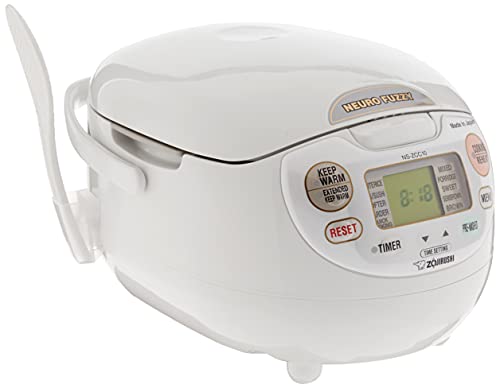
Pros
- Multiple specialized rice and porridge settings
- Spherical nonstick pan ensures uniform heating
- Retractable cord simplifies kitchen storage
- Automatic and extended keep-warm cycles
Cons
- Requires measuring with included cup only

Pros
- Large 20-cup cooked capacity for batch meals
- Integrated slow cook and saute-then-simmer presets
- Includes steam tray and ceramic-coated inner pot
- Switches automatically to keep-warm mode
Cons
- Bulky footprint takes up significant countertop space
- Minimum 4-cup cooked yield limits single-portion cooking

Pros
- Dishwasher-safe nonstick pot and steam basket
- Automatic keep-warm mode lasts twelve hours
- Includes dual-purpose rinse and steam basket
- Hinged lid locks moisture inside pot
Cons
- Advertised cup capacity uses six-ounce rice cup standard

Pros
- Removable nonstick bowl safe for dishwasher cleaning
- Automatic switch to keep-warm mode prevents overcooking
- Includes steaming basket, rice cup, and spoon
- Large 16-cup cooked capacity suits batch cooking
Cons
- Requires included measuring cup for accurate water ratios

Pros
- Removable ceramic nonstick inner pot
- Automatic keep-warm setting after cooking
- Compact footprint weighs under 2.2 pounds
- Glass lid allows easy visual monitoring
Cons
- Small capacity limited to two cups cooked
- Single switch offers no manual temperature adjustments

Pros
- PFAS-free nonstick ceramic inner pot
- Automatic keep-warm cycle
- Removable pot and lid for easy cleaning
- Compact 1.5-quart countertop footprint

Pros
- Dishwasher-safe accessories and ceramic-coated inner pot
- Fuzzy logic automatically controls seven-step cooking process
- Includes 24-hour delay timer and keep-warm setting
- Eighteen cooking presets for diverse grains and meals
Cons
- Quick cook function limited to white rice
How to Choose a Rice Cooker for Sushi
Sushi rice requires precise water ratios and controlled heat absorption. Different cooking systems handle steam regulation, heat adjustments, and inner pot coatings in ways that directly impact your finished rolls.
Fuzzy Logic vs. Mechanical Switches
Single-switch cookers rely on a thermal sensor at the base that clicks into warming mode once the pot rises above boiling temperature. This basic system works by boiling liquid until dry, which can leave grains unevenly cooked if water measurements are slightly off. Models using computerized fuzzy logic, such as the Zojirushi Ns ZCC10 and Cosori 10-Cup, adjust heating cycles in real time to match the cooking phase. Dedicated sushi settings deliberately cook grains slightly firmer to prevent mushiness when seasoning liquids are folded in later.
Usable Batch Size and Capacity
Rice cooker capacity is commonly listed by cooked yield using specialized cups rather than standard measuring cups. If you consistently make small portions for two rolls, a large pot will spread the rice too thin, causing parched or uneven grains. Compact units like the Dash Mini or Zojirushi 3-Cup handle modest portions as small as a half cup of dry grain cleanly. Large multicookers like the Aroma Professional Plus ARC-5000SB yield up to 20 cooked cups, catering to large gatherings but consuming significant storage room.
Pot Coatings and Cleanup
Short-grain rice is exceptionally starchy, making pot release critical when transferring hot rice to a hangiri or mixing bowl. Traditional nonstick aluminum inserts release grains easily but require plastic or silicone paddles to avoid scratching the surface. Ceramic coatings, featured on models like the Aroma ARC-363NG and Cosori, provide slick release without standard fluoropolymers. Look for removable, dishwasher-safe inner pots and detachable steam caps if you prefer minimal hand scrubbing after cooking sticky grains.
Countertop Clearance and Cord Storage
Steam venting is a real concern in tight kitchen layouts. Units that vent large plumes of moisture directly upward can damage the underside of wall cabinets over time. If your counter space is shared with other appliances like toaster ovens best suited for daily counter meals, footprint matters. Compact bodies with fold-down handles and retractable cords, like the Zojirushi Micom 3-Cup, simplify stashing the machine inside deep drawers or pantry shelves when not in use.
How We Compared These Products
Our editorial evaluation is based on manufacturer specifications, material compositions, programmed menu options, and verified owner feedback. We did not conduct lab testing or firsthand cooking trials for this guide. Instead, we analyzed how each appliance manages heat distribution, nonstick release, and moisture venting to determine which designs best support the strict texture needs of sushi preparation.
Which Option Fits Your Kitchen?
Matching an appliance to your specific counter space and cooking routines prevents buyer regret. Based on feature sets and capacities, consider these distinct options:
For Dedicated Sushi Texture: Choose the Zojirushi Ns ZCC10 Neuro Fuzzy Rice Cooker. Its computerized heating cycle includes a programmed setting specifically for white and sushi rice, producing the uniform firmness needed before seasoning. The spherical nonstick pan promotes even heat distribution around the base.
For Small Households and Tight Storage: Select the Zojirushi Micom 3-Cup Compact Size. It cooks small batches down to a half cup without drying out the grains, features a retractable power cord, and takes up minimal room on crowded counters where you might also store countertop microwaves for small spaces.
For Budget Simplicity and Straightforward Cleanup: Look at the AROMA® Rice Cooker, 3-Cup (Uncooked). It uses an uncomplicated one-touch switch, provides a ceramic nonstick bowl made without PFAS, and produces up to 6 cups of cooked grains without taking up excess pantry room.
Frequently Asked Questions
Can any standard rice cooker prepare sushi rice?
Yes, standard cookers can cook short-grain rice, but basic models require careful monitoring of water levels. Because basic single-switch pots boil vigorously until dry, slightly too much water makes the batch gummy, while too little creates hard, dry cores. Dedicated computerized models adjust heating curves to avoid scorching.
Why do rice cookers include specific measuring cups?
Rice cooker measuring cups follow standard Asian sizing, typically around 180 milliliters (approximately three-quarters of a standard US cup). The water graduation lines stamped inside the cooking pot match these smaller plastic cups. Using a standard 8-ounce kitchen measuring cup with the pot lines will result in waterlogged, overcooked rice.
Is a nonstick inner pot necessary for sushi rice?
Nonstick coatings are highly beneficial for short-grain rice due to its high starch content. In uncoated stainless steel pots, starches bond quickly to the heated base, leaving a scorched layer that is difficult to scrub out and tears grains when scooped. Ceramic and standard nonstick surfaces let whole grains slide out cleanly.
Should you add sushi vinegar directly into the rice cooker pot?
No, do not add sushi seasoning vinegar into the nonstick inner pot. Vinegar contains acid and salt, which can degrade nonstick coatings and aluminum surfaces over time. Always transfer the cooked, hot rice into a wide wooden, plastic, or glass bowl before folding in seasoned rice vinegar.
How does fuzzy logic improve sushi rice?
Fuzzy logic cookers use thermal sensors and microchips to track internal pot conditions throughout the cooking cycle. If ambient temperatures are cold or water levels vary slightly, the cooker adjusts soak times, boil intensity, and steam settling periods automatically to keep the grain structure intact and firm.

Write Your Review
No reviews yet. Be the first to share your experience!