

Getting dry grains cooked evenly requires balanced liquid ratios, steady heat, and correct timing. Traditional stovetop pots often boil over or burn on the bottom, while standard single-button cookers leave little room for whole grains like farro or quinoa. Modern units aim to eliminate that guesswork, but extra features add cost and require more counter room.
Choosing a dedicated rice cooker KitchenAid appliance or an alternative model comes down to your cooking volume, available workspace, and whether you prefer automated liquid dispensing or simple manual measuring. This guide examines capacity limits, inner pot materials, and control systems across 10 top options so you can pick the right fit for your meal prep.

Pros
- Removable nonstick pot dishwasher safe
- Includes steamer basket, measuring cup, serving spoon
- Compact footprint fits crowded counters
- Switches automatically to keep-warm mode
Cons
- Requires included three-quarter cup measure for proper water ratios
- Three-cup dry capacity limits batch sizes
Pros
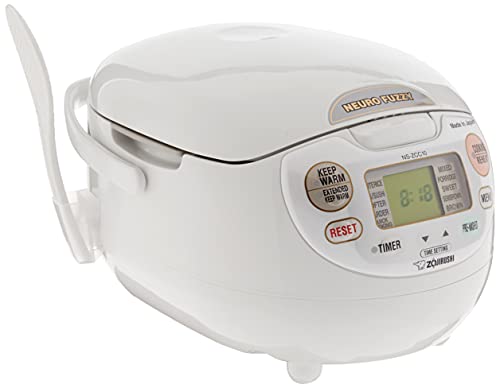
- Multiple specialized rice and porridge settings
- Spherical nonstick pan ensures uniform heating
- Retractable cord simplifies kitchen storage
- Automatic and extended keep-warm cycles
Cons
- Requires measuring with included cup only

Pros
- Integrated scale measures liquid directly inside pot
- Dishwasher-safe nonstick ceramic pot and inner lid
- Compact footprint under ten inches wide
- Includes steam basket for sides and proteins

Pros
- Integrated scale calculates exact water ratios automatically
- Sixteen presets cover grains, rice, and beans
- Large twelve-cup cooked grain capacity
- Includes dedicated steam basket
Cons
- Heavy 10.7-pound weight complicates frequent cabinet storage

Pros
- Built-in scale measures water directly in pot
- Dishwasher-safe ceramic pot and inner lid
- Compact footprint under ten inches wide
- Includes steam basket for steaming foods

Pros
- Large 20-cup cooked capacity for batch meals
- Integrated slow cook and saute-then-simmer presets
- Includes steam tray and ceramic-coated inner pot
- Switches automatically to keep-warm mode
Cons
- Bulky footprint takes up significant countertop space
- Minimum 4-cup cooked yield limits single-portion cooking

Pros
- Integrated scale calculates exact water ratios automatically
- Automated water tank dispenses measured liquid directly
- Includes 21 presets for grains, rice, and beans
- Comes with ceramic nonstick pot and steam basket
Cons
- Bulky footprint and 10.5-pound weight require counter storage
Selecting the Right Rice Cooker KitchenAid or Alternative
Integrated Scales and Water Management
Dedicated grain cookers take different approaches to adding liquid. Basic models rely entirely on plastic measuring cups, requiring you to balance water volumes manually. In contrast, advanced models like the KitchenAid Grain and Rice Cooker use a built-in scale to calculate water ratios by weight. Some high-end configurations even feature an integrated water tank that automatically pumps the required liquid into the pot based on your chosen ingredient setting.
Automated liquid systems speed up meal prep and reduce human error, which is useful when moving between different grains like lentils, barley, or jasmine rice. However, integrated water tanks add physical bulk, require regular rinsing to prevent standing water deposits, and introduce more mechanical parts to keep clean. If you cook mostly standard white rice, manual measuring remains reliable and keeps the appliance footprint compact.
Cooking Capacity and Finished Volume
Manufacturer capacities often refer to cooked rice rather than raw grain volume. Small units yield around 4 to 6 cups of cooked food, which covers daily portions for one or two diners without taking over a crowded counter. Mid-sized options yield 8 to 12 cups, making them better suited for families or advance meal preparation.
Cooking small portions in an oversized vessel can lead to thin, dried-out layers, while overfilling a compact cooker causes starchy foam to push past the steam vent. When balancing prep requirements alongside other countertop gear, such as toaster ovens best suited for daily dinners, matching the pot volume directly to your average batch size is essential.
Cooking Settings and Multi-Grain Presets
Simple switch-operated cookers run on a basic thermal sensor that switches off heat when liquid evaporates. This setup handles standard white rice well but struggles with tough-hulled grains that demand longer soaking or staged simmering temperatures. Units with computerized microprocessors adjust heating patterns dynamically based on grain type.
If your diet includes beans, farro, couscous, or steel-cut oats, buying a model with dedicated preset programs removes the trial-and-error phase. The trade-off is an interface that takes more steps to program than an elementary one-touch lever. Deciding how often you prepare non-rice grains will determine whether a touchscreen menu is a practical asset or unnecessary clutter.
Inner Pot Construction and Maintenance
Inner pots typically feature standard PTFE coatings, non-stick ceramic finishes, or raw metal. Ceramic non-stick liners, used on models such as the KitchenAid grain cookers, release sticky starches cleanly while remaining dishwasher-safe for fast kitchen cleanup. Removable inner lids and silicone gaskets also need frequent washing to prevent starchy residue from accumulating.
Thin aluminum liners with basic non-stick coatings are lighter and heat quickly, but they require strictly gentle hand-washing with plastic utensils to avoid surface scratches. Always check whether the inner pot, condensation collector, and steam vent cap detach easily before buying, especially if you dislike hand-scrubbing appliance parts after dinner.
Footprint and Storage Clearance
Vertical clearance matters just as much as counter width. Rice cookers vent steam upwards during the boil cycle, which can warp or peel wood veneers if operated directly underneath low-hanging wall cabinets. Some compact designs keep widths around 9 inches to squeeze between other gear, such as electric kettles stainless steel designs, while models with side handles or top-access water reservoirs need broader working space.
If you plan to store the unit inside a cabinet when not in use, consider total weight and power cord management. Retractable power cords and square-sided bodies store much more neatly on utility shelves than rounded cookers with dangling cords and loose exterior paddles.
How We Compared These Products
This guide is based on product research, published manufacturer technical specifications, and cataloged user feedback rather than hands-on laboratory testing. We examined stated liquid handling mechanisms, control panel designs, cooking capacities, and dishwasher safety details across major appliance makers to understand practical ownership differences. Product capabilities reflect verified listing documentation available at the time of publication.
Which Option Fits Your Kitchen?
For cooks who prepare mixed whole grains regularly and want automated measuring, the KitchenAid 8 Cup Grain and Rice Cooker offers significant functional benefits. Its integrated scale measures dry ingredients by weight, while the top water tank automatically dispenses the proper liquid ratio across 21 presets for oats, beans, farro, and rice. The ceramic cooking pot and steam basket fit easily in modern dishwashers, making it a strong choice for busy weekly routines if you have counter space for the base unit.
If you need maximum volume for batch cooking, soup prep, or feeding a large household, the Aroma Housewares Professional Plus ARC-5000SB 20 handles up to 20 cups of cooked grain. It includes dedicated steam, slow-cook, and saute-then-simmer programs alongside an included ceramic-coated pot, providing meal prep utility comparable to other large countertop units without taking on specialty grain-scale complexity.
For small apartments, dorms, or kitchens with minimal storage, the BLACK+DECKER Rice Cooker 6-Cup (Cooked) provides a compact footprint with straightforward mechanical operation. At 300 watts, it fits comfortably alongside small setups like microwaves countertop appliances, using a basic single-switch lever to handle 1 to 6 cups of cooked rice with minimal setup.
Frequently Asked Questions
How does an integrated scale improve grain cooking?
An integrated scale measures the actual weight of the rice, grains, or legumes placed in the pot instead of relying on volumetric cup estimates. This eliminates discrepancies caused by varying grain densities or uneven scoops, allowing the cooker to prompt for the exact amount of water needed for your selected texture.
Can I cook beans and other grains in a standard rice cooker?
Basic single-switch cookers are calibrated for rice absorption rates and often shut off too quickly when handling dry beans or firm grains like farro. Multi-cookers and specialized grain cookers provide lower simmering temperatures, programmed pre-soaks, and extended cook cycles required to soften dense pulses and whole seeds thoroughly.
Are the inner cooking pots dishwasher-safe?
Inner pot cleaning guidelines vary by manufacturer and surface material. Models with ceramic-coated cooking bowls and removable steam baskets are frequently rated for top-rack or standard dishwasher cleaning, while basic aluminum pots with thin non-stick coatings usually require gentle hand-washing to preserve the surface over time.
What is the difference between raw and cooked cup capacities?
Rice generally doubles to triples in volume as it absorbs water during the cooking cycle. A cooker labeled for 8 cups of cooked rice typically handles a maximum of 3 to 4 standard dry measuring cups of raw grain. Cooker product listings almost always highlight final cooked yields, so plan your portion sizes around dry input maximums.
Why does water boil over the steam vent during cooking?
Starchy boil-overs occur when rice is not rinsed before cooking, when the inner pot is filled past its rated capacity, or when an improper grain-to-water ratio creates excess foam. Rinsing excess surface starches off your grains under cold water before starting the cycle significantly reduces foaming through the lid vent.



Write Your Review
No reviews yet. Be the first to share your experience!