

Boiling water on standard stove surfaces takes time and ties up burner space. Many modern countertop appliances solve speed issues but introduce heated plastics directly into contact with drinking water. Finding electric kettles stainless steel construction throughout interior eliminates plastic contact while keeping heat times short.
Choosing right kettle requires balancing water capacity, heating element strength, safety shutoffs, and ease of mineral descaling. This guide examines how build materials and lid designs impact daily kitchen workflow.
Pros
- Zero plastic contact with water
- Fast heating under three minutes for two cups
- Wide mouth simplifies interior cleaning
- Automatic shut-off and boil-dry safety
Water Contact Materials
Interior materials directly impact water flavor and durability. Many appliances use metal walls but include plastic filter brackets, inner lid surfaces, or water gauge windows. Over prolonged heat cycles, low-quality plastics can degrade or impart unpleasant tastes into water.
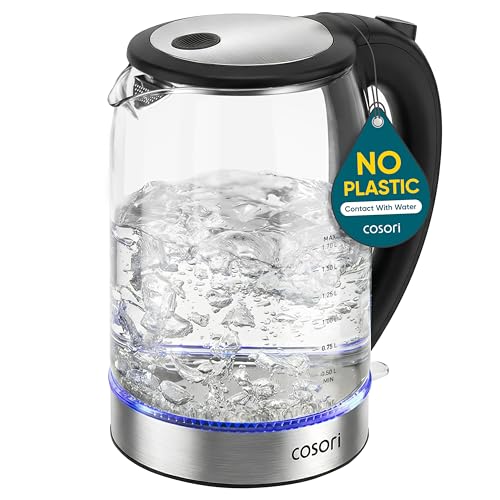
Look for designs explicitly eliminating plastic from all water-facing surfaces, including spout filter and inner lid. The Cosori Electric Kettle, No Plastic Contact utilizes all-metal contact inside kettle body. Trade-off involves lack of external water level view window, meaning you open lid to verify fill level.
Heating Speed and Element Wattage
Electric heating coils boil faster than traditional stovetop kettles on standard electric ranges. Quick heating speeds allow rapid preparation for morning pour-over coffee, tea brewing, or boiling water for grain dishes. Check manufacturer performance specifications for volume benchmarks. For instance, manufacturer listing for Cosori kettle notes ability to heat 0.5 liters (approximately two cups) in under three minutes.
Rapid heating saves time during breakfast prep, though faster heating rates require dedicated countertop outlet space without overloading kitchen appliance circuits. Explore other countertop choices across our wider Kitchen Appliances coverage to balance counter utility.
Interior Access and Cleaning
Hard water causes mineral scale buildup on interior stainless steel bases over regular use. Narrow kettle openings prevent hand entry, making scrubbing mineral deposits difficult and forcing complete reliance on vinegar or descaling solutions. Selecting kettle with wide mouth opening and wide-angle lid clearance simplifies daily interior wiping and periodic deep cleaning.
Safety Shutoff Mechanisms
Unattended kettles present boil-dry hazards if left heating after liquid evaporates. Reliable electric units incorporate two key safety mechanisms: automatic shutoff triggered by steam temperature sensors once boiling occurs, and boil-dry safety shutoffs that cut power if switched on empty. The Cosori model specifies automatic power cutoff within 30 seconds after reaching full boil.
Spout Design and Pouring Accuracy
Kettle spouts dictate water stream velocity and control. Broad, unshaped spouts dispense volume quickly for stockpots but splash when filling narrow mugs or drip coffee cones. Precision spouts control exit stream and reduce splash hazards, while heat-resistant handle materials protect hands from hot metal kettle body.
How We Compared These Products
Our assessment relies on product specifications, material disclosures, manufacturer performance data, and published user feedback rather than hands-on laboratory testing. We analyzed internal water-contact materials, rated capacities, safety features, pour mechanics, and maintenance requirements to identify functional kitchen advantages and trade-offs.
Which Option Fits Your Kitchen?
Home cooks seeking pure metal water contact without internal plastic components will appreciate the Cosori Electric Kettle, No Plastic Contact. Its 1.7-liter capacity supports family tea prep or multiple rounds of French press coffee, while wide-mouth opening simplifies lime scale maintenance in hard water regions. Cooks needing small-batch hot water in tight kitchen spaces can find specialized models across our Electric Kettles category page.
Frequently Asked Questions
Does water contact plastic inside this kettle?
The interior build of the Cosori Electric Kettle, No Plastic Contact is designed so boiling water and rising steam contact only stainless steel, avoiding interior plastic fittings, seams, or plastic lid linings.
How do you clean mineral scale from electric kettles stainless steel surfaces?
Boil equal parts water and distilled white vinegar inside kettle, let sit for twenty minutes, then discard liquid. Wide opening allows wiping interior clean with soft cloth before rinsing thoroughly with fresh water.
Can an electric kettle base be submerged in water?
No. Countertop kettle power bases contain electrical wiring and heating contacts. Wipe power base with damp cloth after unplugging; never submerge base or bottom electrical connection of kettle vessel in sink water.
Is 1.7 liters large enough for daily kitchen prep?
A 1.7-liter capacity yields approximately seven 8-ounce cups of water. This volume accommodates standard French press carafes, multiple cups of tea, or instant meal prep without requiring immediate second boiling cycle.
How does an automatic shut-off feature work on stainless kettles?
Internal thermostats detect steam pressure or temperature rises once water reaches 212 degrees Fahrenheit, tripping electrical circuit to turn unit off automatically within thirty seconds to prevent boil-over.


Write Your Review
No reviews yet. Be the first to share your experience!