

Water temperature changes extraction speed and flavor. Delicate green teas turn bitter under boiling water. French press coffee stalls when water cools too fast. Dedicated electric kettles temperature control models solve this problem by stopping heat at target heat points.
Choosing wrong unit wastes counter space or limits brew precision. Guide evaluates capacity, interface style, spout shapes, and cleaning access across 5 options from Cuisinart, Chefman, Cosori.

Pros
- Wide temperature range between 160°F and 212°F
- Included removable infuser steeps loose tea directly
- Color-changing LEDs display operating status clearly
- Fully removable lid simplifies filling and interior cleaning

Pros
- 1500W heating element for rapid boiling
- Lift-out lid enables straightforward interior cleaning
- Built-in automatic shutoff plus boil-dry protection
- Cordless glass carafe with 360-degree swivel base

Pros
- Five dedicated one-touch temperature presets
- Food-grade 304 stainless steel interior and spout
- Counterbalanced handle for controlled pour-over flow
- One-hour hold temperature function
Cons
- Modest 0.8-quart capacity limits multi-serving batch brewing
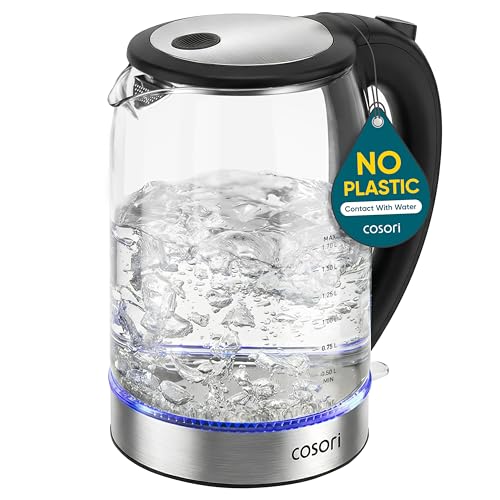
Pros
- Zero plastic contact with water
- Fast heating under three minutes for two cups
- Wide mouth simplifies interior cleaning
- Automatic shut-off and boil-dry safety
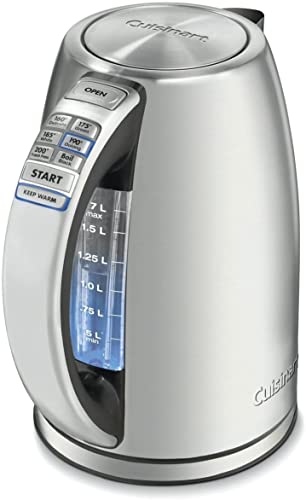
Pros
- Six preset heat settings
- Fast 1500-watt boiling power
- Thirty-minute keep-warm feature
- Two-minute internal memory function
- Cordless 360-degree swivel base
Cons
- Listed unit weight exceeds ten pounds
Buying Guide: Choosing Electric Kettles Temperature Control
Preset Heat Options vs Single-Boil Switches
Standard electric kettles run until steam trips bimetal switch at boiling point. Units with variable presets stop heating at specific thresholds like 160°F or 175°F. Chefman Electric Kettle with Temperature Control lists seven presets from 160°F to 212°F. Cuisinart Electric Kettle, 1500W provides six dedicated buttons for delicate, green, white, oolong, and black teas. If routine only requires boiling tap water for instant oats, basic single-switch models suffice. Multi-temp settings matter most for specialty tea drinkers seeking repeatable extraction.
Spout Design: Gooseneck vs High-Flow Spout
Spout geometry dictates pour velocity. Gooseneck designs restrict water flow for precise pour-over coffee circles. Cosori Gooseneck Electric Kettle with Temperature uses curved neck to prevent channel flooding in paper filters. Wide triangular spouts pour fast to fill soup pots, French presses, or mixing bowls quickly. Match spout to primary prep task. Choosing gooseneck for batch cooking slows meal workflow.
Interior Materials and Water Contact Surfaces
Material selection affects maintenance and taste perception. Glass bodies allow visual monitoring of boil activity and mineral buildup. Chefman glass models use borosilicate glass bodies paired with metal heating plates. Cosori Electric Kettle, No Plastic Contact features 304 food-grade stainless steel across interior wall, inner lid, and spout, preventing boiling water from touching plastic components. Stainless construction resists impact damage better than glass, while glass kettles show limescale earlier so cleaning stays on schedule.
Capacity, Counter Clearance, and Footprint
Capacity directly influences base size and vertical clearance below upper cabinets. Compact 0.8-liter gooseneck units fit tight counter nooks but require multiple boil cycles for large gatherings. High-capacity 1.7-liter and 1.8-liter carafes serve multiple mugs at breakfast but demand more clearance when lifting off 360-degree swivel bases. Measure space between counter surface and upper cabinets before selecting tall carafe profiles, particularly in small spaces alongside other small appliances.
Keep-Warm Modes and Base Memory
Water cools rapidly once power cuts. Keep-warm settings pulse heating element to maintain set target. Cosori gooseneck model holds temperature up to 1 hour within 5°F window. Cuisinart kettle holds heat for 30 minutes and includes 2-minute memory function. Memory function lets cook lift carafe to pour cup, then replace kettle onto base without resetting selected program. For morning routines spread over an hour, holding function avoids repeated reheat cycles.
How We Compared These Products
Guide relies on published manufacturer technical specifications, material declarations, control layouts, and aggregate customer feedback patterns rather than laboratory testing. We examined wattage ratings, stated temperature options, interface controls, base features, and lid removal access. We cross-referenced user notes regarding ease of descaling, button responsiveness, and pour stability to identify practical differences between glass and stainless steel models.
Which Option Fits Your Kitchen?
For pour-over coffee specialists needing directional water control, choose Cosori Gooseneck Electric Kettle with Temperature. Unit pairs 0.8-liter volume with 5 preset temperatures, 1-hour hold mode, and stainless interior that restricts flow for slow, controlled extractions.
For tea drinkers brewing loose leaves directly in kettle, choose Chefman Electric Kettle with Temperature Control. Glass model includes removable tea infuser basket, 1.8-liter capacity, seven preset temperatures, and tri-color LED indicators for mode tracking.
For multi-user households seeking fast water volume and simple button presets, choose Cuisinart Electric Kettle, 1500W. It provides 1.7-liter capacity, six presets, 30-minute hold function, and base memory that retains settings during brief pours.
Frequently Asked Questions
Why does temperature control matter for brewing tea?
Different tea varieties extract best at specific temperatures. Boiling water burns delicate green and white tea leaves, releasing excess tannins that cause harsh bitterness. Presets between 160°F and 185°F preserve sweet, grassy notes. Robust black teas and herbal infusions require full 212°F boil to extract proper flavor compounds.
How do you descale an electric kettle with mineral buildup?
Mineral scale forms on heating plates from hard water tap use. Fill kettle with equal parts water and white vinegar or dilute food-grade citric acid. Bring solution near boil, turn unit off, and let sit 20 to 30 minutes. Empty kettle, wipe loosened scale with non-abrasive sponge, and boil fresh rinse water twice before reuse.
Can you heat milk or soup inside an electric kettle?
No. Electric kettles are designed strictly for boiling plain water. Liquids containing sugars, fats, or dairy scorch against high-wattage heating plates at base. Burnt residue triggers auto-shutoff sensors prematurely and makes interior cleaning extremely difficult. Use saucepan on stovetop for dairy or broths.
What is the benefit of a gooseneck spout over a standard spout?
Gooseneck spout provides slow, balanced laminar stream. This control allows targeted pouring over coffee grounds in pour-over drippers without disturbing coffee bed. Standard wide spouts pour too quickly for pour-over filters but work faster when filling pots, French presses, or mugs.
How does auto shutoff work on temperature-controlled kettles?
Temperature-controlled kettles use internal thermistors that monitor water temperature continuously. Once sensor registers target preset, internal circuit interrupts current to heating coil. Secondary boil-dry safety sensors shut unit down if heating plate heats up without water present in carafe.

Write Your Review
No reviews yet. Be the first to share your experience!