

Finding the right blender often forces a choice between raw crushing power and manageable cabinet storage. A machine built to turn solid ice into drinkable slush can crowd compact prep areas, while a small single-serve setup might stall on tough frozen ingredients. Navigating options requires looking closely at actual motor ratings, container shapes, and cleanup steps before clearing space on your counter.
This guide compares key designs to help you determine which blenders best match your cooking volume, prep habits, and available storage. Whether you need full family batches of frozen drinks or individual morning smoothies without extra dishes, matching motor specifications and jar styles will prevent buyer remorse. If you are outfitting a full kitchen on a budget, exploring budget-friendly blenders provides extra context for balancing features against upfront cost.

Pros
- 1400-peak-watt motor handles dense frozen ingredients
- Three automated Auto-iQ presets simplify drink prep
- Top-rack dishwasher-safe pitcher and blade assembly
- Large 64-ounce max liquid blending capacity
Cons
- Tall 17.5-inch height may challenge low upper cabinets
- Max liquid capacity capped at 64 ounces

Pros
- Compact footprint fits small counters easily
- Top-rack dishwasher-safe cups simplify cleanup
- Includes multiple cups and portable lids
- Simple push-to-blend mechanism requires no buttons
Cons
- 250-watt motor limits dense blending tasks
- Blade assembly requires manual sink washing

Pros
- Includes two 16-ounce cups with to-go spout lids
- Removable components are top-rack dishwasher safe
- Three manual speeds plus pulse and single-serve functions
Cons
- Pitcher maximum liquid capacity is 64 ounces

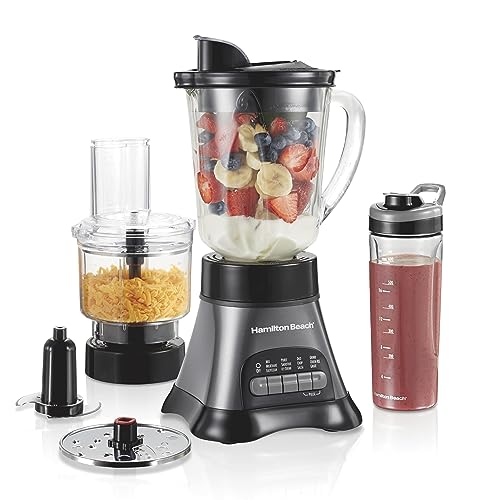
Pros
- Powerful 1500-watt motor base for tough blending
- Includes food processor bowl and personal travel cups
- Removable accessories are top-rack dishwasher safe
Cons
- Tall 18-inch profile requires significant cabinet clearance
- Pitcher usable liquid capacity limited to 64 ounces
- Blades require extreme caution during handling and cleaning
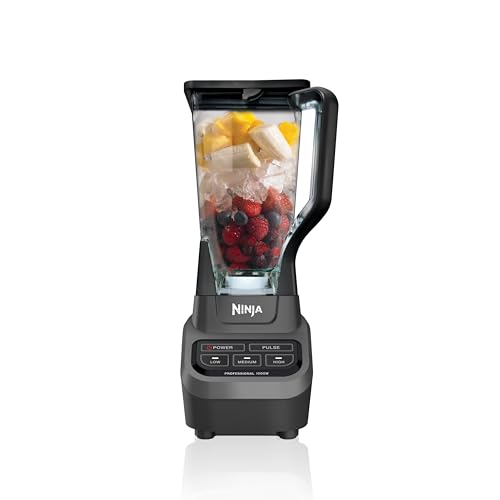
Pros
- 1000-watt motor crushes ice into snow quickly
- Large 72-ounce pitcher fits multi-serving batches
- Dishwasher-safe BPA-free pitcher simplifies cleanup
Cons
- Liquid capacity capped at 64 ounces
- Tall 15.94-inch height may challenge low cabinets

Pros
- Compact footprint fits small countertop spaces
- Top-rack dishwasher safe removable parts
- Includes two 16-ounce travel cups with lids
- 700-watt motor blends ice and frozen fruit
Cons
- 16-ounce capacity restricts blending to single servings
Buying Guide: How to Find the Blenders Best Suited for Your Needs
Choosing an effective blending machine requires looking beyond raw peak wattage numbers. Daily satisfaction usually hinges on container usability, practical blade layouts, control options, and the physical cleaning effort required after cooking.
Pitcher Volume Versus Usable Liquid Capacity
Total container size does not always represent the amount of liquid you can process safely. Many full-size jars advertise an overall volume of 72 ounces, yet manufacturers designate a maximum liquid fill line at 64 ounces to leave essential head space for blending action. Pushing beyond these listed limits often results in leaks through the lid seal or uneven circulation of thick mixtures.
For cooks preparing food strictly for one or two people, oversized pitchers create unnecessary dishwashing bulk and require larger ingredient quantities to submerge the blades properly. Single-serve cups, ranging from 16 to 22 ounces, eliminate extra prep vessels but restrict processing to quick drinks and light purees. Consider whether your typical meal prep involves large shared batches or fast individual servings when selecting container size.
Motor Power and Duty Cycles
Motor ratings across consumer machines vary significantly, from compact 250-watt bases up to 1500-watt power units. Higher wattage generally provides the torque needed to turn dense frozen fruit, heavy dough, or hard ice into uniform textures without motor strain. However, higher power draw generates more mechanical noise, requires heavier base construction, and demands standard household circuits capable of handling the electrical load.
Lower-wattage units, such as personal blenders drawing between 250 and 700 watts, work well for light sauces, protein powders, and soft produce. Running tough ingredients through a lower-powered motor requires added liquids or pre-chopping to prevent stalling. When evaluating power claims, focus on what you blend most frequently rather than paying for excess wattage you might never challenge.
Blade Assembly and Processing Geometry
Blade design determines how efficiently ingredients circulate through the jar. Traditional blenders position fixed or removable cutting assemblies at the very bottom of the jar, relying on a fluid vortex to pull food down. Stacked blade assemblies place cutting edges on a central vertical shaft, allowing the machine to chop items near the top and bottom of the pitcher at the same time.
Stacked systems crush whole ice cubes and chunky items quickly without constant tamping, but they demand extreme caution when handling or pouring because the blade tower is often loose inside the vessel. Bottom-mounted extractor blades create a tighter vortex suitable for single-serve cups and emulsifications. The geometry you choose directly influences safety during cleanup and the consistency of delicate mixtures.
Controls: Automated Programs Versus Manual Speeds
Control interfaces range from basic push-down cups with no switches to multi-button panels equipped with programmed cycles. Timed pulse programs combine specific blending bursts with pauses to allow suspended ingredients to settle back down toward the cutting blades. This takes the guesswork out of crushing ice or cycling frozen fruit blends.
In contrast, manual multi-speed dials or low, medium, and high buttons offer total control when incorporating delicate ingredients or avoiding over-processing. If you plan to make smooth emulsions, having low manual speeds is crucial to prevent splitting. Push-to-blend controls provide instant responsiveness for small cups but require you to hold the vessel down throughout the entire process.
Maintenance, Safety, and Cleaning Workflows
A machine that is difficult to wash will quickly end up unused in a cabinet. Most modern jars, cups, and removable blade assemblies are top-rack dishwasher safe, though washing them by hand preserves plastic clarity over long periods. Removable blades provide direct access to the lower seal where food residue can collect, but handling sharp, exposed cutting assemblies requires careful attention.
Tall pitchers with locking lids may also feature tight crevices around the pour spout or handle that need dedicated brushing. If your kitchen cleanup involves quick manual washing after meals, verify how easily the components break down. Kitchen tool care varies widely across categories; just as preserving cookware demands specific habits like seasoning cast iron cookware or understanding caring for nonstick pans, appliance longevity depends on proper cleaning routines.
How We Compared These Products
This comparison is based on careful analysis of published manufacturer technical specifications, included accessories, jar capacities, and verified consumer feedback rather than direct laboratory testing. We examined differences in wattage ratings, usable fill limits versus total capacities, blade design mechanisms, and listed dishwasher compatibility across all models. By evaluating reported user experiences and published features, we mapped each model to specific kitchen prep tasks, space constraints, and cleanup routines.
Which Option Fits Your Kitchen?
If you regularly entertain or prepare large batches of icy drinks for a household, the Ninja Professional Plus Blender, Auto-iQ, 1400W offers a generous 72-ounce pitcher with a 64-ounce liquid limit. Its 1400-watt motor and stacked Total Crushing blades handle large volumes of ice efficiently, while the built-in Auto-iQ presets take out the guesswork by running automated pulse cycles.
When counter footprint and quick single-serving prep are your primary concerns, the magic bullet® Personal Blender, 22 oz Cup fits easily into tight kitchen layouts. With a compact 250-watt motor base and cups that double as drinking vessels, it simplifies morning smoothies, quick dips, and light dressings while keeping post-meal dishwashing to an absolute minimum.
For cooks who need one machine to handle prep work, baking tasks, and shared drinks, the Ninja Kitchen System Pro, 1500W, 72oz Pitcher delivers expansive versatility. The 1500-watt base powers an XL blending pitcher, an 8-cup food processing bowl capable of mixing up to 2 pounds of dough, and two 16-ounce personal cups for portable morning routines.
Frequently Asked Questions
What is the difference between total capacity and maximum liquid capacity?
Total capacity measures the entire physical volume of the container up to the rim, whereas maximum liquid capacity marks the safe upper limit for active blending. In a 72-ounce container, the liquid limit is typically 64 ounces. Leaving this head space allows contents to expand and circulate freely without pushing liquid out through the lid seals.
Can personal blenders crush ice effectively without added liquids?
Most compact personal blenders rely on liquid to create a vortex that feeds solid ingredients into the bottom blade assembly. Running ice cubes or dense frozen fruit without liquid in a small cup can stall the motor or wear down the blade gears. Adding a small amount of water, juice, or milk creates the necessary flow for uniform processing.
Are blender blades safe to clean in the dishwasher?
Most manufacturers state that their removable blade assemblies, pitchers, and cups are safe for the top rack of household dishwashers. However, frequent exposure to high heat cycles can dull sharp blade edges and cause rubber sealing rings to degrade over time. Hand washing blades with a long-handled brush remains the safest method for preserving cutting performance.
Can I process hot soups in standard personal blending cups?
You should never blend hot liquids in sealed personal blending cups. The heat from boiling soup quickly creates steam pressure inside the airtight container, which can force the vessel to pop off or burst violently when opened. Hot purees should only be prepared in vented, full-size pitchers designed to release steam during operation.
How do stacked blade systems compare to standard bottom blades?
Stacked blade assemblies feature multiple tiers of blades running up a central spindle inside the pitcher. This layout quickly breaks down large ice cubes and whole fruits throughout the height of the jar without needing a tamper. Bottom blade systems create a tighter vortex that works better for single portions, salad dressings, and silky vegetable purees.
Will a higher motor wattage always yield a smoother puree?
Higher motor wattage provides more raw power and torque to overcome heavy resistance, preventing the machine from overheating during tough tasks. However, final smoothness also depends heavily on jar shape, blade angles, and blending speed. A well-designed container that pulls ingredients continuously through the blades often outperforms a poorly shaped jar with a larger motor.




Write Your Review
No reviews yet. Be the first to share your experience!