

Countertop space creates tough choices between quick reheating speed and real browning power. Standard microwave units warm leftovers fast but leave food soggy, while extra appliances clutter prep surfaces. Finding microwaves best matched to small counters means balancing interior room against cooking modes.
This guide evaluates multi-function design, heating methods, and footprint limitations. Compare models through our countertop microwave category to pick right configuration for daily cooking routines.

Pros
- Generous 12.4-inch turntable fits standard dinner plates
- One-touch express cook options up to six minutes
- Ten power levels with multistage cooking support
- White LED display and bright interior lighting
Cons
- Heavy 33.1-pound weight makes frequent relocation difficult
- Footprint spans over 20 inches of counter space

Pros
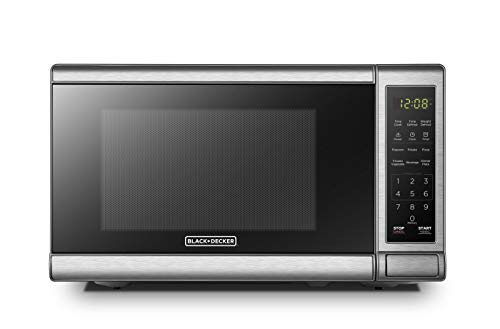
- Compact footprint for tight kitchen counters
- Eleven distinct power levels
- Dedicated one-touch express start buttons
Cons
- 10.6-inch turntable restricts oversized dish sizes
- Two-step door access slows routine opening
Buying Guide: Choosing Microwaves Best Suited for Your Home
Usable Capacity and Countertop Footprint
Interior volume limits dish size. Compact 1.0 cubic foot cavity accommodates standard dinner plates and low-profile baking dishes. Exterior dimensions matter for placement under upper cabinets. Unit measuring 13.98 inches wide, 9.49 inches high, and 13.23 inches deep leaves counter room for cutting boards but limits large casserole vessels. Measure prep surfaces before selection.
Cooking Modes and Heating Versatility
Standard units rely strictly on magnetron output. Combination units add convection circulation, quartz broil elements, and air fry settings. Multi-mode units reduce need for separate countertop gadgets. Cooks wanting crisper texture should check our air fryer microwave combo guide before buying basic reheating units.
Wattage and Power Delivery
Wattage dictates heating speed. Rating of 1,050 watts provides rapid liquid boils and fast plate warming without overloading standard household circuits. Lower wattage units cook slower, while higher ratings draw significant current. Balanced wattage keeps cook cycles predictable.
Dedicated Accessories and Rack Configuration
Convection and broil modes need elevated racks for proper air movement. Tall racks position proteins near broil elements for searing. Short racks let heated convection air pass underneath baking tins. Stainless steel crisper pans catch grease during air fry cycles. Verify accessory inclusion to avoid separate purchases.
Noise Output and Kitchen Placement
Cooling fans and turntables generate operational sound. Whisper-quiet operation benefits open floor plans, dorms, and studio apartments. Loud exhaust systems disrupt quiet living spaces during late-night reheating. Check sound profiles if operating near work areas.
How We Compared These Products
This guide is based on manufacturer specifications and product information rather than hands-on testing. No firsthand laboratory testing was conducted. Analysis prioritizes space utility, stated wattage, multifunction settings, and build materials across small kitchen appliances to guide purchase decisions.
Which Option Fits Your Kitchen?
For cooks needing multi-appliance performance in single small footprint: GE GCST10A1WSS Countertop Microwave Oven combines 1,050-watt microwave reheating with convection, broiling, and dedicated air frying in compact 1.0 cu. ft. frame.
For noise-sensitive studio apartments or shared office spaces: GE GCST10A1WSS Countertop Microwave Oven offers whisper-quiet operation alongside one-touch preset buttons for quick reheating without loud disruptions.
For cooks prioritizing pure frying capacity over microwave speed: dedicated standalone appliances detailed in our top air fryers review provide larger baskets for bulk batch cooking.
More countertop microwaves to compare: the Sharp SMC1161KB 1.1 Cu. Ft. Countertop Microwave, the compact Toshiba 0.9 Cu. Ft. 900W Microwave, and the larger Toshiba 1.2 Cu. Ft. Countertop Microwave 1000W. Match interior size to your largest dish and wattage to how much you cook from frozen.
Frequently Asked Questions
Can metal wire racks stay inside during microwave cooking?
Remove metal racks during pure microwave mode unless manufacturer instructions explicitly direct otherwise. Use tall wire rack strictly for broiling and short rack for convection circulation to prevent electrical arcing.
How do you clean stainless steel crisper pan?
Wash stainless crisper pan using warm water, mild dish soap, and non-abrasive sponge. Soak stuck grease before scrubbing to protect metal surface finish.
Is 1,050 watts sufficient for daily meal prep?
Yes. Output of 1,050 watts handles standard reheating tasks, heats frozen entrees evenly, and powers convection elements without tripping standard 15-amp kitchen circuit breakers.
Does convection mode replace standard toaster oven?
Convection setting bakes personal pizzas, cookies, and roasted side dishes using fan-driven hot air. Cavity size remains smaller than full-size ovens but matches most countertop toaster units.
What clearance space does multi-function microwave require?
Convection and air fry cycles vent substantial hot air. Maintain several inches of clear open space above top exhaust and along side vents to prevent cabinet heat damage.



Write Your Review
No reviews yet. Be the first to share your experience!