

Ceramic cookware non stick pans promise slippery surfaces without traditional fluoropolymer coatings, but finding the right set requires balancing storage limits against everyday cooking habits. Many cooks struggle with pans that crowd compact cupboards, warp under sudden heat shifts, or lose release properties after aggressive washing.
This comparison examines vessel capacities, stovetop compatibility, and handle configurations across 10 popular sets. Understanding these differences ensures you select pieces that fit your daily meal prep rather than storing excess pans you never use.

Pros
- Detachable handle enables compact nesting storage
- Compatible with induction, gas, electric, and ceramic cooktops
- Pan bodies oven-safe up to 480 degrees Fahrenheit
- PTFE-free and PFOA-free ceramic nonstick surface
Cons
- Detachable handle is not oven-safe
- Requires medium-low heat and non-metal utensils
- Handle requires removal before dishwasher cleaning

Pros
- Detachable handles enable compact nesting and storage
- Compatible with induction, gas, and ceramic hobs
- Oven-safe cookware design with handles removed
- PFOA-free nonstick surface simplifies manual cleaning

Pros
- Compatible with all stovetops including induction
- Rivetless interior simplifies everyday cleaning
- Oven safe up to 550 degrees Fahrenheit
- Includes matching lids, silicone utensils, and pan protectors
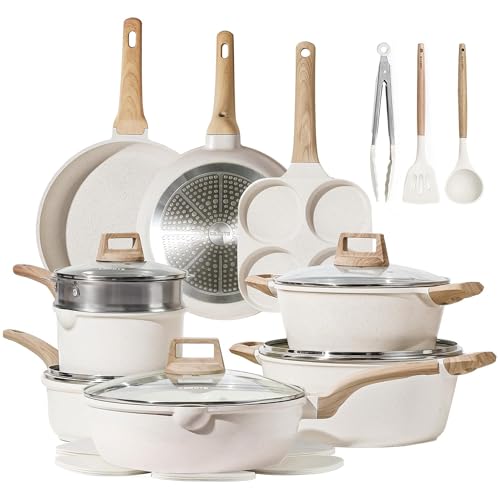
Pros
- Compatible with all cooktops including induction
- Lightweight die-cast aluminum construction heats quickly
- Includes four pan protectors plus basic cooking utensils
- Includes 12-month manufacturer warranty from purchase date
Cons
- Hand washing recommended instead of dishwasher use

Pros
- Works on induction and all standard cooktops
- Coating free of PTFE, PFOA, PFAS, and lead
- Thick 4.8mm base heats quickly and evenly
- Stay-cool Bakelite handles provide comfortable grip
Cons
- Hand washing recommended to protect nonstick surface
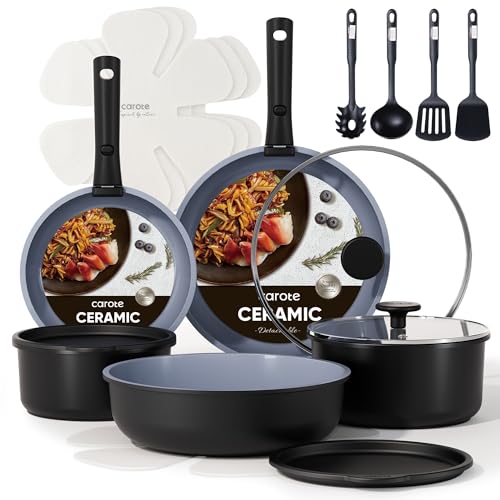
Pros
- Compact nested storage with handles removed
- Compatible with all cooktops, ovens, and grills
- Includes fridge storage lids and pot protectors
- Two removable handles included for multi-pan cooking
Cons
- Lids do not fit while handles are attached

Pros
- Die-cast aluminum build resists daily kitchen wear
- Silicone lids create airtight seal trapping steam
- Coating manufactured without PFOA or PFOS
- Includes four protective pads for nested storage
Cons
- Hand washing recommended over automatic dishwashing

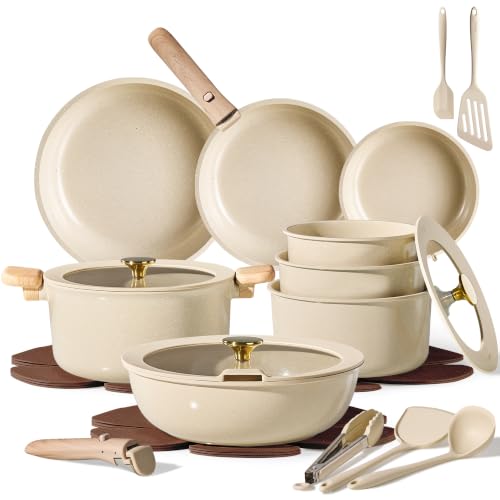
Pros
- Detachable handles save significant storage space
- Works on induction, gas, electric, and ceramic stovetops
- Ceramic nonstick surface cleans by hand or dishwasher
- Includes protective pan separators to prevent stacking scratches
Cons
- Only two detachable handles shared across eight vessels

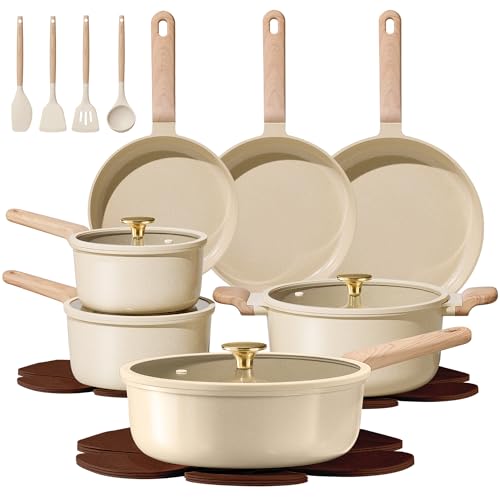
Pros
- Integrated pour spouts facilitate clean liquid draining
- Silicone-rimmed glass lids seal tightly and prevent chipping
- Dishwasher-safe construction streamlines cleanup
- Includes utensils, silicone trivets, and pan protectors
Buying Guide for Ceramic Cookware Non Stick Sets
Handle Styles and Storage Footprint
Cookware storage creates friction in smaller kitchens. Traditional riveted or screwed handles stick out at awkward angles, forcing you to spread vessels across multiple shelves or stack them haphazardly.
Sets designed with detachable clip-on handles solve this by letting pans nest inside one another like bowls. The trade-off is mechanical handling: you must remove and reattach the gripping mechanism between tasks, and pan lids rarely seal securely while a clamp handle remains attached. If you keep pots on open racks, fixed ergonomic handles avoid that extra assembly step entirely.
Base Construction and Heat Distribution
The metal core beneath the ceramic coating determines cooking consistency. Most ceramic sets use cast or pressed aluminum bodies bonded to magnetic stainless steel base plates, allowing fast heat transfer on gas, electric, and induction burners.
Thicker aluminum walls prevent hot spots that can scorch delicate ingredients like dairy sauces or eggs. Thinner stamped pans heat rapidly but risk warping if subjected to rapid temperature changes, such as rinsing a hot skillet under cool tap water. Cooks seeking heavier thermal retention for high-heat searing might alternate these pans with traditional options found in our cast iron cookware buying guide.
Interior Rivets and Cleaning Friction
Cleaning nonstick pans should take seconds, yet hardware placement alters maintenance routines. Pans with interior mounting rivets collect grease, burnt fat, and batter along the bolt edges, demanding focused scrubbing that can degrade the adjacent coating.
Smooth, rivetless interiors eliminate food traps entirely, letting you wipe the surface clean with a soft sponge. While dishwasher cleaning is claimed by several manufacturers, harsh alkaline detergents and mechanical vibration accelerate ceramic wear. Hand washing with mild soap preserves the release properties significantly longer.
Oven Compatibility and Thermal Limits
Finishing a frittata or braise requires vessels that safely transfer from stovetop to oven. Ceramic pans without attached plastic components withstand high ambient oven temperatures, often reaching between 480 and 550 degrees Fahrenheit depending on the model.
However, Bakelite or faux-wood fixed handles degrade quickly under direct oven heat and should stay on the stovetop. When using modular sets, you must detach clamp handles before sliding pans into the oven cavity. For tasks demanding unlimited oven heat or broiler exposure, dedicated pieces highlighted in our stainless steel cookware sets comparison remain the sturdier tool.
Set Composition Versus Usable Pieces
Large piece counts look generous on paper, but accessory bloat often inflates the final inventory. A package labeled as twenty-one pieces might include only six cooking vessels, with the remainder composed of silicone scrapers, felt pan protectors, detachable handles, and plastic fridge lids.
Review the exact dimensions and liquid capacities of the actual pots. If you regularly simmer large soups or cook for several people, prioritize sets providing deep 5-quart or 6.5-quart stockpots over configurations heavy on miniature skillets. If your cooking centers on single portions, consult our non stick fry pan guide to evaluate standalone skillets instead.
How We Compared These Products
This comparison relies on detailed research into published product specifications, manufacturer material disclosures, and common user feedback rather than hands-on laboratory testing. We evaluated the 10 sets by comparing aluminum core thicknesses, stated stovetop and induction compatibility, oven temperature ratings, vessel capacities, and included accessory utility to highlight practical differences for home kitchens.
Which Option Fits Your Kitchen?
For RV kitchens, small apartments, or cramped cabinets, nesting capability takes priority over fixed hardware. The CAROTE 19pcs Ceramic Cookware Set Detachable supplies two removable handles alongside silicone storage lids, allowing you to move vessels straight from the stovetop to the refrigerator while saving roughly 70 percent of cupboard space.
For cooks who prepare larger batches and need substantial liquid capacities, the CAROTE 21pcs Pots and Pans Set offers a generous mix of cookware. It includes a 4-quart stockpot, a large 6.5-quart stockpot, and a deep 4.5-quart sauté pan, giving growing households the volume necessary for soups, stews, and multi-portion meal prep.
For standard daily meal preparation prioritizing simple cleanup and traditional handling, the SENSARTE Nonstick Ceramic Cookware Set is a practical fit. Its rivet-free interior prevents grease buildup around handle joints, while the cast aluminum body and stainless steel base provide even heating across all cooktops without requiring detachable handle adjustments.
Frequently Asked Questions
Can ceramic nonstick cookware be used on induction cooktops?
Yes, provided the vessel features a bonded ferromagnetic base plate. While ceramic itself is not magnetic, the sets compared here use stainless steel bottom plates attached to aluminum bodies, allowing induction burners to detect the pan and generate heat.
Why should you avoid high cooking heat with ceramic coatings?
Excessive heat breaks down ceramic release layers much faster than moderate temperatures. Cooking on low to medium settings protects the nonstick coating from microscopic thermal degradation, preserves food release performance, and prevents cooking oils from carbonizing onto the surface.
How do you safely wash ceramic nonstick pots and pans?
Allow the pan to cool completely before cleaning to avoid thermal shock that can warp the metal core. Use warm water, mild liquid dish soap, and a soft cloth or non-abrasive sponge. Avoid steel wool, scouring pads, and harsh machine detergents that strip nonstick slickness.
Are detachable handles secure while lifting full pots?
Modern detachable systems use locking clamp mechanisms designed to hold the pan rim firmly without slipping during normal stovetop use. However, you must ensure the clamp is fully locked before lifting heavy, liquid-filled vessels, and remove handles prior to putting pans in hot ovens.
Which cooking utensils work best on ceramic surfaces?
Silicone, wooden, and heat-resistant plastic utensils protect the ceramic surface from scratches. Metal spoons, turners, or whisks can chip the mineral layer, creating tiny imperfections where food will begin to stick over time.


Write Your Review
No reviews yet. Be the first to share your experience!