

Brewing loose leaves or delicate herbal blends requires precise heat management. Using water boiled at a flat 212 degrees Fahrenheit scorches green tea leaves, while underheated water leaves robust black teas flat and weak. Finding the right electric kettle for tea comes down to weighing temperature options against counter space, interior material contact, and everyday cleaning convenience.
Countertop footprints and maintenance needs differ significantly between models. Some units focus on variable presets and built-in steepers, while others prioritize seamless interior surfaces to minimize plastic contact or simplify descaling. This guide reviews 3 models from Chefman, Cosori to help identify the best fit for your daily brewing habits.

Pros
- Wide temperature range between 160°F and 212°F
- Included removable infuser steeps loose tea directly
- Color-changing LEDs display operating status clearly
- Fully removable lid simplifies filling and interior cleaning

Pros
- 1500W heating element for rapid boiling
- Lift-out lid enables straightforward interior cleaning
- Built-in automatic shutoff plus boil-dry protection
- Cordless glass carafe with 360-degree swivel base
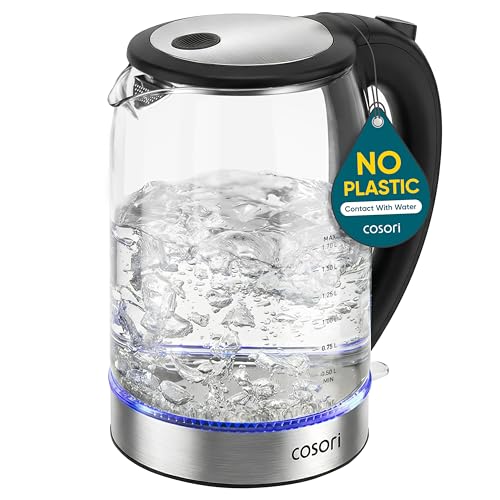
Pros
- Zero plastic contact with water
- Fast heating under three minutes for two cups
- Wide mouth simplifies interior cleaning
- Automatic shut-off and boil-dry safety
How to Choose an Electric Kettle for Tea
Temperature Control and Presets
Different tea varieties demand specific water temperatures to extract balanced flavor without excessive bitterness. Green and white teas generally brew best between 160 and 180 degrees Fahrenheit, while oolong, black, and herbal infusions require hotter water near a full boil. Single-switch units boil water to a fixed shutoff point, forcing users to manually time cooling or estimate temperatures. In contrast, models with multi-stage presets remove guesswork. If you rotate between delicate greens and robust blacks, dedicated settings reduce brewing errors considerably.
Internal Materials and Water Contact
The surfaces that contact boiling water affect long-term maintenance and flavor neutrality. Borosilicate glass provides full visibility of the boiling process and water level, but it requires regular wipe-downs to prevent mineral scale from showing. All-metal interiors eliminate contact with synthetic seals or plastic components entirely. Reviewing internal construction helps ensure your heated water contacts only your preferred materials, whether you favor visual clarity through glass or seamless metal walls.
Capacity Versus Countertop Space
Most standard countertop boilers hold between 1.7 and 1.8 liters of water. A larger vessel handles multiple mugs or a full teapot in a single boil, which suits entertaining or high-volume kitchens. However, taller and wider carafes take up valuable prep area and require extra vertical clearance beneath upper cabinetry. Like positioning other counter equipment explored in our guide to kitchen appliances, measure your designated prep zone before choosing between high capacity and compact storage.
Cleaning Access and Lid Construction
Mineral buildup naturally accumulates on heating plates over time, especially in homes with hard tap water. Kettles with narrow openings or non-removable hinged lids restrict hand access, turning descaling and towel drying into tedious chores. A wide-mouth opening or a completely lift-out lid lets you reach the bottom corners effortlessly to wipe away scale. Checking lid clearance ensures routine cleaning remains manageable rather than frustrating.
Pouring Spouts and Built-In Accessories
Spout shaping determines how cleanly hot water transfers into cups, French presses, or narrow mugs. Precision spouts prevent drips down the carafe wall and minimize splashing hazards during rapid pours. In addition, some units integrate removable stainless steel loose-leaf infusers directly into the carafe. A built-in steeper saves counter space by eliminating secondary teapots, though steeping directly in the main vessel requires thorough rinsing between different tea varieties to avoid flavor crossover.
How We Compared These Products
This comparison relies on detailed product specifications, manufacturer documentation, and verified design details rather than independent laboratory testing. We analyzed operational features across all 3 models, focusing on rated capacities, listed boiling speeds, interface controls, lid designs, and internal material compositions. By evaluating these published specifications alongside standard tea preparation requirements, we identified the practical trade-offs each design presents on a home countertop.
Which Option Fits Your Kitchen?
For tea drinkers who prepare delicate varietals like green or white tea, multi-temp control is essential. The Chefman Electric Kettle with Temperature Control includes seven preset temperatures from 160 to 212 degrees Fahrenheit, tri-color status indicator lights, and an integrated removable tea infuser for direct brewing inside the 1.8-liter glass carafe.
For kitchens that prioritize straightforward boiling without complex programming, the Chefman Electric Kettle, 1.8L 1500W delivers rapid heating with a single-switch operation. Its borosilicate glass body features blue heating LEDs, a fully removable lift-out lid for straightforward filling, and automatic shutoff once boiling finishes.
If minimizing water contact with synthetic materials is your primary concern, the Cosori Electric Kettle, No Plastic Contact provides an interior where boiling water avoids plastic surfaces entirely. It offers a 1.7-liter capacity, a wide-mouth lid opening designed for simple hand access during descaling, and a targeted pouring spout to prevent countertop drips.
Frequently Asked Questions
Can loose tea leaves be brewed directly inside every kettle?
No. Standard kettles are designed exclusively to boil pure water. Loose leaves placed directly into a basic kettle can scorch against the heating element base and clog internal spout filters. Direct steeping is only appropriate if the appliance includes a specialized, suspended steeping basket designed to keep botanical material away from the heating floor.
How often should an electric tea kettle be descaled?
Descaling frequency depends on your local water hardness and daily usage volume. Homes with moderate to hard water typically require descaling every four to six weeks to clear chalky mineral spots from the base. Running a heated cycle with diluted white vinegar or food-grade citric acid, followed by a plain water rinse, restores heat transfer efficiency.
Why does water temperature matter when brewing tea?
Substances like catechins and tannins extract rapidly at high temperatures, creating harsh astringency in delicate green and white teas. Keeping water between 160 and 180 degrees Fahrenheit extracts sweet, aromatic notes without burning the leaves. Conversely, black tea and herbal botanicals require boiling water at 212 degrees to fully extract body and soluble compounds.
Are glass electric kettles heavier than plastic or metal models?
Thermal-shock-resistant borosilicate glass adds noticeable empty weight compared to single-wall metal or plastic housings. When filled to an advertised 1.7- or 1.8-liter line, a glass vessel can weigh upwards of four to five pounds total. Cooks with wrist strain may prefer kettles with broad, ergonomic handles and balanced base placement to facilitate safe lifting.
How do cordless electric kettles work?
Cordless kettles use a specialized power base that remains plugged into the electrical wall outlet. The kettle body rests atop a 360-degree contact plate, allowing the jug to be lifted off cleanly without an attached cord dragging across counters or catching on nearby electric kettles and appliances.

Write Your Review
No reviews yet. Be the first to share your experience!