

Leftovers, packed lunches, and batch-cooked meals rarely fit one container size. Choosing glass storage means weighing portion flexibility and lid convenience against cupboard space and cleanup.
This guide to best food storage containers glass compares sets by capacity mix, sealing design, stacking, materials, and stated microwave, freezer, oven, and dishwasher compatibility. Use those details to match containers to the food you store most often.

Pros
- Oven-safe glass bases
- Vented lids for reheating
- Nine assorted capacities
- Stackable modular design
Cons
- Set weighs 14.87 lb
- Who should skip it: cooks seeking a lightweight set
Pros
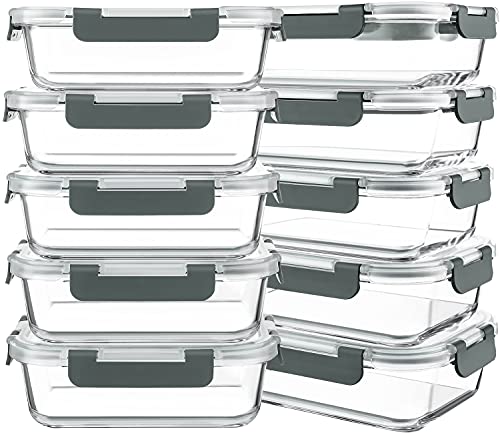
- Ten matching 30 oz containers
- Borosilicate glass construction
- Snap-lock lids with silicone seals
- Freezer-compatible containers
Cons
- Plastic lids must be removed for microwave and oven use
- Who should skip it: cooks needing oven- or microwave-safe lids

Pros
- Nine containers in mixed sizes and shapes
- Glass resists stains and odors, according to product claims
- Lids compatible with freezer, microwave, and top-rack dishwasher
Cons
- Plastic lids require top-rack dishwasher placement
- Who should skip it: shoppers seeking a stated leak rating

Pros
- Four roomy 8-cup containers
- Removable silicone sealing rings
- Stackable rectangular design
- Oven, microwave, freezer, and dishwasher compatibility
Cons
- Large containers may not suit small portions
- Who should skip it: cooks needing compact containers

Pros
- Two container sizes in one set
- Stackable for storage
- Glass listed as dishwasher safe
Cons
- Lids must be removed before heating
Pros
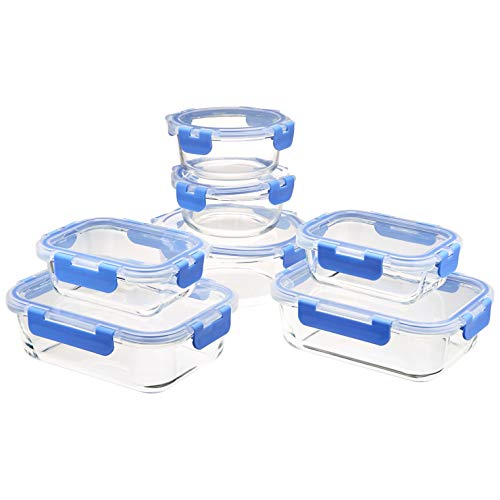
- Four container capacities
- Leak-proof locking lids
- Freezer, microwave, and oven-safe containers
- Dishwasher-safe containers and lids
Cons
- Lids are not oven safe
- Who should skip it: cooks needing oven-safe lids

Pros
- Leakproof, airtight lids
- Oven-safe glass bases
- Stackable, freezer-safe design
- Vented microwave lids
Cons
- Lids must be unlatched for microwave reheating
- Who should skip it: cooks needing larger capacities

Pros
- Eight containers in two shapes
- Oven, microwave, freezer, and dishwasher compatibility listed
- Nesting storage design
- Removable silicone lid seals
Cons
- Listed capacities top out at 35.1 ounces
- Who should skip it: cooks needing larger storage portions
Buying Guide: Best Food Storage Containers Glass
Capacity and shape
Capacity determines whether a container suits a single serving, a side dish, or a larger batch. Mixed-size sets offer flexibility, while sets focused on one size simplify meal portions but may not suit every leftover. Pyrex Simply Store (9-Pack) includes round and rectangular containers from 1 to 7 cups. Snuvid’s four containers are each listed at 63 ounces, a format aimed at larger portions and bulkier leftovers.
Match container size to your usual portions and available fridge shelves. Check dimensions before buying if shelf height or lunch-bag fit matters, since dimensions are not provided for every set. For portioned lunches in a different format, see our meal prep containers guide.
Lid seal and carrying needs
Snap-lock lids with silicone seals are specified on several sets, including Vtopmart, Dealusy, and KOMUEE. These designs are intended to limit leaks, which may matter for soup or transport. Rubbermaid Brilliance lists airtight, leakproof lids with microwave vents. Lid designs and claims differ, so do not assume every set performs the same way with liquids.
If containers will travel, prioritize a clearly specified locking seal and confirm the lid closes securely before carrying liquids. Removable silicone rings, listed for Snuvid, Dealusy, and Vtopmart, can be taken out for cleaning, but add a part to keep track of.
Glass type and heating limits
Many listed sets specify borosilicate glass, including KOMUEE, Snuvid, Dealusy, Vtopmart, and Amazon Basics. Pyrex describes its containers as tempered glass. Those material descriptions are not interchangeable evidence of identical temperature limits, so check each listing for the exact use and limit you need.
Oven compatibility applies to glass bases only when explicitly stated, and plastic lids generally need to be removed or handled according to their instructions. Rubbermaid lists glass bases as oven-safe up to 450°F. Amazon Basics lists its containers as oven-safe, but its lids are not oven-safe. If you plan to move a dish from freezer to oven, verify the specific product’s temperature range and transition guidance rather than assuming all glass tolerates the same conditions.
Microwave and dishwasher care
For reheating, check whether the listing permits microwave use for both base and lid. Rubbermaid’s lids have vents and are specified for microwave reheating with lids unlatched. Snuvid specifies microwave use with the lid removed. KOMUEE also instructs users to remove plastic lids before microwave use. These differences affect convenience and help avoid treating a lid as oven-safe when it is not.
Dishwasher compatibility can still involve separate care for lids. Pyrex and Rubbermaid specify top-rack dishwasher care for lids; Amazon Basics recommends top-rack placement and says hand washing is best. If you prefer fewer hand-washed parts, compare lid instructions as carefully as the glass-care instructions.
Stacking and cabinet space
Stackable shapes can make better use of fridge shelves, while nested containers may reduce cabinet clutter when empty. Snuvid describes its rectangular containers as stackable, and Vtopmart says its containers stack into each other for storage. Rubbermaid describes its Brilliance range as modular and stackable. Consider both filled-container stacking and empty storage, since one does not guarantee the other.
Count your likely storage locations and compare container shapes with them. If you need help organizing a broader range of leftovers and pantry goods, browse Food Storage & Preservation or our Food Storage Containers category.
How We Compared These Products
This comparison draws on published product specifications and design descriptions, including capacities, materials, lid features, stacking claims, and stated appliance compatibility. Available customer feedback is limited in the published data, so it does not establish a pattern of performance. This guide is based on product research, not firsthand evaluation.
Which Option Fits Your Kitchen?
For varied leftovers and portion sizes: Pyrex Simply Store (9-Pack) includes six listed capacities and both round and rectangular shapes. Its mix may suit cooks who store everything from smaller portions to larger batches. Who should skip it: anyone who prefers one uniform container size.
For larger batches: Snuvid 4 Pack 8 Cups/ 63oz Large Glass Storage provides four 63-ounce containers, with wide openings noted for scooping or pouring. Who should skip it: cooks who mainly store small servings or have limited room for large containers.
For transporting meals or reheating with a vented lid: Rubbermaid Brilliance Glass Food Storage (nine-count set) lists airtight, leakproof lids with microwave vents and modular stacking. Who should skip it: buyers prioritizing a lower-complexity set or who do not need the specified vented-lid design. The four-count Rubbermaid set is a separate option with four 3.2-cup containers.
Frequently Asked Questions
Can glass food storage containers go in the oven?
Only when the product listing specifies oven use for the glass base. Remove plastic lids unless the listing explicitly permits them for that use, and follow the product’s temperature guidance. Rubbermaid lists its glass bases as oven-safe up to 450°F.
Can I microwave the lids?
It depends on the lid. Rubbermaid specifies microwave-safe vented lids for reheating with lids unlatched. Snuvid says to remove its lid before microwaving, and KOMUEE instructs users to remove plastic lids before microwave use. Check the instructions for the exact set.
Which set has larger containers?
Snuvid lists four containers at 63 ounces each. Dealusy includes five 36-ounce containers alongside five 12-ounce containers. These capacities describe different set layouts, so consider whether you want several large containers or a mix of sizes.
Are silicone seals removable for cleaning?
The published listings specifically describe removable silicone rings for Snuvid, Dealusy, and Vtopmart. That can help with cleaning around the seal, but check the product instructions for reassembly and care.
Is borosilicate glass different from tempered glass?
They are different material descriptions, and the published listings do not establish a direct performance comparison between them. Compare each container’s stated temperature limits and care directions instead of assuming material names alone establish oven or freezer suitability.
How can I save cabinet space?
Look for an explicit nesting or stacking description and consider the shapes and sizes in the set. Vtopmart says its containers nest when not in use, while Snuvid and Rubbermaid describe stackable designs. Verify the dimensions if your cabinet space is especially tight.


Write Your Review
No reviews yet. Be the first to share your experience!