

Induction cooking heats pans via magnetic fields, making standard aluminum or copper pans useless without a magnetic steel base. Buying a cookware set for induction stove use requires checking base construction, heat transfer, and whether handle designs match your storage limits.
Sets range from bare stainless steel to multi-piece nonstick collections with detachable handles. This guide outlines key trade-offs in base construction, materials, and care so you pick pieces matching your cooking routine.
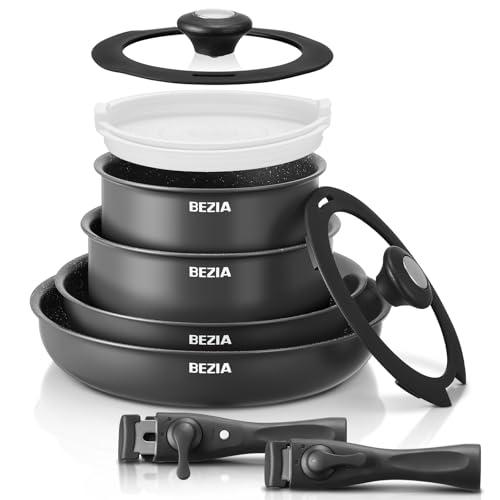
Pros
- Compact nesting design saves cabinet space
- Compatible with induction and all cooktops
- Removable handles rated up to 22 pounds
- Includes storage lids for refrigerator use
Cons
- Handles must detach before oven placement
- Hand washing recommended over dishwasher use
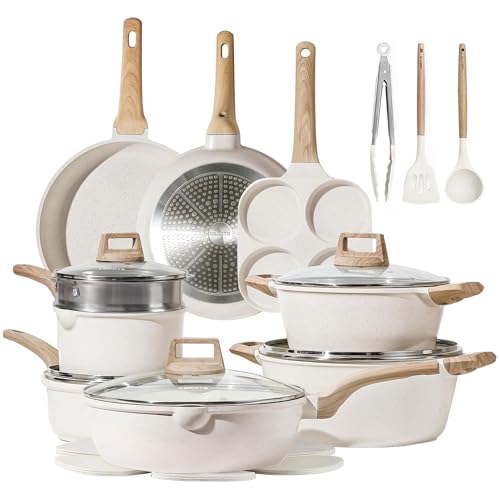
Pros
- Compatible with all cooktops including induction
- Lightweight die-cast aluminum construction heats quickly
- Includes four pan protectors plus basic cooking utensils
- Includes 12-month manufacturer warranty from purchase date
Cons
- Hand washing recommended instead of dishwasher use
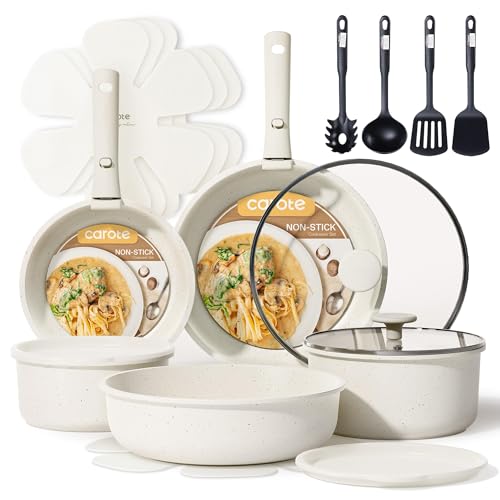
Pros
- Removable handles enable space-saving stackable storage
- Vessels transition directly from stovetop to oven
- Includes storage lids for direct refrigeration
- Nonstick surface cleans without heavy scrubbing
Cons
- Only two detachable handles shared across five pans

Pros
- Compatible with induction, gas, electric, and ceramic stoves
- Pre-installed stay-cool Bakelite handles require no assembly
- Comprehensive 31-piece bundle covers cooking and baking needs
- Stackable carbon steel bakeware minimizes cabinet clutter
Cons
- Hand washing required; not dishwasher safe
- Metal utensils and abrasive cleaners damage nonstick coating

Pros
- Induction-compatible edge-to-edge steel base
- Dishwasher-safe nonstick construction
- Cast stainless handles with silicone grip
- Integrated pour spouts and straining lid
Cons
- Lid oven safety capped at 350 degrees Fahrenheit
- Pan oven safety limited to 400 degrees Fahrenheit

Pros
- Induction, gas, and ceramic stovetop compatible
- Includes protective pan separators for stacked storage
- Glass lids allow easy monitoring while cooking
- Titanium nonstick surface eases food release

Pros
- Removable handles enable compact nesting storage
- Compatible with all stovetops including induction
- PFOA-free nonstick surface cleans easily in dishwasher

Pros
- Induction, gas, and electric cooktop compatible
- Oven safe up to 500°F
- Dishwasher safe construction makes cleanup fast
- Aluminum encapsulated base eliminates hot spots

Pros
- Induction cooktop compatible base
- Comprehensive 30-piece kitchen collection
- PFOA-free granite nonstick surface
- Includes bakeware and prep tools
Cons
- Oven safe only to 350 degrees Fahrenheit
- Bakelite handles limit oven duration

Pros
- Induction-compatible stainless steel base
- Dishwasher-safe interior and exterior nonstick surfaces
- Durable hard-anodized aluminum build
Buying Guide: Choosing a Cookware Set for Induction Stove
Base Plate Design and Induction Efficiency
Induction elements detect cookware only when magnetic steel contacts the glass surface. Pans made from aluminum require bonded steel base plates, while full stainless steel cookware features magnetic exterior layers naturally.
Wide, edge-to-edge magnetic plates heat more evenly than small stamped discs. If a pan base is smaller than the induction burner ring, the cooktop sensor might fail to detect it entirely.
Stainless Steel vs Nonstick Surfaces
Stainless steel handles high heat, searing meats, and dishwasher cycles without wearing away a delicate surface layer. It requires cooking fats and technique to prevent sticking, but it lasts indefinitely.
Nonstick coatings release eggs and starches with minimal fat, simplifying quick weekday cleanup. Coatings degrade under excessive heat or harsh wash cycles, making nonstick sets practical for moderate cooking rather than aggressive high-heat searing.
Handle Designs and Cabinet Storage Limits
Fixed riveted handles give stable balance when pouring heavy soups or shifting hot pans. They take up significant cabinet volume and make small dishwashers hard to load.
Detachable handle mechanisms allow pans to nest flat inside cramped drawers, RV cabinets, or refrigerators. You must detach the handle before moving pans into hot ovens to prevent mechanism damage.
Oven Safe Thresholds and Lids
Cookware transitions from cooktop to oven easily if components tolerate standard baking temperatures. Uncoated stainless steel pans tolerate temperatures up to 500 degrees Fahrenheit.
Sets with plastic Bakelite handles, silicone accents, or glass lids often cap oven limits at 350 to 400 degrees Fahrenheit. Always verify temperature limits before searing dishes intended for broiling finishes.
How We Compared These Products
This guide relies on technical specifications, material documentation, and reported user experiences rather than hands-on testing. We analyzed base plate construction, piece assortments, stated heat limits, and storage designs across Cuisinart, CAROTE, Kitchen Academy and more to determine practical trade-offs for home kitchens.
Which Option Fits Your Kitchen?
For compact spaces, dorms, or recreational vehicles, stackable pans minimize cabinet clutter. The BEZIA Induction Cookware Set 10 Pieces uses removable handles that let vessels nest flat and transition into refrigerators using minimal shelf space.
For high-heat browning, searing, and long-term durability, uncoated metal avoids coating failure. The Cuisinart Chef’s Classic 11-Piece Stainless Steel provides an encapsulated aluminum base that tolerates 500-degree oven heat and routine dishwasher cleaning.
For high-volume family meal prep requiring quick egg release and easy wiping, scratch-resistant coatings help. The Circulon A1 Series Induction Pots and Pans uses edge-to-edge steel induction bases and lab-tested nonstick surfaces rated for dishwasher cleanup.
Frequently Asked Questions
How do I test if my existing pots work on induction?
Hold a common magnet against the exterior bottom of the pan. If the magnet clings firmly, the pan base contains enough ferrous material to trigger induction heating.
Why does a pan buzz or hum on an induction burner?
Rapidly alternating magnetic fields create microscopic vibrations between bonded metal layers in pan bases. This humming sound is standard behavior on higher power levels, especially with multi-ply bottoms.
Can aluminum pans work on induction cooktops?
Pure aluminum cannot activate an induction cooktop on its own. Manufacturers bond a magnetic stainless steel disc to the bottom of aluminum pans so the stove detects them.
Are nonstick induction pans safe in the dishwasher?
While many listings label sets as dishwasher safe, aggressive detergents and hot wash cycles gradually oxidize bare base plates and dry out nonstick coatings. Hand washing preserves pan performance longest.
What happens if a pan base is smaller than the burner?
Induction burners have minimum size thresholds for cookware recognition. If pan diameter is too small, magnetic sensors fail to complete the circuit, and the burner will not produce heat.


Write Your Review
No reviews yet. Be the first to share your experience!