

A small saucepan can save space, but one size may not cover every meal. This Best Induction Saucepan guide compares compact pots, larger capacities, stainless steel construction, and ceramic nonstick so you can match cookware to your cooktop, cooking tasks, and cleanup preferences.

Pros
- Works across induction, gas, and electric cooktops
- Interior measurement markings simplify prep
- Dishwasher safe construction enables quick cleanup

Pros
- Works on induction and standard stovetops
- Tri-ply base ensures even heat distribution
- Vented glass lids monitor cooking progress
- Riveted stay-cool stainless steel handles
Cons
- Description notes hand washing despite dishwasher claim

Pros
- Even heat distribution from tri-ply construction
- Works on all listed stovetop types
- Oven-safe to 500°F
- Dishwasher-safe stainless steel construction
- Riveted handle for secure handling
Cons
- 3.32-pound weight may feel heavy to some users
- Stainless steel may require more care than nonstick cookware
- Who should skip it: cooks seeking lightweight or nonstick cookware

Pros
- Induction compatible
- Oven safe to 500°F
- Dishwasher safe
- Riveted stainless steel handle
- Compact size for small batches
Cons
- 1.5-quart capacity limits larger batches
- Lid oven safe only to 350°F
- Who should skip it: cooks needing larger saucepan capacity


Pros
- Works on induction, gas, electric, and ceramic stoves
- Oven and broiler safe up to 600°F
- Durable 18/10 stainless steel with impact-bonded base
- Dishwasher safe for easy cleanup

Pros
- Works with all listed stovetop types
- Oven-safe up to 500°F
- Dishwasher-safe
- Lifetime warranty stated
Cons
- 2-quart capacity may be small for larger batches
- Skip it if you need a larger-capacity saucepan
Choose capacity around your usual portions
Capacity shapes what a saucepan can comfortably handle and how much cupboard space it occupies. The listed options range from 1-quart and 1.5-quart pots to 2-, 2.5-, and 3-quart sizes. The MICHELANGELO set covers two small capacities, while the Tramontina 3-quart model offers more room for soups or stews. These are capacity differences, not guaranteed serving counts.
For warming milk, melting butter, or making a small amount of sauce, a 1- to 1.5-quart pot may suit your routine. Choose a 2.5- or 3-quart capacity if you often cook larger batches. Who should skip the smallest sizes: cooks who regularly prepare larger quantities in one pot.
Check construction and cooking surface
Stainless steel offers a non-reactive cooking surface, according to the listings, and does not have a nonstick coating to maintain. Tri-ply construction combines stainless steel and an aluminum core in the Idymere and Tramontina pots; the MICHELANGELO set specifies a 3-ply base. The Cuisinart listing specifies an aluminum-encapsulated base, while the T-fal listing describes an induction-ready base.
The SENSARTE uses a ceramic nonstick surface over die-cast aluminum, with a stainless steel base specified for induction compatibility. Nonstick may appeal when easy food release and quick wiping matter, but the listing recommends hand washing. If you want to avoid coated cooking surfaces, prioritize the stainless steel options. Who should skip ceramic nonstick: buyers who prefer an uncoated cooking surface or dishwasher cleaning as their routine.
Confirm induction fit and burner contact
Induction needs cookware with a magnetic base, but stainless steel alone does not prove compatibility. Each product listing here states induction compatibility or readiness. Match the pot’s base to your burner size and follow your cooktop maker’s guidance, especially if you have a small cooking zone. For a wider look at materials and surfaces, see our stainless steel cookware comparison.
Balance oven use against lid limits
Oven ratings differ. Tramontina specifies up to 500°F for its 2- and 3-quart saucepans. T-fal specifies up to 500°F for the pan and 350°F for its lid. MICHELANGELO lists oven and broiler safe up to 600°F, but verify the included lid’s limit before using the set in an oven. Cuisinart and Idymere listings do not provide oven limits, so check the product manual if stove-to-oven cooking matters.
A higher listed temperature can add flexibility, but only when every part you plan to use is rated for that temperature. If oven use is occasional, prioritize capacity, handle comfort, and care instead. For other surface options, compare our ceramic cookware guide.
Plan for cleanup and storage
Dishwasher details vary. Cuisinart, Tramontina, T-fal, and MICHELANGELO list dishwasher-safe cookware. Idymere specifies hand washing the pot and says its polished exterior is dishwasher-safe; SENSARTE recommends hand washing. Consider whether you want a single pot or a two-pot set: two capacities improve flexibility, but need more cabinet room. For kitchens with limited storage, compare the storage considerations for cookware with detachable handles.
Glass lids let you monitor cooking without lifting them, while stainless steel lids conceal the food. The Idymere glass lid includes a steam vent; the MICHELANGELO set also specifies glass lids. Check lid material, handle design, and cabinet space before choosing. For more ways to compare cookware care and storage, see our cookware set buying guide.
How We Compared These Products
This guide evaluates the published product listings, including stated capacity, materials, induction compatibility, lid design, oven limits, and care instructions. Available customer feedback is limited in the listing information, so it does not establish a recurring performance pattern. Recommendations are based on product research rather than firsthand use.
Which Option Fits Your Kitchen?
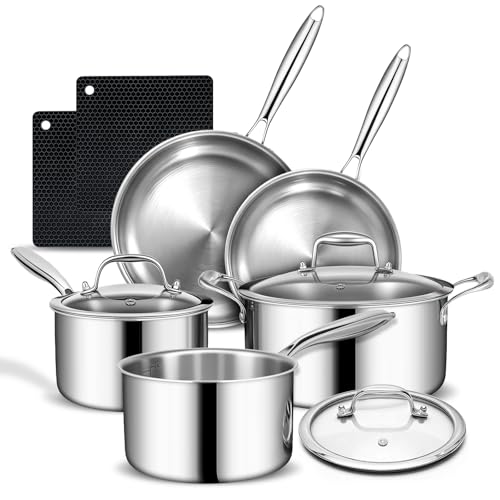
For two small-pot sizes: MICHELANGELO Stainless Steel Saucepan Set 1Qt includes 1-quart and 2-quart saucepans with glass lids. Its listing specifies dishwasher-safe care and oven and broiler use up to 600°F. Trade-off: a two-pot set takes more storage than one saucepan. Who should skip it: buyers who only want one pot or need a larger listed capacity.
For a medium pot with tri-ply construction: Tramontina Signature Tri-Ply Clad Stainless Steel has a 3-quart capacity, an aluminum core, and a stated oven limit of 500°F. It suits cooks who want more capacity and stove-to-oven flexibility. Who should skip it: cooks who want a compact 1-quart or 1.5-quart saucepan.
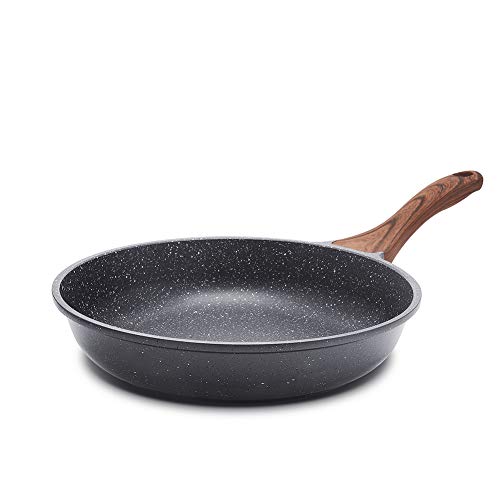
For coated-surface cleanup: SENSARTE Ceramic Nonstick Sauce Pan with Lid has a 1.5-quart size, glass lid, and no-rivet design; the listing recommends hand washing. Who should skip it: buyers who prefer uncoated stainless steel or dishwasher-oriented care. If neither trade-off fits, choose capacity and cleaning routine first rather than relying on a single overall winner.
Frequently Asked Questions
How can I tell if a saucepan works on induction?
Check the manufacturer’s compatibility statement and your cooktop instructions. All seven products in this comparison are listed as induction-compatible or induction-ready. Stainless steel by itself does not guarantee induction compatibility.
What saucepan capacity should I choose?
Use your usual task as a guide: smaller capacities suit small amounts and reheating, while larger capacities provide more room for soups, grains, or sauces. Check the stated quart capacity and compare it with your recipes; capacity does not specify a serving count.
Are all of these saucepans dishwasher-safe?
No. Several listings specify dishwasher-safe cookware, but SENSARTE recommends hand washing, and Idymere specifies hand washing the pot while noting its polished exterior is dishwasher-safe. Check the care instructions for each part.
Should I choose stainless steel or ceramic nonstick?
Stainless steel gives you an uncoated, non-reactive cooking surface in the listed models. SENSARTE offers a ceramic nonstick surface and recommends hand washing. Choose according to your surface preference and cleaning routine.
Do the glass lids have a stated oven limit?
Limits are not provided for every lid. T-fal specifies a 350°F lid limit, while its pan limit is 500°F. MICHELANGELO lists oven and broiler use up to 600°F for its set but does not separately state a lid limit. Verify lid guidance before oven use.
Is a saucepan set worth the extra storage?
A set can cover more than one small-pot task without requiring you to buy capacities separately. It also occupies more cabinet space than a single pot. Choose a set only if you expect to use both sizes and have room to store them.




Write Your Review
No reviews yet. Be the first to share your experience!