

Dragging a cord around a mixing bowl can be frustrating when you are working in a compact kitchen, preparing food outdoors, or moving between counter spaces. A cordless mixer removes that restriction, but it also introduces new decisions about charging, battery visibility, speed control, storage, and the types of attachments you actually use.
This guide to the best cordless hand mixer options compares two rechargeable models for common home baking tasks. Use it to decide whether you prefer a simpler four-speed design with a charging stand or a more adjustable mixer with a display, storage case, and six stainless steel attachments.

Pros
- Cordless mixing
- Four speeds plus Turbo
- Dishwasher-safe beaters and dough hooks
Cons
- Requires recharging between uses
- Who should skip it: cooks needing uninterrupted, corded mixing
Pros
- Rechargeable, cordless design
- 12 speed settings
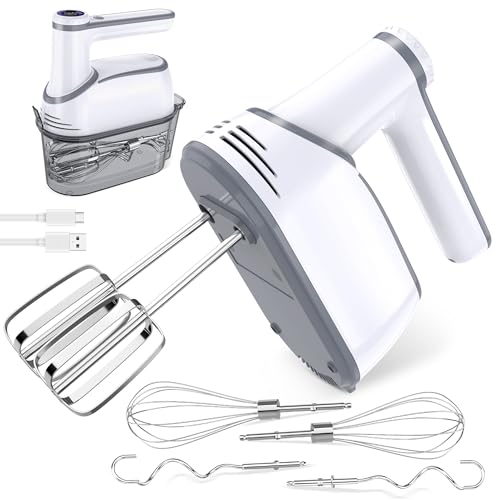
- Six included stainless steel attachments
- Storage case included
Cons
- Described for light bread dough, not heavier dough
- Who should skip it: cooks who need a mixer for heavier doughs
How to Choose a Cordless Hand Mixer
Start with battery and charging needs
Cordless operation is useful only when the mixer has enough charge for the task in front of you. DASH says its rechargeable lithium-ion battery can mix batter for up to 150 eight-inch waffles per charge, although actual runtime can vary with speed, mixture thickness, and how the appliance is used. The battery recharges on its charging stand in 2.5 hours.
binROC specifies a 2 to 3 hour full-charge time and includes an LED display that shows remaining power. That display may be helpful if you want to check the battery before starting a recipe, while DASH may appeal if you prefer a dedicated stand and a stated use reference. Neither product’s research details specify a removable battery, so confirm the charging arrangement and battery-care instructions before purchase.
Match speed control to your recipes
Speed settings matter most when you move between delicate ingredients and tasks that need vigorous whipping. DASH has four speeds and a Turbo button, with the brand describing low-speed starts for flour and higher speeds for meringue. This layout keeps the controls straightforward, but it offers fewer incremental adjustments than the binROC mixer.
binROC has 12 speed levels and describes its low setting as a way to reduce splashing, while higher speeds are intended for whipping cream and eggs. More settings can help you fine-tune the pace, but they also give you more controls to manage. Choose DASH if a simple range and quick boost fit your routine. Choose binROC if gradual adjustment is more important for batters, frosting, or whipping.
Check attachments against your usual tasks
Beaters are useful for many cake and cookie mixtures, while whisks are better suited to incorporating air into cream or eggs. Dough hooks can help with small batches of dough, but a hand mixer should not automatically be treated as a replacement for a stand mixer when you regularly make large or heavy batches.
DASH includes beaters and dough hooks. binROC includes two dough hooks, two beaters, and two whisk heads, all described by the manufacturer as food-grade 304 stainless steel. The binROC set gives you a broader attachment selection, while the DASH kit may be easier to manage if you mainly prepare batters, whipped cream, and occasional small dough batches. For more context on matching tools to baking tasks, see our guide to choosing a bakeware set.
Consider storage and countertop pauses
Storage design affects whether accessories stay together and where the mixer can rest between steps. DASH uses a charging stand, which can give the mixer a designated home while it recharges. binROC includes a snap-on storage case for its attachments and has a self-stand design for placing the mixer down during a pause.
A charging stand may suit a kitchen where the mixer remains near an outlet, while a storage case may be more useful when attachments would otherwise scatter in a drawer. The exact overall footprint and case dimensions are not listed, so measure your cabinet or shelf space if storage is tight. The self-stand feature may also help keep the motor unit from lying directly on a messy counter, but it does not eliminate the need to clean the appliance.
Compare cleanup and attachment removal
Removable attachments make cleanup easier, especially after sticky batter or whipped mixtures. DASH specifies dishwasher-safe beaters and dough hooks, with an eject button that releases them over the sink. The motor unit is intended to be wiped clean rather than placed in water.
binROC uses a one-click eject button and describes its detachable stainless steel attachments as easy to rinse. Its materials are identified, but dishwasher safety is not specified in the product details, so check the care instructions before placing any binROC attachment in a dishwasher. In either case, treat the motor housing separately and follow the manufacturer’s charging and cleaning directions.
Weigh handling features against claimed performance
Both mixers are designed for handheld use, so controls, grip, and pauses can affect comfort during longer recipes. binROC describes its design as lightweight and ergonomic and says the motor operates at low noise, but the manufacturer does not specify a noise level or product weight. DASH emphasizes cordless movement and a Turbo button rather than a listed weight or noise measurement.
binROC also describes a 200W high-torque motor, heat dissipation, and overheat and overload protection. Those are manufacturer claims about design features, not a guarantee that every dough or batter will feel easy to mix. If you often prepare thicker mixtures, follow the manual’s operating guidance and prioritize the attachment type, speed control, and comfortable handling that fit your recipes.
How We Compared These Products
We compared the manufacturer’s stated battery and charging features, speed controls, attachments, storage designs, cleaning guidance, handling features, and intended kitchen tasks. The comparison also considers retailer details and recurring owner feedback where it forms a consistent pattern, while keeping advertised capabilities separate from independently verified performance.
Which Option Fits Your Kitchen?
For a simpler cordless setup with dishwasher-safe attachments: Pros: Dash Cordless Hand Mixer, Beaters & Dough Hooks has four speeds, Turbo, a charging stand, and dishwasher-safe beaters and dough hooks. DASH also states a charge reference of up to 150 eight-inch waffles. Cons: it has fewer speed levels, no listed whisk attachment, and no listed LED battery display. Who should skip it: cooks who want multiple whisk heads, 12-speed adjustment, or a visible charge readout.
For attachment variety and more gradual control: Pros: binROC Cordless Hand Mixer Electric offers 12 speeds, an LED power display, two beaters, two dough hooks, two whisk heads, a storage case, and a self-stand design. Cons: the manufacturer does not specify dishwasher safety for the attachments, and its exact weight, operating noise, and overall storage dimensions are not listed. Who should skip it: buyers who want explicitly dishwasher-safe accessories or a simpler control layout.
For small kitchens or occasional baking: prioritize the storage arrangement that fits your counter and cabinet space. DASH’s charging stand may work well when the mixer lives near an outlet, while binROC’s snap-on case may be better when you need to keep six attachments together. If your baking setup also needs pans for cakes, cookies, or roasting, compare storage and care requirements in our guide to bakeware shapes and materials.
Frequently Asked Questions
Are both mixers genuinely cordless?
Yes. Both products are described as rechargeable cordless hand mixers, so they are designed to operate without a power cord attached during mixing. They still need charging, and the charging method differs: DASH uses a charging stand, while binROC specifies a 2 to 3 hour full charge and includes an LED power display.
Which mixer has more speed settings?
binROC has 12 speed levels. DASH has four speeds plus a Turbo button, which may be easier to operate if you prefer a smaller set of clearly separated controls.
Do both models include dough hooks?
Yes. DASH includes dough hooks, and binROC includes two dough hooks. These attachments can support small dough batches, but the presence of dough hooks does not establish that either cordless mixer is suitable for every heavy or large-volume dough recipe.
Which model includes whisk attachments?
binROC includes two whisk heads in addition to its beaters and dough hooks. DASH’s stated accessory set includes beaters and dough hooks, but a whisk attachment is not listed.
Can the attachments go in the dishwasher?
DASH specifies that its beaters and dough hooks are dishwasher-safe. binROC describes its attachments as detachable and easy to rinse, but dishwasher safety is not specified, so check the care instructions before using a dishwasher.
How should I store a cordless hand mixer?
Keep the mixer and attachments in the arrangement that best fits your kitchen. DASH uses a charging stand, while binROC includes a snap-on storage case and a self-stand feature. Leave adequate room for charging and avoid storing attachments loose if they can be kept together.
Can these mixers handle bread dough?
Both products include dough hooks, and binROC describes its mixer as suitable for light bread dough. For either model, use the manufacturer’s instructions and consider the batch size and dough firmness, since a cordless hand mixer is not equivalent to a stand mixer for every bread-making workload.



Write Your Review
No reviews yet. Be the first to share your experience!