

Induction burners need magnetic metal to create heat. Many nonstick pans use aluminum bodies. Aluminum conducts heat well but fails on induction glass without steel base plate bonded to bottom. Finding reliable nonstick cookware for induction means checking plate construction, coating durability, and pan flat-ness.
Mismatched pans buzz, heat unevenly, or trigger burner error codes. Guide evaluates base designs, interior coatings, and handle hardware to match setup with daily cooking habits, storage limits, and cleaning routines.
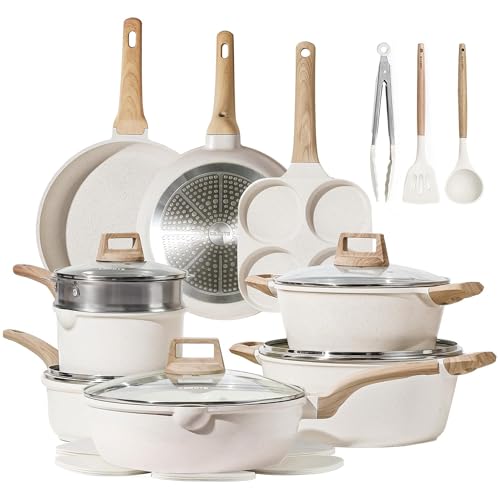
Pros
- Compatible with all cooktops including induction
- Lightweight die-cast aluminum construction heats quickly
- Includes four pan protectors plus basic cooking utensils
- Includes 12-month manufacturer warranty from purchase date
Cons
- Hand washing recommended instead of dishwasher use
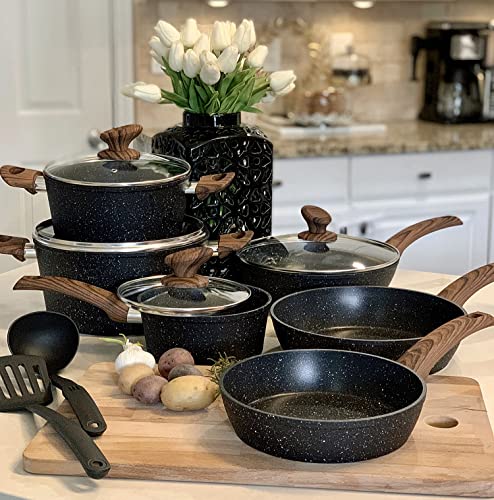
Pros
- Compatible with induction and glass cooktops
- Aluminum core heats quickly and evenly
- Coating is free of lead, PFOS, and PFOA
- Includes matching lids and silicone cooking utensils
Cons
- Hand washing recommended instead of dishwasher use
- Handles safe only up to 350 degrees Fahrenheit

Pros
- Includes wide variety of pots, pans, utensils, and protectors
- Silicone-edged glass lids seal moisture and resist chipping
- Comes with 12-month warranty coverage from purchase date
- Protective pads prevent scratching during stacked storage
Cons
- Hand washing recommended rather than dishwasher cleaning
- Large 26-piece collection requires substantial cabinet storage space

Pros
- Detachable handles enable compact nesting storage
- Oven, grill, and fridge compatible vessels
- Includes storage lids and pan protectors
- Nonstick coating simplifies everyday cleanup
Cons
- Only two handles provided for five cookware vessels

Pros
- Compatible with induction cooktops
- Dishwasher-safe cookware and lids
- Nonstick-coated handle rivets prevent sticking
- Durable hard-anodized aluminum build
Cons
- Boxed set weighs over twenty pounds

Pros
- Induction, gas, and ceramic stovetop compatible
- Includes protective pan separators for stacked storage
- Glass lids allow easy monitoring while cooking
- Titanium nonstick surface eases food release

Pros
- Works on all stovetops including induction
- Lightweight 1.3-pound frame handles easily
- Nonstick coating wipes clean quickly
- PFOS- and PFOA-free surface

Pros
- Works on induction and all standard cooktops
- Coating free of PTFE, PFOA, PFAS, and lead
- Thick 4.8mm base heats quickly and evenly
- Stay-cool Bakelite handles provide comfortable grip
Cons
- Hand washing recommended to protect nonstick surface

Pros
- Induction-compatible stainless steel base
- Pans oven safe to 500 degrees Fahrenheit
- Double-riveted stainless handles offer secure grip
- Tempered glass lids allow easy food monitoring
Cons
- Glass lids limited to 350 degrees Fahrenheit
- Requires non-metal utensils to maintain nonstick coating
Buying Guide: Selecting Nonstick Cookware for Induction
Magnetic Base Plate Construction
Induction coils transfer energy directly to ferrous metal. Nonstick pans typically use aluminum cores bonded to stainless steel base plates. Thickness of steel disc determines heat distribution speed and stability. Thin stamped plates warp under high heat, breaking magnetic contact with cooktop surface. Thick forged bases maintain flat contact and reduce hot spots.
Coating Chemistry and Temperature Boundaries
Sets feature PTFE coatings or mineral ceramic finishes. PTFE offers slick release for delicate foods like eggs, handling stove temperatures up to standard medium cooking ranges. Ceramic surfaces use silica-based layers free of fluoropolymers, providing release with lower heat tolerance. High heat degrades nonstick layers quickly. Check manufacturer oven limits before broiling or searing.
Pan Diameter and Induction Element Sizing
Induction cooktops feature defined coil zones. Burner sensor fails to activate if pan steel base is too small for ring. Large pans on small coils leave outer edges cold. Match skillet base footprint to primary cooktop burner diameters for uniform cooking results.
Handle Fasteners and Storage Footprint
Pans use riveted metal, screwed-on bakelite, or detachable clamp systems. Riveted stainless steel handles provide strength and higher oven thresholds. Bakelite stays cool on stovetop but limits oven use. Detachable handles save cabinet space and let pans stack flat, helpful when kitchen storage shares space with compact appliances like toaster ovens best for daily meals.
Cleaning Demands and Exterior Finish
Manufacturer listings often state dishwasher compatibility, but harsh detergents corrode exposed aluminum rims and degrade steel induction discs over time. Hand washing with soft sponges preserves nonstick slickness and keeps bottom contact plates free of oxidization residue.
How We Compared These Products
Comparison based on published manufacturer specifications, listed materials, base plate dimensions, and customer feedback patterns. Analysis examined base construction, oven ratings, lid seals, and care guidelines across 10 models without hands-on lab measurements.
Which Option Fits Your Kitchen?
Tight storage space: CAROTE 21pcs Pots and Pans Set Non Stick uses removable handles. Pans stack nested in small drawers, clearing room for essentials like microwaves countertop in compact setups.
High-heat oven transfer: All-Clad HA1® Nonstick 5-Piece Pots & Pans Set includes riveted stainless steel handles. Listing specifies pan bodies safe up to 500°F, fitting cooks moving skillets from induction elements directly into hot ovens.
Single-serving morning tasks: CAROTE Nonstick Frying Pan provides standalone 8-inch skillet with magnetic base. Small footprint suits daily egg frying without buying full box set, pairing easily alongside morning routines with electric kettles stainless steel.
Frequently Asked Questions
How verify pan works on induction stove?
Place kitchen magnet against pan bottom. Magnet sticks firmly means pan contains ferrous metal and activates induction cooktop coil. Weak magnetic pull causes burner error or poor heating.
Why does induction stove buzz when using nonstick pan?
Vibration between bonded base plate and aluminum pan body causes slight buzzing sound at high power. Normal physical reaction from alternating magnetic fields.
Can nonstick induction pans go in dishwasher?
Manufacturers sometimes claim dishwasher safe, but caustic detergent powder damages nonstick coating and oxidizes bare steel base plates. Hand washing with neutral soap preserves pan lifespan.
What cooking utensils protect nonstick surfaces?
Use silicone, nylon, or wooden spatulas and spoons. Metal forks, whisks, and scrapers scratch nonstick layers, damaging food release capabilities.
Can empty nonstick pan preheat on induction boost mode?
Never preheat empty nonstick pan on high or boost settings. Induction heat builds instantly. Dry overheating past 500°F ruins coating integrity within minutes.


Write Your Review
No reviews yet. Be the first to share your experience!