

Choosing stainless steel cookware pot involves trade-off between single-task pans and multi-piece sets. Thin walls cause scorching. Heavy base prevents burnt food but adds weight and storage bulk. Guide breaks down construction, induction support, and capacity across 3 options from Cuisinart, Idymere.

Pros
- Works on induction and standard stovetops
- Tri-ply base ensures even heat distribution
- Vented glass lids monitor cooking progress
- Riveted stay-cool stainless steel handles
Cons
- Description notes hand washing despite dishwasher claim

Pros
- Induction, gas, and electric cooktop compatible
- Oven safe up to 500°F
- Dishwasher safe construction makes cleanup fast
- Aluminum encapsulated base eliminates hot spots

Pros
- Works across induction, gas, and electric cooktops
- Interior measurement markings simplify prep
- Dishwasher safe construction enables quick cleanup
Buying Guide: Choosing Right Stainless Steel Cookware Pot
Base Construction and Heat Distribution
Stainless steel resists corrosion, but poor heat conduction creates hot spots. Manufacturers bond aluminum cores inside base or throughout body. Impact-bonded disc base spreads heat across bottom. Fully clad tri-ply spreads heat up sides. Buyers needing saucepans for delicate simmering need thick aluminum cores. Thin steel burns dairy fast. Check stainless steel cookware base thickness before purchase.
Cooktop and Induction Compatibility
Not all stainless steel works on induction cooktops. Induction requires magnetic outer layer like 430-grade steel. Standard 304 food-grade interior stays non-reactive, while exterior bonds magnetic steel for burner detection. Check manufacturer listing for explicit induction compatibility if using magnetic burners, or review our guide on cookware set for induction guide options.
Capacity and Kitchen Space
Pot capacity must fit household meal sizes and cabinet space. Small 1.5-quart pot handles boiled eggs, warm milk, or melting butter. Large 8-quart stockpot needs tall cabinet clearance but handles family soups. Buying complete set provides matching pieces but eats pantry shelf room. Single saucepan saves cabinet area. Compare layout against cookware sets best suited for home spaces.
Handle Fastening and Heat Safety
Handles attach via rivets or welds. Riveted handles offer long mechanical life under heavy liquid loads. Cast hollow stick handles reduce heat transfer from burner, remaining cooler on stovetop. Helper handles become essential on pots over 3 quarts to prevent wrist strain during draining. Verify handle material allows oven use when searing or finishing dishes.
Lid Design and Steam Control
Glass lids allow visual monitoring without lifting lid and losing steam. Lids with built-in steam vent holes prevent boil-overs by releasing pressure. Solid stainless steel lids lock in moisture tighter and survive higher oven heat. Choose vented glass for starch-heavy foods like pasta or rice.
How We Compared These Products
Guide relies on published manufacturer technical specifications, material declarations, and owner feedback patterns. We analyzed layer composition, stated oven limits, cooktop compatibility notes, and handle ergonomics. No firsthand cooking tests or laboratory measurements performed.
Which Option Fits Your Kitchen?
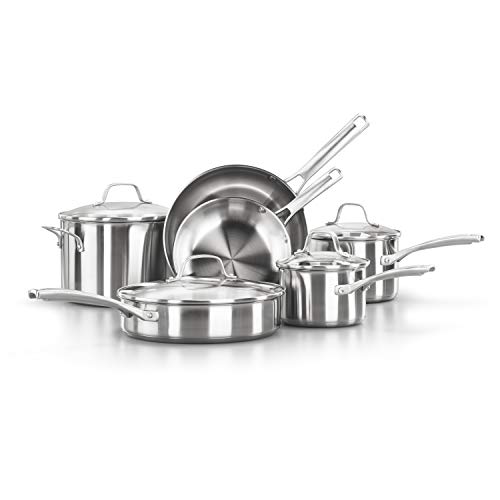
For complete kitchen setup, Cuisinart Chef’s Classic 11-Piece Stainless Steel supplies saucepans, stockpot, skillets, and steamer insert. Aluminum encapsulated bases provide balanced heating across multiple vessels, oven-safe up to 500 degrees Fahrenheit.
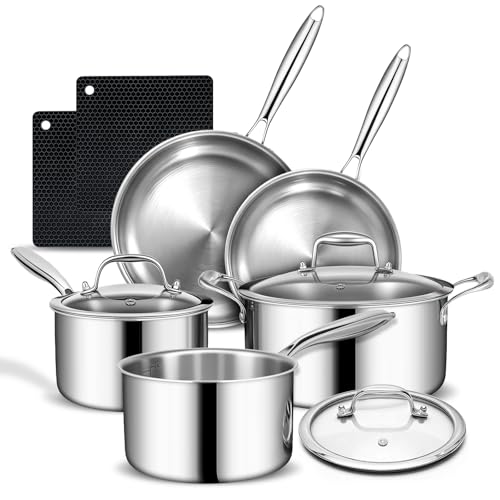
For small batch side dishes and sauces, Idymere Tri-Ply Stainless Steel Pot 1.5Qt & 2.5Qt delivers two compact sizes with vented glass lids. Tri-ply construction using 304 interior, aluminum core, and 430 magnetic exterior ensures full induction compatibility with minimal storage footprint.
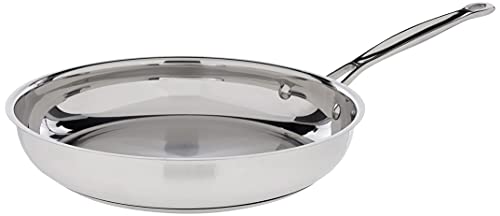
For dedicated small-portion cooking or replacing single worn pan, Cuisinart 1.5 Quart Sauce Pan with Cover offers compact build with interior measurement markings, stay-cool riveted handle, and drip-free rim profile.
Frequently Asked Questions
Does stainless steel cookware pot work on induction stove?
Pot works on induction if outer base contains magnetic stainless steel, such as 430 grade. Non-magnetic steel alone will not trigger induction burners. Test base with household magnet to confirm pull.
How do you stop food sticking to stainless steel pot?
Preheat dry pot over medium heat before adding oil. Add oil, let warm until shimmering, then add food. Cold food placed into cold, dry steel sticks immediately. For frying needs, compare dedicated frying pans best suited for release.
Can stainless steel pot go inside oven?
Most stainless pots with riveted metal handles tolerate oven heat up to 500 degrees Fahrenheit. Tempered glass lids usually carry lower heat tolerance. Verify specific lid and handle limits before placing inside oven.
Is stainless steel pot safe in dishwasher?
Stainless steel survives dishwasher cycles without structural failure. Harsh detergent salts and high dry cycles can cause cloudy film or surface spotting over time. Warm water hand-washing with sponge maintains mirror finish best.
Why does stainless steel pot develop rainbow stains?
Rainbow discoloration comes from heat tint when chromium layer oxidizes under high stovetop temperatures. Thin layer of vinegar or baking soda dissolved in warm water strips tint without scratching steel surface.



Write Your Review
No reviews yet. Be the first to share your experience!