

Every home cook eventually faces the skillet dilemma. A fragile nonstick pan might make morning eggs effortless but fail completely when you want a deep brown sear on a pork chop. Conversely, heavy stainless steel excels at building pan sauces but requires careful temperature management to keep delicate foods from sticking. Deciding what are the best frying pans to cook with comes down to matching your daily recipes, cleanup tolerances, and heat sources with the right pan construction.
Navigating the options in modern cookware means looking past marketing buzzwords and assessing the physical build. We evaluated 9 pans across standard nonstick, textured hybrid, and bare stainless steel designs. This guide breaks down how base construction, handle design, and stove compatibility affect everyday performance so you can pick the ideal pan for your counter space and cooking routine.

Pros
- Compatible with all cooktops including induction
- PFOA- and PFOS-free nonstick surface
- Cleans quickly with simple wipe or rinse

Pros
- Dual pour spouts simplify liquid transfers
- Compatible with all common stovetops including induction
- Heat-resistant Bakelite handle stays cool
- Lightweight 2.6-pound frame eases daily handling
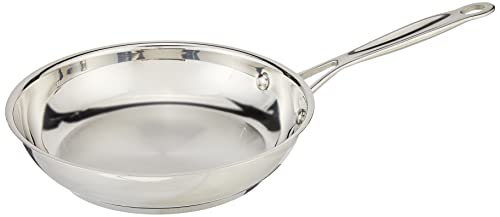
Pros
- Aluminum encapsulated base distributes heat evenly
- Works on induction, electric, and gas cooktops
- Non-reactive stainless steel cooking surface
- Dishwasher safe construction
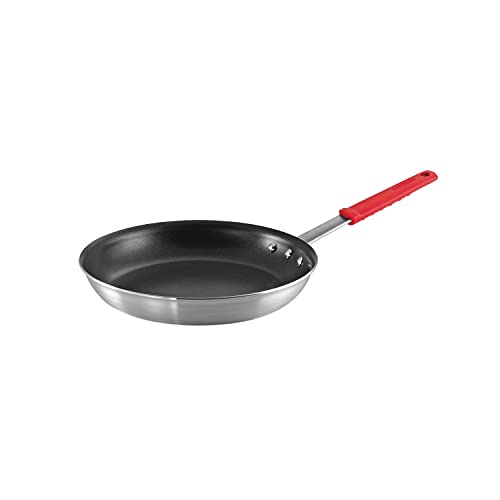
Pros
- Even heat distribution from heavy-gauge aluminum
- Reinforced nonstick coating ease cleanup
- Removable silicone grip protect hands
- NSF certified with lifetime warranty
Cons
- Not compatible with induction cooktops
- Oven temperature limit capped at 400 F

Pros
- Induction-compatible magnetic stainless steel base
- Three pan sizes cover diverse cooking tasks
- PFOA- and PFOS-free nonstick coating
- Cleans easily with quick rinse or wipe

Pros
- Metal utensil safe hybrid cooking surface
- Tri-ply construction distributes heat evenly
- Oven safe up to 500 degrees Fahrenheit
- Compatible with all cooktops including induction
Cons
- Lids not included in set
- Requires seasoning before first use for optimal release
- Hand washing recommended to preserve appearance
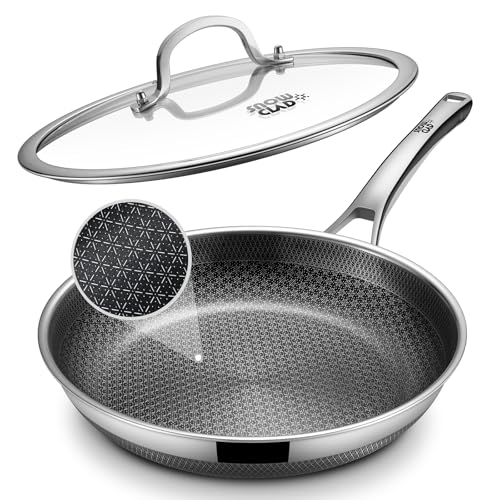
Pros
- Tri-ply stainless steel construction
- Oven safe up to 500 degrees Fahrenheit
- Includes matching lid
- Dishwasher safe for easy maintenance
Cons
- Induction cooktop compatibility not listed

Pros
- Oven safe up to 400 degrees Fahrenheit
- Titanium nonstick coating promotes effortless food release
- Thermo-Spot visual indicator signals proper preheat timing
- Dishwasher safe construction simplifies daily cleanup
Cons
- Incompatible with induction cooktops
- Lid heat limit capped at 350 degrees

Pros
- Works on all stovetops including induction
- Lightweight 1.3-pound frame handles easily
- Nonstick coating wipes clean quickly
- PFOS- and PFOA-free surface
Buying Guide: What Are the Best Frying Pans to Cook With?
When selecting new frying pans and skillets, the surface material determines both how food behaves in the pan and how long the piece will last. Understanding the mechanical differences between materials prevents premature wear and ensures predictable results on the stove.
Cooking Surface: Nonstick, Hybrid, or Bare Stainless Steel
Traditional nonstick surfaces, such as the granite-style coating on CAROTE pans or the titanium-reinforced coating on T-Fal skillets, offer low surface friction. They let you cook delicate proteins like eggs and flaky fish with minimal added fat. However, standard nonstick coatings are sensitive to high heat and abrasive tools. Bare stainless steel, found on options like the Cuisinart open skillet, contains no chemical coating to degrade. Stainless allows high-heat searing and leaves flavorful browned bits for pan sauces, but it requires proper oil preheating to prevent sticking. Hybrid models like FogDream use raised stainless steel ridges over a recessed nonstick matrix, attempting to balance scratch resistance with easy release.
Base Construction and Cooktop Compatibility
The core material of a frying pan dictates how quickly heat moves from the burner to your ingredients. Stamped aluminum heats rapidly but can warp under thermal shock. Clad pans incorporate an aluminum core between layers of stainless steel, offering even heat distribution across the entire pan floor. Cooktop compatibility is another decisive factor. Induction stoves require magnetic bases. While the Kordisen, CAROTE, and SNOWCLAD pans feature magnetic stainless steel base plates suitable for induction, heavy-gauge aluminum options like the Tramontina Professional and T-Fal Ultimate are not induction-compatible. Always check base specifications against your stove type before buying.
Pan Diameter and Cooking Capacity
Pan diameter affects both batch size and storage efficiency. An 8-inch skillet handles one or two eggs, single burgers, or toasted nuts without taking up excessive drawer space. A 10-inch pan functions as a versatile middle ground for two-person meals. For larger households or meal preparation, a 12-inch or 12.5-inch model provides the surface area needed to prevent food crowding. Overcrowding drops pan temperature, causing meat to steam in its own moisture rather than brown properly. However, 12-inch pans require wide burners and substantial cabinet clearance.
Handle Ergonomics and Oven Temperature Limits
Pan versatility increases when cookware moves seamlessly from the burner to the oven. Stainless steel handles, such as those on the SNOWCLAD and Cuisinart pans, typically permit oven temperatures up to 500 degrees Fahrenheit. Silicone-sleeved handles, like the one on the Tramontina Professional, offer a slip-free grip and stay cool on the stovetop, but they limit oven use to 400 degrees Fahrenheit. Phenolic or Bakelite handles provide heat resistance on standard stovetops but are generally not rated for broilers or high oven temperatures. Consider whether your cooking style involves finishing frittatas or thick steaks under direct oven heat.
Cleaning Protocol and Maintenance
Maintenance expectations should align with your daily routine. While many manufacturers label nonstick pans as dishwasher safe, harsh detergents and high drying temperatures accelerate coating breakdown over time. Wiping smooth surfaces with warm soapy water and a soft sponge maximizes coating life. Stainless steel pans require a bit more effort to remove stuck grease, though they tolerate abrasive scouring pads and dishwasher cycles without surface deterioration. If quick post-dinner cleanup is your top priority, smooth nonstick granite or anodized surfaces demand the least scrubbing.
How We Compared These Products
Our analysis relies on detailed examination of manufacturer specifications, technical material disclosures, and broad consumer feedback patterns rather than laboratory testing. We examined base composition, maximum oven temperature thresholds, handle attachment methods, and cooktop compatibility claims across all 9 models. By evaluating dimensional sizing, advertised coating durability, and practical maintenance requirements, we mapped each skillet to typical home kitchen requirements.
Which Option Fits Your Kitchen?
If you cook primarily for one or need a dedicated pan for morning eggs, the CAROTE 10 inch Non Stick Black Frying Pan Skillet offers balanced sizing with a smooth granite nonstick surface. Its extended magnetic base provides induction compatibility, and the slick coating lets you cook eggs and delicate foods with very little butter or cooking oil.
For family meals, searing larger batches, or preparing one-pan skillet dinners, consider the Kordisen Non Stick Frying Pan Skillet. Its 12.5-inch diameter prevents ingredient crowding, while dual pour spouts make draining braising liquids or transferring pan sauces clean and straightforward. The stay-cool Bakelite handle ensures comfortable stove handling when moving a full pan.
Cooks who frequently transition dishes from the stovetop into a hot oven will appreciate the SNOWCLAD Non Stick Frying Pans,12-Inch Stainless. Built with tri-ply stainless steel construction and an enhanced textured surface, this model tolerates oven temperatures up to 500 degrees Fahrenheit and includes a dedicated lid, making it well suited for stovetop braising and oven-baked egg dishes.
Frequently Asked Questions
Can all nonstick frying pans be used on induction cooktops?
No. Induction burners require ferrous magnetic material to generate heat. Pure aluminum pans, such as the Tramontina Professional and T-Fal Ultimate models listed here, do not work on induction stoves unless the maker bonds a magnetic steel plate to the exterior base. Always verify that induction compatibility is explicitly stated before purchasing.
What is the difference between hard-anodized aluminum and clad stainless steel?
Hard-anodized aluminum undergoes an electrochemical treatment that hardens the exterior metal, making it resistant to corrosion and scratches while retaining aluminum’s fast heat conduction. Clad stainless steel sandwiches an aluminum core between layers of durable steel, offering heavier structural heft, high heat resistance, and broad cooktop compatibility at the expense of slower initial warm-up times.
Why does food stick to stainless steel pans?
Stainless steel lacks a chemical coating, meaning microscopic pores in the metal expand as it heats. Cold food added to an insufficiently heated pan bonds to these pores. To reduce sticking, preheat the dry pan over medium heat, add a thin layer of cooking oil, let the oil shimmer, and then add your ingredients.
How do I know when a nonstick pan needs replacement?
A nonstick pan should be replaced when food consistently catches on the surface despite using oil, when visible scratches expose the bare metal below, or if the surface shows signs of flaking and peeling. Warping along the base that prevents even contact with flat burners is another sign the pan has reached the end of its useful life.
Can I use metal utensils on modern nonstick cookware?
While hybrid pans with raised stainless ridges and specific textured coatings claim metal utensil resistance, soft silicone, wooden, or heat-resistant plastic tools remain the safest choice. Sharp metal forks and spatulas can nick coatings, eventually degrading the release properties of any nonstick surface.
Is a pan lid essential for everyday frying?
A lid is not required for basic frying, sautéing, or searing, which benefit from open evaporation. However, a fitted lid is valuable for melting cheese, steaming vegetables, finishing eggs, or keeping food warm before serving. If you prepare one-pan meals or braised dishes, choosing a pan with an included lid saves the trouble of finding a universal cover.


Write Your Review
No reviews yet. Be the first to share your experience!