

A bare skillet sears meat well, but braising, steaming greens, and trapping splatters require a tight lid. Choosing a frying pan with lid stainless steel design introduces trade-offs between overall pan weight, rim geometry, and lid materials. A heavy glass lid lets you inspect food without losing heat, while all-metal construction handles higher oven temperatures.
Skillets with encapsulated bases heat differently than fully clad pans that run three layers of metal up the sidewalls. This guide examines 5 pans from brands like Cuisinart, EWFEN, VocVoi and more to help you pick the right balance of surface area, heat tolerance, and easy maintenance for your kitchen.

Pros
- Tri-ply construction provides even heat distribution
- Compatible with all common stovetops including induction
- Includes fitted lid for moisture control
- Durable uncoated steel construction
Cons
- Five-pound weight limits easy one-handed lifting
Pros
- Aluminum encapsulated base distributes heat evenly
- Works on induction, electric, and gas cooktops
- Non-reactive stainless steel cooking surface
- Dishwasher safe construction

Pros
- Tri-ply clad body provides even heat distribution
- Rivet-free interior simplifies food release and cleaning
- Oven safe up to 600 degrees Fahrenheit
- Compatible with all stovetops including induction
Cons
- Requires manual handle assembly before initial use
- Heavy weight at over 6.5 pounds with lid
Pros
- Even tri-ply heat distribution
- Compatible with all cooktops including induction
- Oven safe body up to 600 degrees
- Dishwasher safe stainless steel construction
Cons
- Glass lid handle requires manual screw assembly
- Heavy build weighs over five pounds

Pros
- Tri-ply clad construction ensures even heat distribution
- Compatible with induction and all common stovetops
- Oven safe up to 500 degrees Fahrenheit
- Dishwasher safe for convenient cleanup
Cons
- Glass lid handles require careful manual assembly
- Improper screw installation risks cracking glass lids
Buying Guide for a Frying Pan with Lid Stainless Steel
Clad Construction vs. Encapsulated Bases
Stainless steel alone conducts heat poorly. Manufacturers solve this by bonding it with aluminum. Encapsulated bottoms place a thick aluminum disk solely on the pan base, leaving bare single-ply steel along the sidewalls. This heats the bottom quickly but allows temperature drops near the rim, which is common in open designs like the smaller basic skillets used for quick individual tasks.
Tri-ply fully clad construction sandwiches aluminum between two layers of steel throughout the bottom and up the sidewalls. Models like the EWFEN 12 Inch Tri-Ply Stainless Steel Frying Pan use 304 food-grade steel inside, an aluminum core, and a magnetic 430 exterior. This full cladding provides even wall heating, preventing hot rings around the pan perimeter when simmering liquids under a cover.
Lid Visibility and Heat Retention
A lid changes how a skillet functions, transforming a quick searing pan into an everyday vessel for shallow braises and poaching. Tempered glass covers allow you to observe boiling points, liquid reduction, and melting cheese without lifting the lid and losing moisture. However, glass adds weight and introduces hardware that needs careful assembly, as seen on pans requiring screw installation from the inside out to avoid cracking the panel.
Stainless steel lids lack visibility but withstand direct oven broiling and rougher handling. If your cooking involves finishing meats in high heat, verify the heat limit of your lid separately from the skillet body. Glass lids frequently cap out lower than the bare steel pan.
Pan Diameter and Stovetop Footprint
Cooking surface area determines how much food you can cook at once without crowding. Overcrowding lowers the pan temperature, turning what should be a sear into a steam. A 12-inch pan offers ample flat floor space for searing multiple portions or handling batch meals, making it ideal for family cooking as detailed in our guide on choosing frying pans for home cooks.
The trade-off is stovetop and sink space. A 12-inch pan with an extended handle takes up significant cooktop room and may crowd adjacent burners on standard thirty-inch ranges. For side dishes or single portions, an 8-inch skillet takes up far less storage and heats faster with lower energy draw, but lacks the surface area to brown several proteins simultaneously.
Oven Ratings and Handle Geometry
Stovetop-to-oven versatility is a primary reason to choose unlined stainless cookware over coated options. High heat tolerance lets you sear a cut on the burner and transfer the pan directly to the oven to finish. Listings show that body limits can range from 500°F to 600°F depending on the manufacturer and specific model line.
Handle design dictates how safely you can maneuver that heat. Solid handles stay durable under heavy use but may transmit heat faster without hollow designs or thermal breaks. Open hollow handles reduce thermal transfer along the grip during long stovetop sessions, though you should still use dry kitchen towels or silicone grips when pulling a pan from an active oven.
Interior Rivets and Daily Maintenance
Most commercial and residential skillets secure handles using solid metal rivets through the wall. These create permanent, rigid joins that handle heavy loads, but food particles and oils collect around the raised rivet heads inside the cooking chamber. Cleaning around them requires dedicated scouring.
Rivet-free interiors, created using specialized welding or flush studs, eliminate these interior crevices entirely. A smooth interior surface speeds up routine hand washing and prevents burnt residues from building up around fastener joints. If you prioritize fast maintenance alongside reliable stainless steel pans, look closely at how the handle connects inside the vessel wall.
How We Compared These Products
This comparison is based on careful product research and technical analysis of manufacturer specifications rather than hands-on laboratory testing. We analyzed published material specifications, including base construction, steel grades, stated temperature ceilings, and included accessories. We evaluated how feature differences like fully clad walls, lid materials, handle attachments, and sizing affect common kitchen tasks, storage requirements, and daily cleanup routines.
Which Option Fits Your Kitchen?
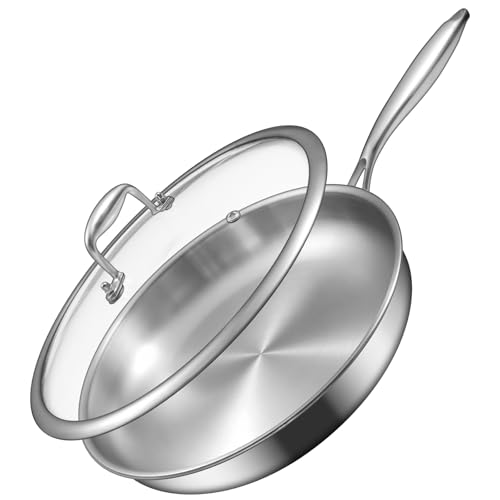
If you cook family-sized meals and want a smooth, simple pan interior to scrub after dinner, consider the MICHELANGELO Fully Clad Tri-Ply Stainless Steel 12. Its 12-inch surface accommodates multiple proteins, while the rivet-free interior removes the crevices where grease often bakes onto traditional cookware. The included tempered glass lid allows you to monitor braises without losing steam, and the body supports oven finishing up to 600°F.
For cooks outfitting an entire kitchen at once who need multiple skillet sizes, the EWFEN Tri-Ply Stainless Steel Frying Pans Set supplies 8-inch, 10-inch, and 12-inch pans. Each piece uses full tri-ply cladding with an aluminum core between 304 interior and 430 exterior steel for induction readiness. It gives you flexible volume options for quick eggs or larger one-pan dinners, backed by a 500°F oven rating on the pan bodies.
If you only need a single large pan on a focused budget, the VocVoi Stainless Steel Pan delivers a 12-inch tri-ply design with a matching lid. It offers wide stovetop compatibility across gas, electric, and induction ranges without requiring you to store a multi-piece set in compact cabinets.
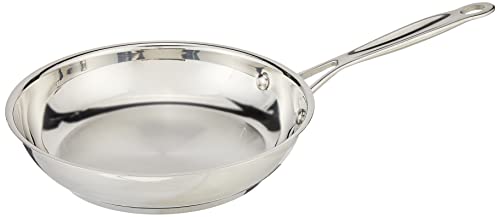
If you primarily prepare small portions or need a dedicated side-dish skillet that takes minimal cabinet space, the Cuisinart 8-Inch Open Skillet handles light duty well. Keep in mind that this specific model does not include a lid and utilizes an encapsulated aluminum base rather than full tri-ply sidewall cladding.
Frequently Asked Questions
Can I put a stainless steel frying pan with a glass lid into the oven?
While the stainless steel pan body can often withstand heat between 500°F and 600°F, tempered glass lids have significantly lower temperature limits. High temperatures can cause glass panels to shatter or damage handle fittings. Always confirm the specific heat rating of the lid separately before placing both in the oven, or remove the lid before broiling.
Will these stainless steel frying pans work on an induction cooktop?
Pans constructed with an exterior layer of magnetic stainless steel, such as 430 grade, operate properly on induction ranges. Tri-ply pans designed for universal compatibility incorporate this magnetic base layer. You can confirm induction readiness on any existing pan by verifying whether a standard refrigerator magnet adheres firmly to the center of the outer bottom.
How do I prevent food from sticking to an uncoated stainless steel pan?
Uncoated steel relies on proper preheating and temperature control rather than nonstick chemicals. Heat the dry pan over medium heat, add your cooking fat, and wait until it shimmers before introducing ingredients. Let proteins sear undisturbed until the pan naturally releases the browned crust, rather than forcing the food off the surface prematurely.
What is the benefit of a rivet-free pan interior?
Traditional pans use rivets that penetrate the pan wall to hold the handle securely, creating small interior protrusions where fat, sauces, and carbonized food accumulate. A rivet-free interior provides a smooth, unobstructed surface. This eliminates detailed scrubbing around fastener heads and simplifies routine washing.
Why does a 12-inch frying pan need a lid?
A lid transforms a standard searing skillet into a multi-use cooking vessel. Covering a 12-inch pan retains trapped steam and radiant heat, allowing you to melt cheese over burgers, steam vegetables alongside proteins, or gently simmer braising liquids and sauces without drying out the dish or splattering the cooktop.
Are tri-ply stainless steel pans dishwasher safe?
Most tri-ply stainless steel pans are listed as dishwasher safe by manufacturers. However, harsh machine detergents and extreme wash cycles can dull the polished exterior mirror finish over time. Hand washing with warm soapy water and a non-abrasive sponge preserves surface appearance and prevents water spotting on the glass lids.


Write Your Review
No reviews yet. Be the first to share your experience!