

Cooks often struggle with food sticking or pans warping under high heat. Uncoated skillets solve durability concerns, but differences in pan construction, base thickness, and sizing drastically change how they perform on your stovetop.
Choosing among frying pans stainless steel options requires weighing pan weight, thermal responsiveness, and overall capacity. This guide breaks down the core features of 4 models so you can match the right cookware to your daily cooking routine.
Pros
- Aluminum encapsulated base distributes heat evenly
- Works on induction, electric, and gas cooktops
- Non-reactive stainless steel cooking surface
- Dishwasher safe construction

Pros
- Tri-ply construction provides even heating
- Oven and broiler safe to 600°F
- Induction cooktop compatible
- Includes stainless steel lid
Cons
- Handwashing recommended by manufacturer
- Relatively heavy at 4.74 pounds

Pros
- Tri-ply construction provides even heat distribution
- Compatible with all common stovetops including induction
- Includes fitted lid for moisture control
- Durable uncoated steel construction
Cons
- Five-pound weight limits easy one-handed lifting
Pros
- Even tri-ply heat distribution
- Compatible with all cooktops including induction
- Oven safe body up to 600 degrees
- Dishwasher safe stainless steel construction
Cons
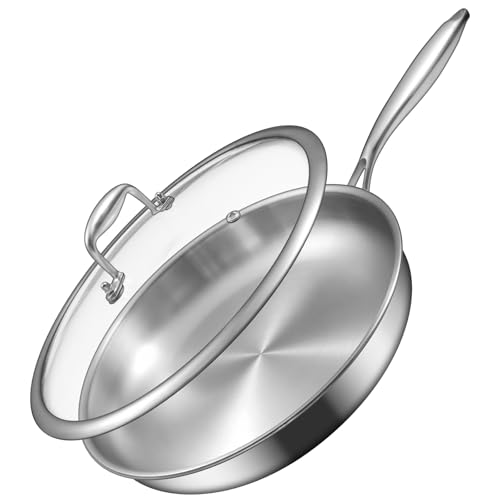
- Glass lid handle requires manual screw assembly
- Heavy build weighs over five pounds
How to Choose Frying Pans Stainless Steel Options for Your Kitchen
Investing in new cookware means evaluating how specific designs interact with heat sources, recipes, and cleaning habits. As you browse our broader Cookware coverage, keep these technical criteria in mind before buying.
Clad Construction vs. Encapsulated Disc Bases
Stainless steel alone is a poor conductor of heat. Manufacturers resolve this by bonding an aluminum layer inside the steel or soldering a thick disc onto the pan bottom. Fully clad designs, such as the tri-ply construction used across the body of the VocVoi skillet and the EWFEN model, conduct heat up the sidewalls as well as across the base. This minimizes hot rings where pan sides meet the bottom.
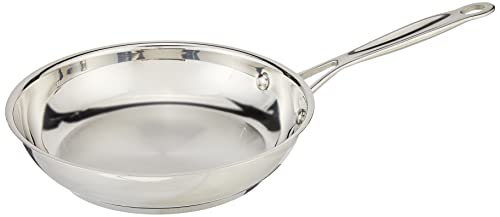
Encapsulated bases focus aluminum conductivity strictly on the bottom cooking surface. The Cuisinart skillet utilizes an aluminum encapsulated base, which keeps production costs down and conducts heat well across the flat bottom. The trade-off is that sidewalls stay cooler, making fully clad pans more suitable for continuous pan-tossing, sauces, and reduction work.
Diameter, Cooking Surface, and Portions
Pan dimensions directly determine how much food you can cook without crowding. Crowding traps moisture and causes meats to steam rather than sear. An 8-inch model like the Cuisinart skillet fits single servings, two fried eggs, or toasted spices, and it stores easily in tight cabinets.
A 12-inch pan provides ample flat surface area for multi-person meals, batch searing, or pan-frying larger proteins. The trade-off is physical bulk: larger skillets occupy more burner space and require deeper cabinet clearance. Explore the full variety of sizes in our dedicated Frying Pans & Skillets section.
Lid Inclusion and Recipe Flexibility
Open skillets offer maximum evaporation for crisp searing, but having a fitted lid extends pan utility to steaming, braising, and melting. The All-Clad pan includes a precision-fit stainless steel lid, creating an enclosed environment that traps moisture and heat. Similarly, models from VocVoi and EWFEN include dedicated lids.
If you primarily sear steaks and saute vegetables, an open pan avoids extra storage clutter. If you intend to use your skillet as a multi-purpose vessel for braised chicken thighs or grain dishes, choosing an option supplied with a lid eliminates the need to source an aftermarket cover.
Handle Design and Heat Transfer
Pan balance depends heavily on handle construction. Solid cast handles riveted to the pan body, such as the contoured handle on the All-Clad D3, provide a secure grip when lifting heavy foods, though they carry more physical weight. Hollow handles, as highlighted on the EWFEN model, work by reducing thermal conduction through air insulation, helping the grip stay manageable during standard stovetop use.
When cooking over high heat or transferring cookware directly from an oven, always keep a dry towel or silicone grip handy, as prolonged exposure can warm even stay-cool metal handles over time.
Cooktop Compatibility and Oven Limits
Confirming exterior metal composition prevents cooktop mismatches. Induction burners require magnetic metals to complete the circuit. The EWFEN pan explicitly notes a 430 magnetic stainless steel exterior, making it induction-ready, while the All-Clad, VocVoi, and Cuisinart pans also state induction compatibility.
Oven safe thresholds allow one-pan meals that start on the burner and finish under the broiler. Both the All-Clad D3 and EWFEN models carry maximum temperature ratings up to 600 degrees Fahrenheit, giving high thermal tolerance. Always verify lower heat thresholds if a model relies on glass lid components, as tempered glass handles far less heat than solid steel lids.
How We Compared These Products
Our analysis relies entirely on technical product specifications, manufacturer documentation, and documented buyer feedback rather than hands-on testing. We compared material construction, including core metals and cladding type, alongside listed stovetop compatibility and stated heat tolerances. We also examined lid designs and handle configurations to help readers identify the best design for their specific cooking habits.
Which Option Fits Your Kitchen?
For cooks who prepare meals for one or work with tight kitchen storage, the Cuisinart 8-Inch Open Skillet fits compact burners and small shelves without taking up valuable prep space. Its encapsulated base delivers targeted heat across a manageable 8-inch surface, ideal for breakfast tasks or small side dishes.
For home cooks seeking long-term construction and domestic manufacturing, the All-Clad D3® Stainless Steel 12″ Fry Pan with Lid pairs high-capacity 12-inch tri-ply construction with a matching stainless steel lid. It offers an oven and broiler safe threshold up to 600 degrees Fahrenheit, making it a reliable workhorse for full-family portions and combination sear-and-braise cooking.
If you want a large-format skillet bundled with a lid on a tighter equipment budget, the EWFEN 12 Inch Tri-Ply Stainless Steel Frying Pan or the VocVoi Stainless Steel Pan provide 12-inch multi-layer composite bodies compatible with gas, electric, glass, and induction cooktops.
Frequently Asked Questions
How do I stop food from sticking to stainless steel?
Preheat the pan dry over medium heat before adding oil. Once the oil produces a gentle shimmer, add your food. Cold food placed directly into an unheated or insufficiently oiled steel pan contracts into the metal micro-pores, causing sticking.
Can all stainless steel skillets work on induction stoves?
No, only stainless steel pans with a magnetic exterior layer work on induction cooktops. Certain stainless formulations, such as grade 304, are non-magnetic. Cookware must incorporate a magnetic outer layer, like the grade 430 steel found on the EWFEN model, to register on induction burners.
Are these frying pans safe for the dishwasher?
Many stainless pans claim dishwasher safety, including the Cuisinart and EWFEN listings. However, strong detergents and harsh wash cycles can cause exterior dulling over time. Hand washing with warm water and a non-abrasive sponge preserves polished mirror finishes longer.
What is the benefit of a tri-ply stainless pan?
Tri-ply pans bond a conductive aluminum core between two stainless steel sheets across the entire pan, including sidewalls. This layer sandwich spreads heat up the edges evenly, helping to eliminate localized scorching when simmering or stirring sauces.
How should I remove stubborn burnt residue?
Add water and a splash of vinegar to the skillet, bring it to a brief simmer on the stove, and gently scrape the bottom with a wooden spatula. For persistent discoloration or protein stains, a dedicated oxalic acid cookware powder safely restores the metal without scratching.


Write Your Review
No reviews yet. Be the first to share your experience!