

Cast iron delivers sustained heat retention and durability, but choosing the right pan involves practical trade-offs. Extra metal makes a skillet hold searing temperatures efficiently, yet excessive weight makes regular handling and stove-to-sink cleanup difficult on crowded cooktops.
Finding the right balance depends on your burner dimensions, daily portion sizes, and storage constraints. This guide reviews 9 options across the broader cookware category to help you select frying pans cast iron that fit your cooking routine and physical setup.

Pros
- Cast iron provides even heat distribution
- Compact 1.94-pound build stores easily
- Oven and freezer safe construction
- Pre-seasoned PFAS-free cooking surface
Cons
- Hand wash only care required
- Small 6.5-inch size limits cooking capacity

Pros
- Compatible with induction, ovens, grills, and campfires
- Factory seasoned with 100 percent vegetable oil
- Includes silicone handle holder and assist handle
- High heat retention for searing and frying
Cons
- Requires manual hand washing and prompt oiling
- Weighs 5.35 pounds empty

Pros
- Includes three versatile skillet sizes
- Pre-seasoned with vegetable oil
- Compatible with stovetops, ovens, grills, campfires
- Reliable cast iron heat retention
Cons
- Requires hand washing and immediate drying
- Needs regular oiling to preserve seasoning

Pros
- Factory pre-seasoned with vegetable oil
- High heat retention for even cooking
- Compatible with stovetops, grills, and campfires
Cons
- Heavy weight at over 7.5 pounds

Pros
- Oven, stovetop, and campfire compatible
- Pre-seasoned cooking surface ready for use
- Teardrop handle aids grip and control
- Durable American-made cast iron build
Cons
- Weighs 3.2 pounds for compact 8-inch size

Pros
- Oven and campfire compatible versatility
- Pre-seasoned finish ready for immediate use
- Durable cast iron holds heat well
- PFAS-free construction
Cons
- Heavy 5.35-pound weight limits easy maneuvering

Pros
- Dual side handles fit easily inside compact ovens
- Versatile use across stovetops, grills, and campfires
- Heavy cast iron provides dependable heat retention
- Seasoned with oil without synthetic PFAS chemicals
Cons
- Weighs over 6.6 pounds empty
- Lacks long handle for single-handed pan tossing

Pros
- Versatile compatibility across stovetops, grills, and ovens
- Assist handle help manage large footprint
- Pre-seasoned surface free of PFAS and PTFE
- Large 15-inch surface accommodate high-volume cooking
Cons
- Heavy 12.36-pound weight limit one-handed handling
- 22.2-inch total length require substantial storage space
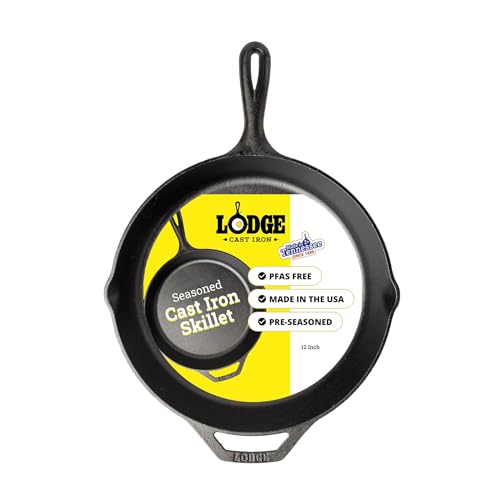
Pros
- Strong heat retention from dense cast iron body
- Versatile design safe for stovetop, oven, and campfire
- Factory pre-seasoned finish improve through continued use
- PFAS-free construction without synthetic chemical coatings
Cons
- Heavy build weigh nearly eight pounds empty
Buying Guide: Key Factors for Frying Pans Cast Iron
Diameter and Cooking Surface Area
Skillet measurements reflect top-rim diameter rather than the usable flat base. A 10.25-inch pan provides enough flat surface for two chicken cutlets or a pair of fried eggs, while a 12-inch or 15-inch model offers the expanded area required to sear family-sized meals without overcrowding.
Larger diameters demand significantly more storage clearance and burner coverage. If your primary stovetop elements are small, an oversized pan like a 15-inch skillet may extend past the heat source, creating cooler zones along the outer rim. For compact tasks or single servings, 6.5-inch and 8-inch designs fit easily into standard cabinets and heat evenly over smaller burners.
Handle Style and Maneuverability
Cast iron is heavy, and handle geometry dictates how safely you can transfer hot cookware. Traditional long teardrop handles provide control for steadying the pan while stirring, but single-handle setups become awkward to lift when loaded with heavy cuts of meat. Assist handles located opposite the main handle provide a second grip point for balanced two-handed transport.
Some pans replace the extended handle entirely with dual side loop handles. This design conserves space inside compact ovens and outdoor grills, though it requires two heat-safe mitts every time you move the pan. If you prefer standard handling with added safety, models that include silicone handle holders simplify transfers from stove to table.
Heat Retention Versus Total Weight
Dense iron walls absorb and store thermal energy, preventing significant temperature drops when cold ingredients touch the metal. This thermal mass makes cast iron an effective tool for searing steaks and baking cornbread, as explored throughout our guide to frying pans & skillets. However, that performance comes with physical mass that can strain wrists during washing.
Evaluate your comfort with managing several pounds of metal with one hand at the sink. If washing a dense 12-inch skillet feels unmanageable, an 8-inch pan or a multi-size set allows you to use lighter iron for simple daily frying while reserving larger pieces for dedicated tasks.
Factory Seasoning and Cooking Surface Care
Most modern cast iron pans arrive pre-seasoned with baked vegetable oil, providing a base layer of rust prevention right out of the box. This factory layer eliminates the need to complete an initial seasoning cycle before your first meal, though food release continues to improve over time with regular cooking and light oil applications.
Maintenance rules remain identical regardless of the manufacturer: wash by hand without harsh abrasive scouring, dry the metal completely after rinsing, and apply a thin coat of cooking oil before storage. These pans cannot go into the dishwasher, making post-dinner cleanup a hands-on requirement that buyers must plan to accommodate.
Cooking Environment and Heat Source Versatility
Cast iron functions across diverse cooking heat sources, including gas, electric, induction, ovens, grills, and open campfires. Because the material consists solely of iron without synthetic coatings or delicate bonding layers, it withstands high broiling temperatures and direct flame contact without structural damage.
When cooking indoors on glass cooktops, the raw base texture requires deliberate handling. Dragging a rough cast skillet across smooth glass surfaces can cause cosmetic abrasions, so practice lifting the cookware rather than sliding it across heat zones.
How We Compared These Products
This comparison is based on careful product research analyzing manufacturer technical specifications, material descriptions, handle designs, included accessories, and published customer feedback patterns. We did not conduct firsthand lab testing or hands-on cooking trials for this guide. Instead, we evaluated how each skillet matches practical home cooking needs by assessing diameter, handling safety, and care requirements against standard kitchen setups.
Which Option Fits Your Kitchen?
For daily, all-around home cooking, the standard 10.25-inch format provides the best compromise between surface area and comfortable lifting. If you want added grip protection right out of the box, consider the Lodge Pre-Seasoned Cast Iron Skillet with Hot, which includes an assist handle and a removable silicone handle holder to keep bare iron handling manageable.
If you regularly cook larger batches or require more flat space for family-style cooking, stepping up to a 12-inch design prevents overcrowded ingredients. The Utopia Kitchen Cast Iron Skillet 12 Inch delivers generous surface area for searing multiple cutlets, while the Lodge Pre-Seasoned Cast Iron Dual Handle Pan replaces the long protruding handle with compact side loops, making it well-suited for oven baking and tight storage spaces.
For small apartments, single servings, or cooks who want size flexibility without purchasing pieces individually, a bundled set covers multiple bases. The Simple Chef Cast Iron Skillet 3-Piece Set provides 6.25-inch, 8-inch, and 10-inch pans, allowing you to fry a single egg in a lightweight skillet or sear larger items without cluttering your prep area with excess weight.
Frequently Asked Questions
Can I use cast iron skillets on induction cooktops?
Yes. Cast iron consists primarily of ferrous metal, making it naturally magnetic and compatible with induction elements. Take care to lift the cookware rather than sliding it to avoid scratching smooth glass surfaces.
How do I clean a cast iron skillet after cooking?
Wash the skillet by hand using warm water and a non-abrasive sponge or brush. Dry the pan immediately with a cloth or over low stovetop heat to prevent moisture from creating surface rust, then rub a drop of cooking oil across the metal before putting it away.
What makes cast iron pans feel sticky?
A sticky residue usually occurs when too much cooking oil is applied during maintenance or when the oil has not been heated sufficiently to polymerize into a dry, hardened seasoning layer. To clear this, scrub the pan clean with hot water and bake it upside down in a hot oven to complete the oil cure.
Are factory pre-seasoned skillets ready to use immediately?
Yes. Pre-seasoned skillets undergo an oil-baking process at the factory to shield raw metal from oxidation during transit. You can rinse and dry the pan, then begin cooking right away, using standard fats like butter or oil to prevent initial sticking.
Why does my food stick to cast iron?
Food sticking typically happens when the skillet is not preheated thoroughly before adding ingredients, or when cooking foods without sufficient fat. Allow the pan to warm over medium heat for several minutes before adding cooking oil, and ensure the fat is hot before placing proteins into the pan.
Can I put a cast iron frying pan in the dishwasher?
No. Dishwasher detergents and prolonged hot water cycles strip the baked-on oil seasoning and expose raw iron to moisture, causing rust formation. Always clean cast iron cookware by hand.


Write Your Review
No reviews yet. Be the first to share your experience!