

Bulk meat, leftovers, and freezer portions can be awkward to store when bags trap air or take up more room than needed. The right vacuum sealer depends on whether you want a straightforward countertop machine, better control for moist foods, a compact design, or reusable bags and containers.
This guide compares those trade-offs so you can match a sealer to your cooking habits, storage space, and cleanup preferences.

Pros
- Includes 30 reusable vacuum bags
- Includes three glass vacuum containers
- Automatic shutoff after sealing
- Containers support liquids and delicate foods
Cons
- Glass containers add weight and storage needs
- Who should skip it: Shoppers needing a different sealer format
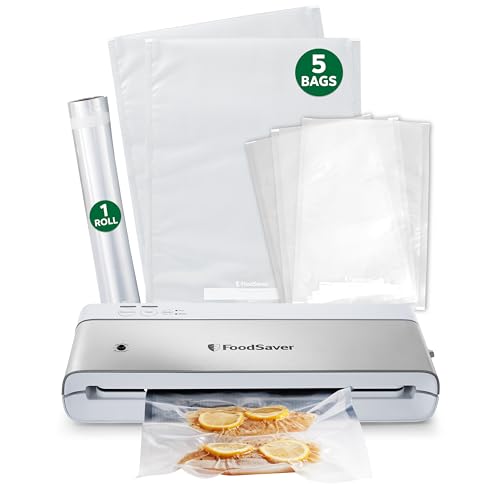
Pros
- Dry and Moist settings
- Vertical storage design
- Includes roll and five bags
- Works with FoodSaver bags and accessories
- Connects to optional Hand Held Sealer
Cons
- Hand Held Sealer sold separately
- Skip it if its 17.9-inch dimension strains counter space
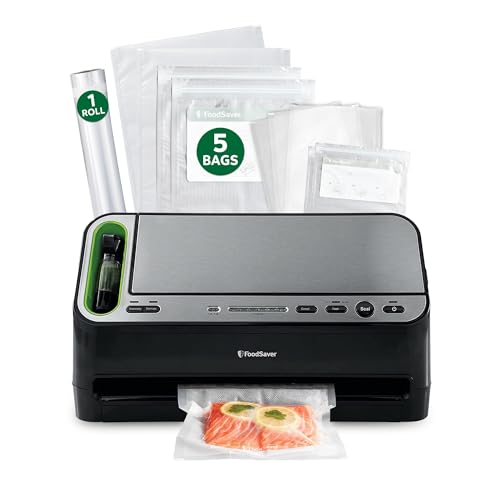
Pros
- Automatic bag and moisture detection
- Built-in roll storage and cutter
- Dishwasher-safe removable drip tray
- Includes multiple bags and a roll
Cons
- Large 20-inch width requires substantial counter space
- Skip if you need a compact countertop appliance
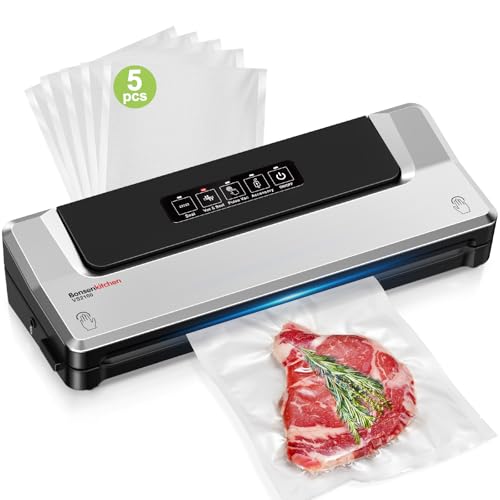
Pros
- Four operating modes
- Compact, lightweight design
- Includes vacuum bags and suction hose
- Three-year coverage commitment
Cons
- Only five vacuum bags included
- Skip it if you need more included bags

Pros
- App-based food tracking
- FreshTrack label printing
- Extra Moist Mode for wet foods
- Removable drip tray
- Built-in bag preparation features
Cons
- Added tracking features may exceed basic sealing needs
- Who should skip it: Basic sealer shoppers wanting no app or labels

Pros
- Automatic bag detection and bag-mouth clamp
- Dry, moist, and pulse vacuum modes
- 0.2-inch widened heating strip
- Includes 10 pre-cut bags and accessories
Cons
- 15.04-inch length needs counter or storage space
- Starter kit includes only 10 pre-cut bags
- Who should skip it: shoppers needing a smaller sealer

Pros
- Double heat-seal option
- Built-in cutter and bag storage
- Removable drip tray
- Includes starter bags and roll
Cons
- Manufacturer performance claims lack independent verification
- Who should skip it: shoppers needing a gyutou knife

Pros
- Wet-food sealing mode
- Built-in bag storage and cutter
- One-hand operation
- Accessory port included
- Included 19-foot bag roll
Cons
- Large countertop footprint for some kitchens
- Who should skip it: Shoppers seeking a smaller sealer

Pros
- Compact profile fits cabinets and drawers
- Built-in cutter customizes bag length
- Includes replacement gasket and external suction hose
- Offers Dry, Moist, and Seal-only functions
Cons
- Starter kit includes only two bag sizes
- Who should skip it: Users needing more included bag sizes
- Safety: Follow included manual for electrical use
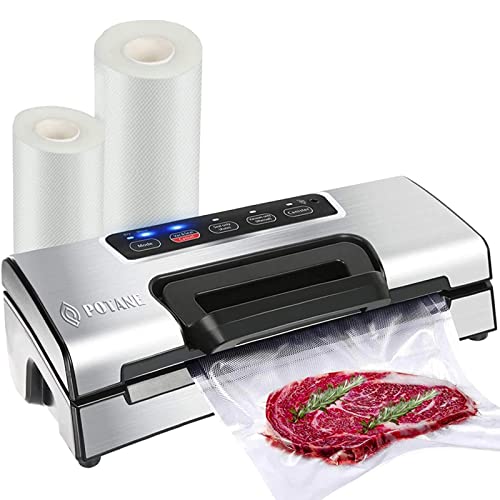
Pros
- Built-in cutter and bag storage
- Automatic and manual sealing options
- Includes two bag rolls
- Compact 4.6-pound design
- Five-year stated guarantee
Cons
- Included bag rolls top out at 16 feet
- Who should skip it: users needing larger included rolls
How to Choose the Best Vacuum Sealer
Match the sealing style to your food
Most models here use heat-seal bags and remove air before sealing. Look for a moist or wet-food setting, pulse control, or both if you often package marinated meat, fish, or softer foods. For example, the Anova Culinary Precision Vacuum Sealer Pro lists a wet mode with lower-pressure suction, while the Bonsenkitchen Vacuum Sealer Machine includes Pulse Vac for manual control.
Delicate foods may be crushed by strong suction, and liquid can interfere with a bag seal. Pulse control can help you stop suction at the right point, but it involves more attention than a one-touch cycle. For soups and other liquids, a container-based approach may be more practical than trying to vacuum-seal them in a bag.
Consider how often you seal and how much at once
If you portion a bulk grocery haul in one session, features such as built-in roll storage, a cutter, and a design intended for repeated sealing can reduce interruptions. The Potane Precision Vacuum Machine,Pro Food Sealer lists a built-in cutter and storage for a roll, and its listing says it is designed for continuous household use. The FRESKO Vacuum Sealer Machine with Automatic Bag also lists continuous sealing of multiple bags in a short session.
For occasional leftovers, a compact or simpler machine may be easier to store and set up. Do not treat advertised suction pressure or motor power alone as proof of better results. Think about your usual batch size, whether you need custom bag lengths, and how much counter space you can leave available.
Check bag and accessory compatibility
Bag-based sealers need compatible textured vacuum bags or rolls, and ongoing bag use is part of the ownership trade-off. Built-in cutters let you make bags to size, which can be useful for irregular portions, though you still need to keep rolls or bags on hand. The FoodSaver V4400 lists compatibility with FoodSaver rolls, premade bags, zipper bags, containers, and optional accessories.
Some machines include an accessory hose for compatible containers or jar lids. Confirm that the accessory you want is included or sold separately, and check that your existing containers fit the sealer’s system before buying.
Plan for cleanup after wet foods
Moisture can collect near the sealing area when packaging juicy foods. A removable drip tray can make cleanup more manageable; the FoodSaver V4400 listing specifies a removable, dishwasher-safe drip tray. That does not mean the whole appliance is dishwasher-safe, so clean the machine according to its instructions.
Reusable systems have a different cleanup routine. The Chef Preserve Compact Vacuum Sealer for Food bundle includes reusable bags and glass vacuum containers, and its listing specifies dishwasher-safe bags and containers. This may suit cooks who want to reuse storage pieces, but check the care directions for each component and consider whether you have room to store them.
Measure storage space and consider the workflow
Countertop footprint matters if the sealer will be put away after each use. The FoodSaver Compact Vacuum Sealer Machine is designed to store vertically, while the 75KPa Vacuum Sealer, Digital Timer listing describes a slim profile intended for drawers or cabinets. Check the listed dimensions and your actual shelf or drawer clearance before choosing.
A more feature-rich machine can save steps during frequent prep but may take up more storage space. Consider where the machine, bags, and any hose or containers will live, not just the appliance footprint.
How We Compared These Products
This comparison is based on the published product listings, including stated modes, design features, included accessories, care details, and available customer feedback. We did not receive firsthand performance evidence, so the recommendations focus on listed features and how they may fit different kitchen routines rather than claiming verified results.
Which Option Fits Your Kitchen?
For reusable storage: The Chef Preserve Compact Vacuum Sealer for Food comes with reusable bags and glass vacuum containers. It is worth considering if you want storage options for delicate foods and liquids as well as bag sealing. Who should skip it: cooks who prefer standard rolls and do not want to manage reusable containers.
For batch prep and bag customization: The Potane Precision Vacuum Machine,Pro Food Sealer lists built-in roll storage and a cutter, plus two rolls in different widths. Those features can help when portioning different foods in one session. Who should skip it: anyone with very limited storage who does not need roll-based customization.
For a smaller storage footprint: The FoodSaver Compact Vacuum Sealer Machine is designed to store vertically and has dry and moist settings. Its compact approach may suit occasional sealing in a crowded kitchen. Who should skip it: cooks who want a built-in cutter or the broader feature set of a larger machine.
Frequently Asked Questions
Can I use any vacuum bag with these machines?
Not necessarily. Many external vacuum sealers require textured bags or rolls that allow air to move toward the machine. Check the specific model’s compatibility information before using bags you already own.
Can a vacuum sealer handle liquids?
Some models offer moist modes or pulse control to help manage foods with moisture, but that does not guarantee a bag seal will work for free-flowing liquid. The Chef Preserve bundle includes glass vacuum containers, which its listing says can be used for liquids such as soups and marinades.
Are vacuum-sealer bags reusable?
It depends on the bag. The Chef Preserve listing specifies reusable bags, while standard heat-seal bags and rolls are intended for sealing portions and may need to be replaced after use. Follow the maker’s care and reuse guidance for the exact bag type.
How should I clean a vacuum sealer?
Follow the appliance instructions and keep water away from parts that are not specified as washable. A removable drip tray can simplify cleanup; the FoodSaver V4400 listing specifically says its drip tray is dishwasher-safe, not the entire machine.
Do all vacuum sealers work for sous vide?
Several listings describe their machines as suitable for sous vide, including the FoodSaver Compact Vacuum Sealer Machine and the Anova Culinary Precision Vacuum Sealer Pro. Check the sealer’s bag compatibility and follow the cooking equipment and bag manufacturers’ directions for the specific task.
What should I measure before buying?
Measure the counter, drawer, or cabinet space where you plan to use or store the appliance. Also consider space for rolls, bags, hoses, and containers, since accessories can add to the storage required.


Write Your Review
No reviews yet. Be the first to share your experience!