

A large stock pot can cook plenty of soup, pasta, or broth, while a Dutch oven handles searing, braising, baking, and slow simmering with stronger heat retention. Choosing between them depends less on a single capacity number and more on how you cook, clean, store, and move heavy cookware.
This Dutch oven vs stock pot guide compares enameled and bare cast iron Dutch ovens with three stainless steel stock pots by construction, cooking surface, oven use, handling, cleaning, and storage. It shows when a Dutch oven makes more sense than a tall stock pot, and when a stock pot is the better tool.
Dutch Oven vs Stock Pot at a Glance
| Enameled cast iron Dutch oven | Bare cast iron Dutch oven | Stainless steel stock pot | |
|---|---|---|---|
| Shape and walls | Thick walls and a fitted lid that hold heat and moisture | Thick walls; camp models may add a flanged lid for coals | Taller and lighter for its capacity, for broth, pasta, and large liquid batches |
| Oven use | Lodge enameled cast iron up to 500°F; STAUB says most pieces to 500°F with the lid | Le Creuset says cast iron can be used in any oven; check the lid and accessories in the listing | Varies by model: the Amazon Basics 8-quart pot in this guide is rated to 500°F |
| Induction | Yes (Le Creuset, STAUB) | Yes (Le Creuset) | Only with a magnetic stainless base (Made In) |
| Seasoning | Not needed (Lodge, STAUB) | Needed; oil after every wash (Lodge) | Not needed |
| Cleaning | Cool first, then hand wash; Lodge and STAUB call it dishwasher safe but prefer hand washing | Hand wash only, dry completely; no dishwasher (Lodge) | The Cuisinart 744-24 in this guide is listed as dishwasher safe |
| Best at | Searing, then braising or baking bread in the oven | Outdoor and coal cooking, if you accept the upkeep | Boiling and simmering large volumes on the stovetop |
For stock pots, Le Creuset’s instructions say to use a burner close to the size of the base and never to heat the pot without liquid in it. For capacity planning, see the Dutch oven sizes chart, which includes Lodge’s serving and chicken-size guidance.
Sources (accessed November 18, 2026): Lodge, Cleaning and Care: Enameled Cast Iron; Lodge, How to Clean Cast Iron; STAUB, Use and Care; Le Creuset Canada, Care and Use; Made In, Does Stainless Steel Work on Induction?.

Pros
- Oven safe up to 500 degrees Fahrenheit
- Self-basting lid design retains cooking moisture
- Compatible with gas, electric, and induction cooktops
- Generous six-quart capacity for batch cooking
Cons
- Heavy empty weight exceeds 14 pounds

Pros
- Oven-safe up to 500 degrees Fahrenheit
- Compatible with induction, gas, electric, and ceramic cooktops
- Lid condensation nodes redistribute moisture onto cooking food
- Includes pair of thick cotton oven mitts
Cons
- Requires 45 minutes natural cooling before cleaning
- Preheating restricted to medium-low heat settings
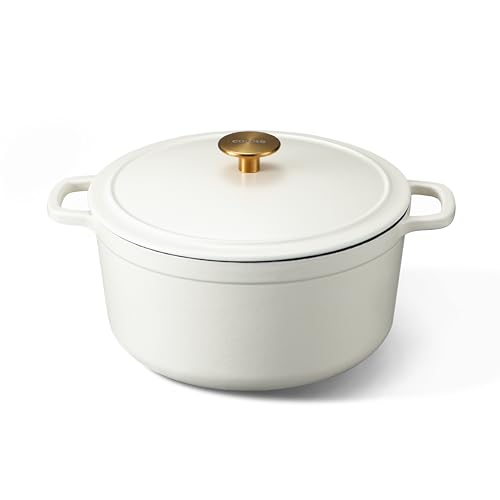
Pros
- Oven-safe up to 500 degrees Fahrenheit
- Compatible with all stovetop types
- Lid nodes direct condensation back into food
- Enamel coating requires no pre-seasoning
Cons
- Heavy empty weight exceeds 13 pounds
- Must cool naturally before washing to protect enamel

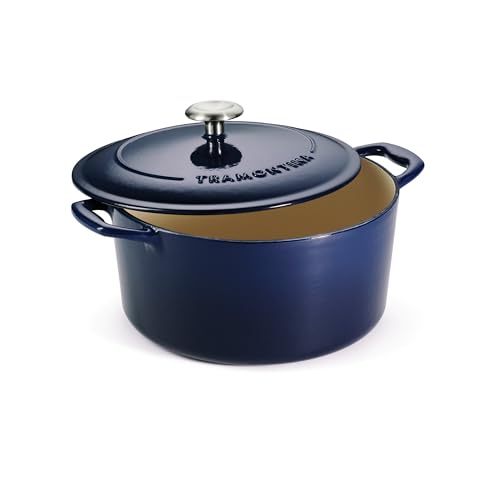
Pros
- Safe in ovens up to 500 degrees Fahrenheit
- Compatible with induction, gas, electric, and ceramic cooktops
- Requires no pre-seasoning before braising or baking
- Interior lid ridges help redistribute moisture during cooking
Cons
- Heavy 13.8-pound empty weight complicates lifting and cleaning

Pros
- Oven-safe up to 500 degrees Fahrenheit
- Works on induction, gas, electric, and ceramic stovetops
- Interior lid nodes redistribute moisture during cooking
- Wide stainless steel handles include cotton potholders
Cons
- Requires 45-minute cooling period before cleaning to prevent cracking
- Preheating limited to medium-low heat to protect enamel

Pros
- Oven-safe up to 500 degrees Fahrenheit
- Compatible with induction cooktops
- Moisture-distributing lid nodes prevent dry food
- Includes thick cotton potholders
Cons
- Heavy 12.7-pound build before adding food

Pros
- Oven safe up to 500 degrees Fahrenheit
- High heat retention from cast iron construction
- Rust-resistant enamel coating requires no seasoning
Cons
- Heavy empty weight of 14.88 pounds
- Hand washing recommended to preserve finish

Pros
- Oven safe up to 500°F
- Self-basting condensation nodes inside lid
- Enamel finish resist acidic food without seasoning
- Induction compatible cast iron construction
Cons
- Requires hand washing with mild soap
- Heavy 12.5-pound weight require deliberate lifting

Pros
- Oven safe up to 500 degrees Fahrenheit
- PFAS-free enamel coating requires no seasoning
- Compatible with stovetop and oven cooking
- Generous six-quart capacity for batch cooking
Cons
- Heavy empty weight at nearly 15 pounds
- Hand washing recommended despite dishwasher safety
Stock Pots to Compare
For comparison, here are three stainless steel stock pots in the 6-quart to 8-quart range.

Pros
- Aluminum encapsulated base distributes heat evenly
- Non-reactive stainless steel interior preserves flavors
- Riveted stay-cool handles ensure secure grip
- Dishwasher safe for straightforward cleanup

Pros
- Induction cooktop compatible
- Oven safe to 500 degrees Fahrenheit without lid
- Dishwasher safe construction
- Sturdy riveted stainless steel handles
Cons
- Glass lid not rated for 500-degree oven heat
The Cuisinart 744-24 Chef’s Classic 6-Quart Stockpot has a stainless cooking surface with an aluminum encapsulated base, riveted stainless handles, and is dishwasher safe. The Calphalon 3-Ply Stainless 6Qt Stock Pot with Lid uses 3-layer construction with an aluminum core and riveted stay-cool handles. The Amazon Basics 8-Quart Stainless Steel Stock Pot adds the most volume, works on any stovetop including induction, and has a tempered glass lid.
Buying Guide: Dutch Oven or Stock Pot
Material and heat retention
Material determines how cookware responds to heat. Enameled cast iron stores heat well and supports searing followed by low, steady cooking. That suits stews, braises, roasts, and bread baking, but heavy walls can take longer to heat and make a full pot harder to lift.
Most of the Dutch ovens here use enameled cast iron, and the Zulay Kitchen 6.4QT, CAROTE 5QT, and Lodge Essential Enamel models name heat retention as a core feature. The Velaze 10 QT Camping Dutch Oven uses bare pre-seasoned cast iron instead, so it needs drying and periodic reseasoning.
Choose enameled cast iron when acidic ingredients, oven braises, and easier surface maintenance matter. Choose bare cast iron when outdoor coal cooking, a flanged lid, and a lid lifter matter more than low-maintenance cleanup.
Cooking surface and maintenance
Enameled interiors do not require seasoning and are suited to ingredients such as tomato, wine, and citrus when the product listing supports that use. Several listed models describe smooth enamel as easier to clean, but enamel still needs careful handling. The Umite Chef listings specifically warn against thermal shock and recommend natural cooling before washing.
Lodge states that its Essential Enamel Cast Iron Dutch Oven is dishwasher safe, while recommending hand washing with warm, soapy water and a nylon scrub brush. Other listings recommend mild soap, soft sponges, or hand washing. Verify care instructions for your chosen model rather than treating all enamel cookware as interchangeable.
A stock pot often wins when you need fast cleanup after cooking a large volume of liquid. Stainless steel stock pots such as the Cuisinart Chef’s Classic 6-Quart, the Calphalon 3-Ply 6-quart, and the Amazon Basics 8-quart are lighter than cast iron and taller for their capacity, which suits soup, broth, and pasta.
Stovetop and oven compatibility
Oven compatibility separates many Dutch ovens from basic stock pots. The enameled Dutch ovens here commonly work on gas, electric, ceramic, and induction cooktops and in the oven, and the Lodge and Mueller models state oven use up to 500°F. Among the stock pots, the Amazon Basics 8-quart pot is rated oven-safe up to 500°F without its lid.
Check whether the stated oven limit applies to the complete pot, lid, knob, and handles. The manufacturer does not list separate limits for every component. The Velaze listing supports stove and oven use at home and outdoor cooking, but its care instructions emphasize gradual heating and avoiding cold water in hot cookware.
Pick a Dutch oven when one-pot recipes move from stovetop searing to oven braising or bread baking. Pick a stock pot when your main task is simmering liquid on the stovetop and oven transfer is not important.
Capacity, shape, and handling
Capacity affects batch cooking, but shape affects access. A Dutch oven has thick walls and a fitted lid, useful for retaining moisture during braises and stews. A tall stock pot generally provides more vertical room for pasta, broth, or large liquid batches, so compare stated capacity and pot height when you plan to boil pasta or make stock.
The Dutch ovens here range from 5 to 10 quarts and the stock pots from 6 to 8 quarts. The 5-quart Dutch ovens suit family-sized meals, the 6-quart models give more room, and the Velaze model lists 10 quarts and outdoor use for 4 to 8 people, though its bare cast iron adds care and handling demands.
Heavy cookware needs secure handles and enough clearance for lifting. Several listings specify wide handles, and some include potholders or gloves. Treat included protection as a convenience, not proof that a full hot pot is easy to carry. Confirm cabinet space, shelf strength, and sink clearance before buying.
Lid design and intended tasks
A tight lid helps retain steam during braising and simmering. The Zulay, CAROTE, Umite Chef, and Mueller listings describe raised interior features that redirect condensation back toward food. That design supports moist cooking, but it does not turn every recipe into a braise or replace recipe-specific liquid control.
Dutch ovens also support bread baking because a heavy covered vessel can retain heat and steam. The Velaze lid adds a different outdoor function: its flanged design holds hot coals and can invert for use as a griddle. Choose lid features according to tasks you perform, not feature count alone.
Storage and cleaning workflow
Cast iron takes more shelf space and weighs more than many thin stock pots. A 5- or 6-quart Dutch oven may fit everyday cooking needs but still require a low shelf or open storage because its lid and broad handles add bulk. The 10-quart Velaze model needs even more storage planning, especially with its stand and lid lifter.
For easier cleanup, favor an enameled interior and a model with care instructions that match your routine. For outdoor use, accept the extra drying and reseasoning steps associated with bare cast iron. More guidance appears in this cast iron rust prevention and restoration guide.
If camping is your main goal, compare the Velaze with this guide to Dutch ovens for camping. If chemical-coating concerns influence your cookware choices, review the discussion of cookware set materials and care without assuming broad safety claims from one product feature.
How We Compared These Products
We compared materials, capacities, cooktop compatibility, oven limits, lid designs, care instructions, included accessories, and intended uses from manufacturer information. We did not cook with these pots, so the notes describe what each is built and sold to do.
Which Option Fits Your Kitchen?
For bread baking and flexible everyday cooking: Mueller DuraCast 6 Quart Enameled Cast Iron Dutch lists 500°F oven use, a self-basting lid, induction compatibility, and an enamel interior that requires no seasoning according to its listing. Verify the full component temperature limits before high-heat use.
For larger family meals: Enameled Cast Iron Dutch Oven lists 6 quarts and a serving claim of 6 to 8 people, plus wide handles and included heat-resistant gloves. Its size fits larger stews and braises, but confirm that your sink and storage shelf can handle its bulk.
For outdoor coal cooking: Velaze 10 QT Pre-Seasoned Cast Iron Camping Dutch lists a flanged coal-holding lid, an inverted griddle function, a stand, and a lid lifter. Its bare cast iron requires drying and possible reseasoning, so it fits buyers willing to follow that maintenance routine.
Frequently Asked Questions
What is the main difference between a Dutch oven and a stock pot?
A Dutch oven usually emphasizes thick heat-retaining walls, a fitted lid, stovetop-to-oven cooking, and searing or braising. A stock pot generally emphasizes taller capacity for broth, pasta, and large liquid batches, with thinner and lighter walls.
Can these Dutch ovens work on induction cooktops?
The published listings for the Zulay, CAROTE, Umite Chef, and Mueller models specify induction compatibility. Confirm the exact model and variant before purchase, especially where product names cover multiple colors or sizes.
Which size suits batch cooking?
The Dutch ovens here range from 5 to 10 quarts and the stock pots from 6 to 8 quarts. A 5-quart Dutch oven suits smaller family meals, 6 quarts provides more room, and the 10-quart Velaze targets larger outdoor batches. For pasta and stock, a 6-quart to 8-quart stock pot gives more height. Use your usual recipe volume and available storage as the deciding factors.
Do enameled Dutch ovens need seasoning?
The enameled Dutch ovens here state that seasoning is not required, and the Velaze bare cast iron model recommends periodic reseasoning. Stainless steel stock pots need no seasoning. Follow each model’s care instructions.
Are enameled Dutch ovens dishwasher safe?
Lodge states that its Essential Enamel Cast Iron Dutch Oven is dishwasher safe but recommends hand washing. Other listed models emphasize hand washing or soft cleaning tools. Check the specific listing and care instructions rather than assuming dishwasher compatibility.
Can I bake bread in these pots?
Several of the enameled Dutch ovens here name bread or sourdough baking as an intended use, including the Zulay, Umite Chef, CAROTE, and Mueller models. Confirm the oven limit and handling requirements before baking.
Which material is easier to maintain?
Enameled cast iron avoids routine seasoning and resists rust on its coated cooking surface, while bare cast iron needs thorough drying and periodic reseasoning. Both materials need careful temperature changes because sudden thermal shock can damage cookware or enamel.




Write Your Review
No reviews yet. Be the first to share your experience!