

Cuisinart sells Dutch ovens in several materials: enameled cast iron, triple-ply stainless steel, and a ceramic model with a hard-anodized exterior. This guide compares three of them so you can choose by weight, heat behavior, and care.
Cast iron suits long braises and bread, stainless steel is lighter and handles searing, and a coated pot is easiest to clean.

Pros
- 7-quart capacity for larger meals
- Induction-compatible cooking surface
- No seasoning required
- Oven and broiler safe
- Dishwasher-safe enamel surface
Cons
- 8-pound weight can make handling demanding

Pros
- Triple-ply stainless steel construction
- Induction compatible
- Dishwasher safe
- Wide-grip handles
- 500°F oven-safe pan
Cons
- Lid oven limit is 450°F
- Lid has a lower oven limit than pan
Buying Guide: Choosing a Cuisinart Dutch Oven
Material
Enameled cast iron holds heat for long braises and bread. Triple-ply stainless steel is lighter and heats quickly. A coated pot is easiest to clean but needs gentler utensils.
Capacity
A 4.5- to 5-quart pot suits a small household, while 7 quarts suits large batches and whole chickens.
Cooktop and oven use
Check induction support and the oven rating for the pot and lid of the exact model.
Care
Let enamel cool before washing. Use non-abrasive pads on coated surfaces, and follow the maker’s cleaning instructions for each material.
How We Compared These Products
We compared these models using manufacturer specifications and product information: capacity, construction, controls, included pieces, cooktop and oven compatibility, and cleaning instructions. We did not cook with them, so the notes below describe what each model is built and sold to do, not measured performance.
Which Option Fits Your Kitchen?
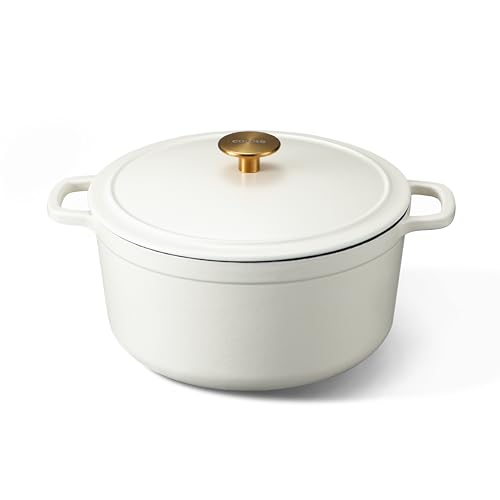
For braises and bread, the Cuisinart 7-Quart Enameled Dutch Oven is heavy-duty cast iron with a porcelain enameled interior and exterior, and works on induction, gas, electric, and halogen cooktops.
For a lighter stainless pot, the Cuisinart PCT3545-24 4.5-Qt Dutch Oven uses triple-ply construction with an 18/10 stainless steel interior, an aluminum core, and wide-grip handles.
For easier cleanup, the Cuisinart 5-Quart Ceramic Dutch Oven has a hard-anodized exterior, measurement markings, drip-free pouring, and riveted stainless steel handles. Cuisinart recommends hot soapy water and a non-abrasive pad for cleaning.
Who should skip cast iron: if you want a pot you can lift easily when full, the stainless or ceramic model is lighter.
Frequently Asked Questions
Which Cuisinart Dutch oven is best for bread?
The enameled cast iron model holds heat best for bread. Check its oven rating before baking.
Is a stainless Dutch oven lighter?
Yes. Tri-ply stainless is lighter than cast iron of a similar size, which makes it easier to lift when full.
How should I clean a coated Dutch oven?
Use hot soapy water and a non-abrasive pad, as Cuisinart recommends for its ceramic model.




Write Your Review
No reviews yet. Be the first to share your experience!