

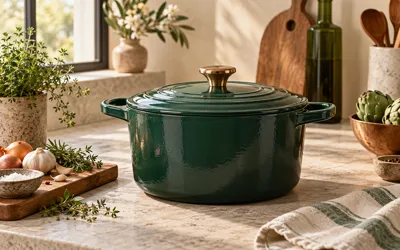
Heavy cast iron pots solve uneven stove heat and dry braises. Thick walls hold heat steady, tight lids trap moisture, and heavy iron moves directly from stovetop into oven. Cooks seeking what are dutch ovens need clarity on enamel coatings, bare iron maintenance, and pot capacities before buying.
This guide compares 10 options from brands like Lodge, Amazon Basics, JANSKA and more. Compare weight limits, heat thresholds, and interior finishes to fit family dinner needs without wasting cabinet space.

Pros
- Heat safe up to 500 degrees Fahrenheit
- Even heat retention from thick cast iron
- Fitted lid locks in cooking moisture
- Large 7-quart capacity for big meals
Cons
- Hand wash only requires regular seasoning upkeep
- Heavy 15-pound weight empty
- Pre-seasoned surface is not non-stick

Pros
- Oven safe up to 500°F
- Self-basting condensation nodes inside lid
- Enamel finish resist acidic food without seasoning
- Induction compatible cast iron construction
Cons
- Requires hand washing with mild soap
- Heavy 12.5-pound weight require deliberate lifting

Pros
- Skillet lid functions as separate cooking pan
- Transitions between stovetops, ovens, grills, and campfires
- Dense cast iron delivers even heat retention
Cons
- Heavy 13.13-pound weight complicates handling and washing

Pros
- Oven-safe up to 500 degrees Fahrenheit
- Compatible with induction, gas, electric, and ceramic cooktops
- Lid condensation nodes redistribute moisture onto cooking food
- Includes pair of thick cotton oven mitts
Cons
- Requires 45 minutes natural cooling before cleaning
- Preheating restricted to medium-low heat settings

Pros
- Oven safe up to 500 degrees Fahrenheit
- Enamel finish eliminates regular seasoning requirements
- Generous 6.4-quart capacity for batch cooking
- Cast iron retains heat evenly for slow cooking
Cons
- Heavy 14.2-pound weight before adding food

Pros
- Oven safe up to 500 degrees Fahrenheit
- Self-basting lid design retains cooking moisture
- Compatible with gas, electric, and induction cooktops
- Generous six-quart capacity for batch cooking
Cons
- Heavy empty weight exceeds 14 pounds

Pros
- Compatible with induction and standard stovetops
- Oven safe up to 500 degrees Fahrenheit
- Self-basting lid helps retain cooking moisture
- Enamel coating requires no initial seasoning

Pros
- Oven-safe up to 500 degrees Fahrenheit
- Works on induction, gas, electric, and ceramic stovetops
- Interior lid nodes redistribute moisture during cooking
- Wide stainless steel handles include cotton potholders
Cons
- Requires 45-minute cooling period before cleaning to prevent cracking
- Preheating limited to medium-low heat to protect enamel

Pros
- Oven safe up to 500 degrees Fahrenheit
- High heat retention from cast iron construction
- Rust-resistant enamel coating requires no seasoning
Cons
- Heavy empty weight of 14.88 pounds
- Hand washing recommended to preserve finish

Pros
- Oven-safe up to 500 degrees Fahrenheit
- Compatible with induction cooktops
- Moisture-distributing lid nodes prevent dry food
- Includes thick cotton potholders
Cons
- Heavy 12.7-pound build before adding food
Buying Guide: What Are Dutch Ovens and How to Choose
Material and Surface Coating
Bare cast iron requires oil seasoning and hand drying to stop rust. Bare iron handles open campfire coals and extreme grill heat safely. Enamel coatings seal cast iron under smooth glass glaze. Glazed surfaces cook acidic tomato sauces without reacting, need zero seasoning, but chip under metal utensils or sudden temperature drops.
Capacity and Usable Space
Pot capacity dictates batch sizes and shelf fit. Five-quart pots suit three to four servings and fit compact kitchens, similar to space tradeoffs seen with microwaves countertop models. Six-quart and seven-quart pots hold whole chickens, large roasts, and large soup batches. Measure cabinet depth before purchase because wide side handles increase required clearance.
Lid Design and Condensation Control
Heavy lids keep moisture locked inside cooking chambers. Lids with underside condensation nodes direct rising steam back onto meats automatically. Smooth lids let steam run down pot sides. Flat skillet lids, like dual-function designs, invert to cook eggs or sear steaks, adding utility for kitchens lacking storage.
Heat Limits and Cooktop Compatibility
Cast iron conducts across gas, electric, ceramic, and induction burners. Most enameled pots tolerate oven temperatures up to 500 degrees Fahrenheit. Stainless steel knobs withstand high heat during bread baking, while composite knobs degrade faster. Check countertop heating appliances like toaster ovens best suited for daily baking to verify interior chamber clearance for tall pot lids.
Weight, Handles, and Everyday Cleaning
Heavy iron walls guarantee steady heat retention, but empty pots weigh ten to fifteen pounds. Wide loop handles allow firm grip with bulky silicone mitts. Enamel washes clean with warm water and soft sponges, while bare iron needs quick drying and oil coats. Cooks prioritizing fast cleanups often balance heavy cookware against easy-care gear like electric kettles stainless steel units.
How We Compared These Products
This comparison relies on manufacturer specifications, material disclosures, dimensions, and customer feedback patterns rather than firsthand laboratory tests. Analysis examines stated oven temperature limits, lid condensation systems, interior coatings, handle ergonomic clearance, and reported reliability across home cooking environments.
Which Option Fits Your Kitchen?
For outdoor cooking, campfires, or multi-use flexibility, Lodge Cast Iron Double Dutch Oven delivers bare iron durability. Lid doubles as five-quart skillet, saving storage space while tolerating direct flame without enamel chipping risks.
For family meals and low-maintenance acid cooking, Mueller DuraCast 6 Quart Enameled Cast Iron Dutch provides 500-degree oven tolerance and self-basting lid nodes. Smooth enamel interior handles tomato sauces and braises without seasoning upkeep.
For high-volume batches and big roasts, Amazon Basics Pre-Seasoned Cast Iron Dutch Oven offers generous seven-quart volume. Extra space prevents overcrowding during large-batch stews, provided you maintain traditional oil seasoning.
Frequently Asked Questions
What cooking tasks require cast iron dutch pots?
Thick iron pots excel at slow braises, deep frying, soups, stews, and sourdough bread baking. Heavy walls retain heat evenly, keeping oil temperatures steady and creating steam chambers for bread crusts.
Can enameled pots go into dishwashers?
Hand washing protects enamel luster and prevents edge dulling. Harsh dishwasher detergents erode glossy porcelain surfaces over time. Cool pots naturally before washing to avoid thermal shock cracks.
Do enameled interiors require seasoning?
Porcelain enamel seals iron completely. Glass barrier prevents rust and stops food contact with raw metal, eliminating seasoning oil requirements entirely.
How do cast iron lids compare to glass lids?
Cast iron lids maintain high oven heat and create tighter moisture seals due to heavy weight. Glass lids offer visual monitoring but lack heat retention and node-based condensation circulation.
Can these pots sit on induction cooktops?
Cast iron contains magnetic ferrous metal, making pots naturally compatible with induction elements. Smooth flat bases protect glass induction tops, provided users lift pots instead of sliding them.


Write Your Review
No reviews yet. Be the first to share your experience!