

A board that is easy to wash may feel different under a knife than one made from wood, and a multi-board set can take more storage space than a single board. This guide to the best non-toxic cutting board options compares materials, sizes, surfaces, and care features so you can match a board to your cooking habits.

Pros
- Dishwasher safe for easy cleanup
- Dual-sided design separates meat and produce
- Non-porous surfaces prevent odor absorption
- Built-in juice groove catches excess liquids
- Stainless steel handle aids grip and hanging


Pros
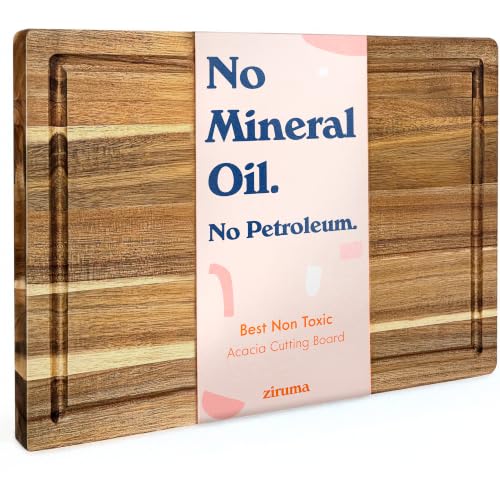
- Solid acacia construction
- FSC-certified wood
- Natural oil and beeswax finish
- Manufacturer-described knife-friendly surface
- 2.9-pound weight
Cons
- Who should skip it: cooks needing a larger cutting area
Pros
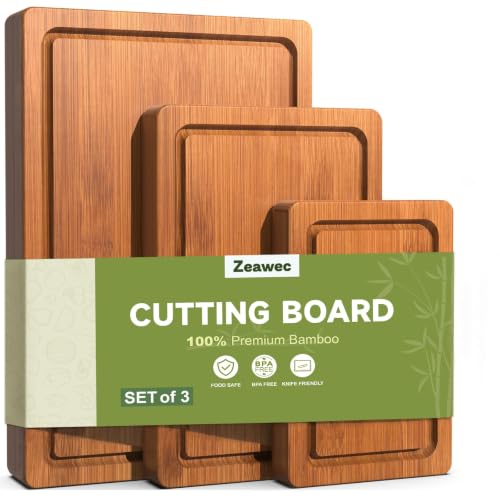
- Three-piece set supports varied prep tasks
- Deep juice grooves contain liquids
- Pre-oiled bamboo surface supports knife care
- Carbonized bamboo resists cracking and splitting
Cons
- Care instructions are not listed in published specifications
- Dishwasher compatibility is not specified
- Skip it if dishwasher compatibility is essential

Pros
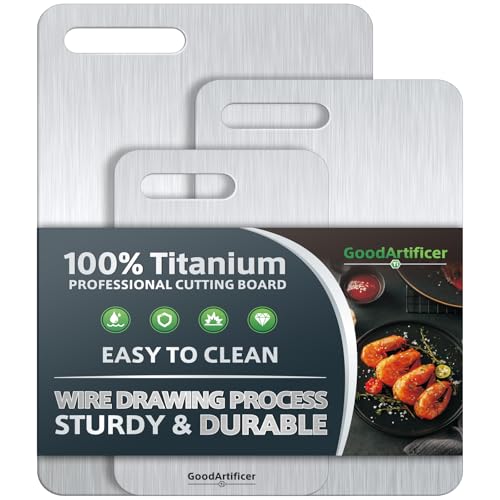
- Three board sizes for different prep tasks
- Reversible surfaces for serving
- Stackable for storage
- Built-in juice grooves
Cons
- Care requirements are not specified
- Who should skip it: buyers requiring stated dishwasher compatibility
How to Choose the Best Non-Toxic Cutting Board
Choose a surface that suits your knife work
Wood and bamboo are the natural-material choices in this comparison. The Ziruma acacia board is 1 inch thick and described by its maker as knife-friendly. The two bamboo sets from zeawec and ROYAL CRAFT WOOD offer several board sizes, while the latter specifies three boards measuring 14 by 11, 11 by 9, and 8 by 7 inches. Bamboo boards may suit cooks who want multiple prep surfaces, but they require wood-board care.
Titanium and stainless steel designs offer non-porous surfaces according to their manufacturers, but metal can feel quite different from wood when chopping. The Mirtan titanium board pairs a titanium side with food-safe PP on the other, giving you a choice of surfaces. If preserving a familiar wood feel matters, compare the acacia and bamboo options; if easy rinsing is the priority, consider a metal-surface design.
Single board or a set of sizes
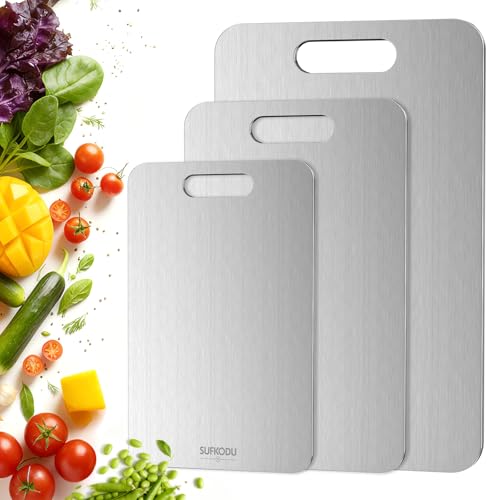
A larger board gives you more room for batch prep, but it also needs more counter and cabinet space. The Ziruma board measures 16 by 11 inches, while the Mirtan titanium board measures 15 by 10.5 inches. Three-piece sets from UFJEG, zeawec, ROYAL CRAFT WOOD, sufkodu, and GoodArtificer offer different sizes for separating tasks or handling small portions; check the listed dimensions against your sink, dishwasher, and storage space before choosing.
Separate raw and ready-to-eat prep
Using distinct surfaces for raw proteins and ready-to-eat foods can make kitchen workflow easier to organize. Mirtan describes its titanium side for raw meat and seafood and its PP side for produce and other ready-to-eat foods. Sumzzz also pairs titanium and PP sides, while SNOWCLAD pairs stainless steel and wheat-straw PP. Double-sided construction can help distinguish tasks, but keep raw-food handling and cleaning practices in mind whichever board you use.
Grooves, stability, and handling
A juice groove can help contain liquid from meat or fruit, particularly during messy prep. Mirtan, Sumzzz, SNOWCLAD, zeawec, and ROYAL CRAFT WOOD specify grooves; Mirtan also lists anti-slip silicone edges, and SNOWCLAD has a handle for carrying or hanging. These details add convenience, but grooves take space away from the flat cutting area. If you often chop large quantities, check the usable surface as well as the board’s outside dimensions.
Cleaning and ongoing care
Dishwasher compatibility is specified for the titanium sets from sufkodu and GoodArtificer, the UFJEG set, and the Mirtan and SNOWCLAD boards. Mirtan recommends hand washing for long-term care despite listing dishwasher compatibility. Wood and bamboo boards generally need hand washing and thorough drying rather than dishwasher treatment; the Ziruma board has a beeswax, flaxseed, and lemon oil finish, and the zeawec set is described as pre-oiled. Follow the maker’s care instructions and consider whether you are willing to maintain a wood surface.
How We Compared These Products
We compared the stated materials, dimensions, number of boards, reversible or dual-sided designs, handling details, and cleaning guidance. The comparison also considers how those features may fit everyday tasks such as separating prep surfaces, catching juices, storing a multi-piece set, or choosing between a wood-like and non-porous surface.
Which Option Fits Your Kitchen?
For a substantial wood board: The wood cutting board guide offers more context on wood materials and care. Within this roundup, the Ziruma acacia board has a 16-by-11-inch surface and 1-inch thickness, with a natural oil and beeswax finish specified by its maker. Pros: solid acacia and a stated knife-friendly surface. Cons: it is a single, substantial board rather than a multi-size set, and wood needs ongoing care. Who should skip it: cooks who want a dishwasher-safe board.
For several wood prep sizes: The ROYAL CRAFT WOOD set includes three sizes and reversible surfaces described for prep and serving. Pros: size variety, stacking storage, and juice grooves. Cons: the set needs room for multiple boards and bamboo care. Who should skip it: anyone who prefers a single board or routinely puts boards in the dishwasher.
For easier cleanup and separated surfaces: The Mirtan titanium board combines titanium and PP, with a juice groove and anti-slip edges. Pros: two distinct surfaces and dishwasher compatibility, with hand washing recommended for long-term care. Cons: it is not an all-wood board, and the metal side may not suit cooks who prefer wood under a knife. Who should skip it: shoppers set on a traditional wood surface. For more knife and board pairing ideas, see our guides to a chef knife for chopping vegetables and budget knife sets.
Frequently Asked Questions
What does non-toxic mean for a cutting board?
The phrase can refer to different material and finish claims. Check the stated board material and any coating or conditioning treatment rather than treating the label alone as a guarantee. For example, Ziruma specifies beeswax, flaxseed oil, and lemon oil; other boards use bamboo, titanium, PP, or stainless steel.
Are wooden cutting boards dishwasher-safe?
The wood and bamboo product descriptions here do not specify dishwasher compatibility. As a general care practice, wash wood boards by hand, dry them promptly, and follow the maker’s instructions to reduce the risk of moisture-related damage.
Does a double-sided board replace two separate boards?
It can provide two designated surfaces, but it does not remove the need to clean surfaces between tasks. Mirtan and Sumzzz specify titanium and PP sides, while SNOWCLAD specifies stainless steel and wheat-straw PP. Follow safe food-handling practices for raw and ready-to-eat ingredients.
Which board is easiest to clean?
Several metal-surface options are described as easy to rinse, and some are specified as dishwasher-safe. Check the particular model’s care guidance: Mirtan, for example, recommends hand washing for best long-term care despite listing dishwasher compatibility.
Do juice grooves make a board better for every task?
Grooves can help catch liquid during meat or juicy-produce prep, but they reduce the uninterrupted flat area available for chopping. If you mostly slice bread or dry vegetables, a plain surface may be more useful.
How should I choose a board size?
Consider the largest ingredient you usually prep, the counter area available, and where the board will dry or be stored. Multi-piece sets offer flexibility, while one larger board can provide a continuous work surface with fewer pieces to put away.




Write Your Review
No reviews yet. Be the first to share your experience!