

A dull kitchen knife can slow meal prep, but an electric sharpener that handles only the blades you own may not justify its counter space. This guide to the best electric knife sharpener compares sharpening designs, supported blade types, cleanup features, and versatility so you can match a model to your knives and maintenance habits.
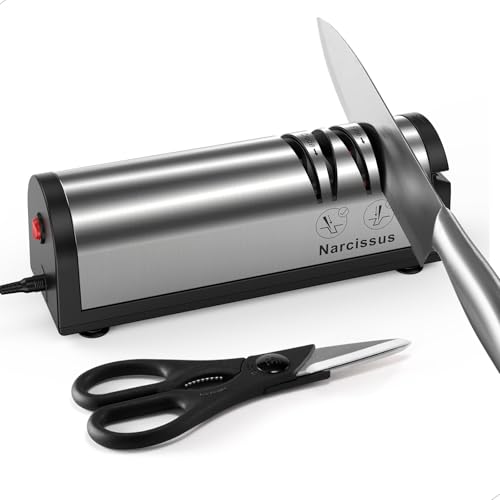
Pros
- Two-stage sharpening and polishing
- Scissors sharpening slot
- Magnetic dust collection box
- Compact countertop footprint
- Extended manufacturer service coverage
Cons
- Designed around several straight-blade knife types
- Requires correct knife angle and wall contact
- Who should skip it: Users needing serrated or specialty-blade sharpening

Pros
- Flexible belts handle varied blade shapes
- Two speeds support lighter and heavier tasks
- Edge guide supports sharpening to the tip
- Three-year warranty
Cons
- Powered abrasive belts require careful handling
- Less suited to users seeking manual sharpening
- Who should skip it: cooks seeking nonpowered sharpening

Pros
- Three stages cover sharpening, refining, and polishing
- Supports straight-edge, serrated, and ceramic knives
- Non-slip feet and magnetic collector simplify handling
Cons
- Large 12.2-inch footprint needs counter space
- Sharpening time varies with blade condition
- Who should skip it: cooks needing a compact sharpener
How to Choose the Best Electric Knife Sharpener
Match the sharpener to your blades
Compatibility is the first filter: a sharpener intended for straight-edge kitchen knives may not suit a serrated blade, scissors, or ceramic knife. Narcissus describes its model for straight-blade kitchen knives and includes a scissors slot. Work Sharp lists a broader range, including kitchen and pocket knives, scissors, axes, garden tools, and serrated knives. Hrevzon says its three-stage model accommodates straight-edge, serrated, and ceramic knives.
Check the manufacturer’s instructions for your exact blade type before buying. If you mainly maintain chef’s and santoku knives, a kitchen-focused design may be enough. If you want one sharpener for kitchen and outdoor tools, consider whether Work Sharp’s belt system fits your needs.
Choose the sharpening stages for your maintenance routine
Two-stage systems separate coarse sharpening from fine sharpening or polishing. Narcissus describes a coarse stage for sharpening and a fine stage for polishing. Hrevzon adds a third polishing stage, with its coarse stage intended for dull edges and minor nicks, its fine stage for everyday sharpness, and its polish stage for refining the edge.
More stages can offer a distinct finishing step, but they also mean more choices during use. For routine care of kitchen knives, a two-stage setup may be simpler. If you value a separate polishing step, compare the three-stage layout and follow the instructions for which slot to use.
Consider the abrasive and sharpening mechanism
Hrevzon identifies diamond abrasive grinding wheels and a flexible abrasive stropping stage. Narcissus describes a two-stage electric sharpening and polishing system, while Work Sharp uses flexible belts that conform to blade edges and can be used on a range of tools.
These designs serve different priorities. A pull-through wheel system has defined slots, while flexible belts support varied tool shapes but call for attention to the manufacturer’s technique. If you are new to sharpening, consider how clearly the instructions explain blade placement and movement before choosing.
Look at control and guidance
Electric power does not remove the need to guide a blade consistently. Hrevzon describes precision angle guides, a handle, and a non-slip base. Narcissus instructs users to keep the blade in contact with the slot’s outer wall while pulling it through. Work Sharp lists an edge guide that supports the knife toward the tip and a two-speed motor.
If you are a beginner, a clear guide and a stable base may make the process easier to manage. If you sharpen heavier tools as well as knives, adjustable speed may be useful, but check the manufacturer’s instructions for the appropriate belt and technique for each tool.
Plan for shavings and cleanup
Sharpening produces metal shavings, so collection features can reduce the mess around your work area. Hrevzon describes a detachable magnetic collection box, and Narcissus lists a magnetic dust collection box. Neither feature means the whole appliance is washable; follow the care instructions and check how the collection area is removed and emptied.
If you sharpen knives near food-preparation areas, consider where you can set the appliance and collect debris without spreading it across a cutting surface. A removable collector may simplify disposal, but verify the cleaning steps before purchase.
Balance versatility with storage and setup
A sharpener that handles several tool types can replace separate devices, but its usefulness depends on whether you will actually sharpen those tools. Work Sharp’s listed range extends beyond kitchen knives; the two pull-through models are described around kitchen use, with Narcissus also including a scissors slot.
Dimensions are not listed here, so check the manufacturer’s product details if cabinet or counter space is tight. Also confirm the electrical requirements for your kitchen. Narcissus specifies a 100–240V design; do not assume that detail applies to the other models.
How We Compared These Products
We compared the sharpeners by their stated blade compatibility, sharpening stages and mechanisms, guidance features, debris collection, and range of intended tasks. We also considered how those differences may affect everyday knife upkeep, tool versatility, cleanup, and storage decisions.
Which Option Fits Your Kitchen?
For a kitchen-focused sharpener with a scissors slot: Narcissus Knife Sharpener uses a two-stage design for straight-blade kitchen knives and includes a separate scissors slot. It may suit cooks who want a straightforward sharpening and polishing setup. Its stated knife compatibility is narrower than the broad tool range described for Work Sharp. Who should skip it: anyone seeking stated support for ceramic or serrated knives.
For sharpening kitchen knives and other tools: Work Sharp MK2 Electric Knife Sharpener uses flexible belts and a two-speed motor, with the manufacturer listing kitchen and pocket knives, scissors, axes, and garden tools among compatible tasks. That breadth may appeal if you maintain outdoor tools as well as kitchen blades. Who should skip it: cooks who want a kitchen-only pull-through sharpener with a dedicated polishing stage.
For a three-stage kitchen setup that includes ceramic knives: Electric Knife Sharpener 100% Diamond Abrasives has coarse, fine, and polish stages, and Hrevzon lists straight-edge, serrated, and ceramic knives as compatible. Its magnetic collector and non-slip feet are also useful features to compare if you prioritize a tidier, stable setup. Who should skip it: buyers who need a sharpener for axes or garden tools.
Frequently Asked Questions
Can these sharpeners handle serrated knives?
Hrevzon lists serrated knives as compatible, and Work Sharp lists serrated knives among the tools its flexible belts can sharpen. Narcissus describes its sharpener for straight-blade knives, so check its instructions before using it on a serrated blade.
Can I sharpen ceramic knives with an electric sharpener?
Hrevzon lists ceramic knives among the compatible types for its model. The other two descriptions do not specify ceramic-knife compatibility, so confirm with their manufacturers before use.
Do the models sharpen scissors?
Narcissus has a scissors slot, and Work Sharp lists scissors among the tools its belts can sharpen. Hrevzon’s stated compatibility focuses on knife types, so verify with the manufacturer if scissors sharpening is important to you.
How many stages do I need?
A two-stage sharpener separates coarse sharpening from fine sharpening or polishing. Hrevzon’s third stage provides a separate polishing step. Choose based on the sharpening sequence you want and follow the instructions for your knife’s condition.
Are the magnetic collectors removable?
Hrevzon describes its magnetic collection box as detachable. Narcissus lists a magnetic dust collection box but does not specify whether it is removable. Check each model’s cleaning instructions and do not assume the appliance itself can be washed.
Which option is suited to outdoor tools?
Work Sharp is the only model here whose manufacturer lists axes and garden tools, along with knives and scissors. Check the belt and technique instructions for the particular tool you plan to sharpen.
How much storage space should I plan for?
Dimensions are not listed here, so check the product details before setting aside cabinet or counter space. Also consider whether you want to store belts, keep the unit accessible for frequent touch-ups, or use it only occasionally.






Write Your Review
No reviews yet. Be the first to share your experience!