

A knife that feels quick and precise for slicing may need more careful upkeep than a heavier, more forgiving kitchen workhorse. The best professional chef knife for your kitchen depends on the foods you prep, the grip and blade style you prefer, and whether you will hand-wash and maintain it.
This guide compares traditional German-style designs, Japanese-style blades, a budget-friendly option, and a five-knife set. It also helps you distinguish a chef knife from a sharpener, which supports knife care but is not a cutting tool.
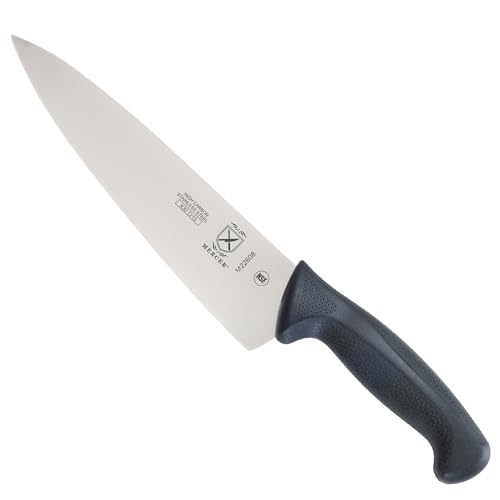
Pros
- Textured handle with non-slip finger points
- High-carbon Japanese steel
- Suitable for varied chopping and mincing tasks
- Tang provides balance
Cons
- Requires hand washing and complete drying
- Who should skip it: cooks seeking dishwasher-safe care

Pros
- Fully forged construction
- Lightweight design
- Suitable for varied kitchen tasks
Cons
- Skip if blade material details matter; material is unspecified
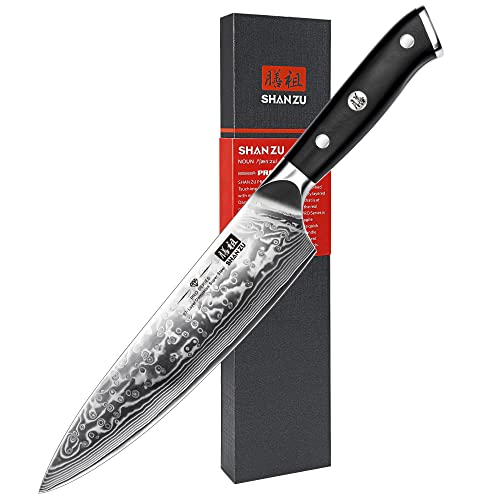
Pros
- 8-inch general-purpose blade
- G10 handle
- 67-layer steel construction
Cons
- Who should skip it: cooks seeking a lighter knife

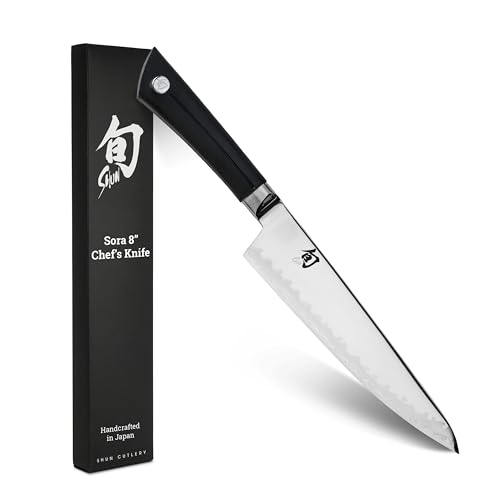
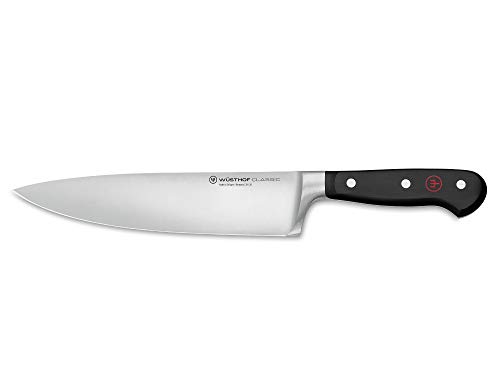
Pros
- Versatile 8-inch blade
- Full-tang, triple-riveted construction
- Ergonomic synthetic handle
Cons
- Skip if you prefer a lighter knife
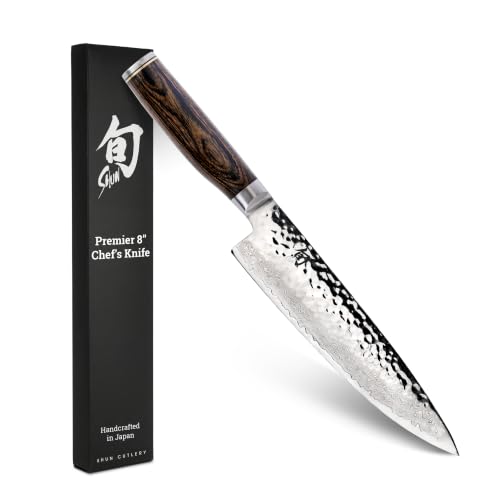
Pros
- Versatile 8-inch chef’s knife
- Hammered blade finish
- Contoured handle for either hand
- Free sharpening and honing support
Cons
- Who should skip it: cooks who do not need an 8-inch chef’s knife

Pros
- VG10 steel core
- Hand-sharpened 12-degree edge
- Full-tang handle
- Leather sheath included
Cons
- Hand wash and dry immediately
- Not for bones or frozen foods
- Who should skip it: cooks wanting dishwasher-safe care

Pros
- Versatile 8-inch blade
- Full-tang forged construction
- Full blade access for sharpening
Cons
- Hand wash only
- Who should skip it: cooks needing dishwasher-safe knives

Pros
- Five knives for varied prep tasks
- Includes two 8-inch knives
- Pakkawood handles with three anchor points
Cons
- Who should skip it: cooks who need only one or two knives
How to Choose the Best Professional Chef Knife
Match the blade to your prep tasks
An 8-inch chef knife is a versatile size for chopping vegetables, mincing herbs, and slicing many everyday ingredients. Mercer describes its Millennia knife as suited to chopping, mincing, and cutting, while Wüsthof lists its Classic for chopping, mincing, slicing, and dicing. If you often work with small portions or have limited board space, consider whether an 8-inch blade feels manageable for your usual prep area.
A chef knife is not a substitute for a cleaver or bone-cutting knife. Atumuryou specifically advises against using its knife on bones, frozen foods, or other hard objects. For these jobs, choose a tool intended for the task rather than risking damage to a fine edge.
Consider steel, edge angle, and upkeep
Steel type and edge geometry influence the balance between sharpness, edge maintenance, and toughness. The Shun Sora has a VG10 edge supported by stainless steel and a 16-degree edge; the Shun Premier also has a 16-degree edge, with a VG-MAX core and Damascus cladding. The SHAN ZU specifies a 15-degree cutting angle, while Atumuryou lists a hand-sharpened 12-degree edge and 62 HRC hardness. These specifications describe different designs, not a guarantee that one knife will suit every cook better.
Some harder, acute-edged Japanese-style knives call for more careful handling and maintenance than a general-purpose knife. If you want to keep an edge in shape at home, compare your preferred method with the knife maker’s care guidance. A dedicated electric knife sharpener may be useful, but check that its angle guides and sharpening process are suitable for your specific knife.
Choose a grip and balance that suit your hand
Handle shape and texture matter during repetitive prep. Mercer describes textured finger points for a non-slip grip, while the HENCKELS Classic uses a traditional triple-rivet handle and fully forged construction. The Shun Sora has a textured polymer-blend handle; the Shun Premier uses a contoured Pakkawood handle. If you have a chance to handle a knife before buying, check that your fingers clear the board and that the grip feels secure in your usual pinch or handle grip.
Weight can also affect control and fatigue, but the feel is personal. Wüsthof lists its Classic at 8.5 ounces, while SHAN ZU lists its knife at 270 grams. Do not assume heavier means more capable: consider the knife’s balance and your comfort over a full meal’s prep.
Plan for cleaning and storage
Care preferences can narrow the field. Mercer recommends hand-washing, rinsing, and drying its knife; Amazon Basics also specifies hand-wash care. HENCKELS says its Classic can be cleaned in a dishwasher or by hand, but hand-washing and drying are sensible habits for preserving a sharp edge and avoiding contact with other utensils.
Before buying, decide where the knife will live. A knife block, drawer insert, or blade guard can protect an edge and keep it from loose utensils. Atumuryou includes a leather sheath, which may help with covered storage; confirm that your preferred storage spot can accommodate an 8-inch blade. A cutting board guide can also help you choose a surface that suits your prep and cleanup routine.
Decide whether you need one knife or a set
A single chef knife makes sense if it will handle most of your chopping and you already own smaller knives. Brewin’s five-piece set includes two 8-inch knives, a santoku, a utility knife, and a paring knife, so it may suit a kitchen starting from scratch. The trade-off is storing several tools when you may only reach for one or two. For a compact prep routine, consider whether a single knife and a suitable board meet your needs before adding a set or vegetable chopper.
One item in this comparison, the Chef’sChoice 15XV EdgeSelect, is an electric sharpener rather than a chef knife. Its manufacturer describes a three-stage system with diamond abrasives and angle guides. Its advantage is a dedicated sharpening workflow; its drawback is that it takes counter or storage space and is not a cutting tool. Skip it if you only need a knife or prefer a manual sharpening method.
How We Compared These Products
We compared the stated blade materials, edge angles, handle designs, intended tasks, care instructions, and included pieces where applicable. The comparison also considers practical trade-offs, such as whether a knife calls for hand-washing, whether a set suits a kitchen that needs several tools, and whether a sharpener fits a buyer’s maintenance routine.
Which Option Fits Your Kitchen?
For an affordable single knife with a textured grip, consider the Mercer Culinary M22608 Millennia Black Handle. Its stated uses cover common chopping and mincing jobs, and its maker recommends hand-washing. Skip it if dishwasher cleanup is a priority or you want a Japanese-style acute edge.
For a Japanese-style knife with a more approachable polymer handle, the Shun Sora 8″ Chef’s Knife pairs a VG10 edge with a 16-degree edge angle. Its narrow gyuto-style blade is described as maneuverable. Skip it if you prefer a traditional German-style profile or do not want to follow the maker’s knife-care recommendations.
If you need several knife types in one purchase, the Brewin CHEFILOSOPHI Japanese Chef Knife Set 5 PCS includes two 8-inch knives plus santoku, utility, and paring knives. The set’s drawback is its larger storage demand compared with buying a single chef knife. Skip it if your drawers or counter space are tight, or if you already have the smaller knives you use.
Frequently Asked Questions
Is an 8-inch chef knife a useful everyday size?
For many home cooks, an 8-inch blade offers a practical balance for general chopping and slicing. If your cutting board is small or you prefer a shorter blade, consider your available workspace and comfort before choosing.
What is the difference between Japanese- and German-style knives?
These labels cover varied designs, so compare the specific blade, edge angle, weight, and handle rather than relying on origin alone. The models here include different edge angles and constructions; select based on the care and cutting feel you prefer.
Can I put a chef knife in the dishwasher?
HENCKELS says its Classic can be cleaned in a dishwasher or by hand. Mercer and Amazon Basics specify hand-washing, and Atumuryou advises hand-washing and immediate drying. Follow the care directions for your exact model.
Can a chef knife cut through bones or frozen food?
Do not assume a chef knife is designed for hard materials. Atumuryou warns against using its knife on bones and frozen foods. Use a tool designed for those tasks and follow the maker’s instructions for the knife you own.
Do I need a knife set or just a chef knife?
If you already have a paring knife and utility knife, a single chef knife may cover much of your daily prep. A set such as Brewin’s includes several knife types, but requires more storage and may duplicate tools you already own.
Is the Chef’sChoice 15XV a chef knife?
No. It is an electric knife sharpener. Chef’sChoice describes it as a three-stage sharpener for straight-edge and serrated knives, so consider it only if you are also shopping for a sharpening tool.




Write Your Review
No reviews yet. Be the first to share your experience!