

A santoku’s shorter, broad blade can make everyday slicing and chopping feel manageable, but the right size and handle depend on what you prep and how you store and clean your knives. This guide to the best santoku knife compares blade designs, grip materials, and care details so you can narrow the options to fit your routine.
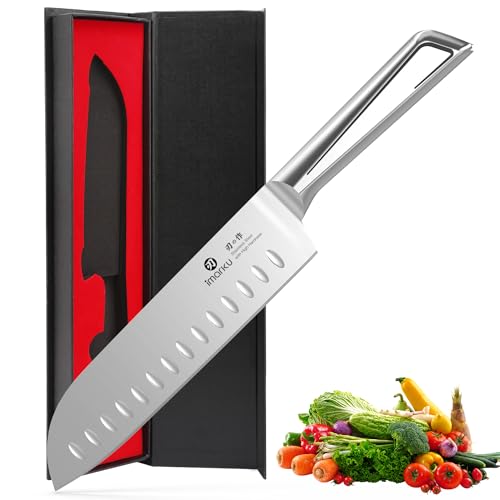
Pros
- Hollow edge designed for food release
- Seamless stainless steel handle
- Stated dishwasher-safe construction
Cons
- Who should skip it: cooks who prefer longer blades

Pros
- Versatile for everyday kitchen prep
- Triple-layer laminated steel blade
- Ergonomic pakkawood handle
- Double-sided grooves
Cons
- Care instructions are not provided
- Who should skip it: buyers needing stated care guidance
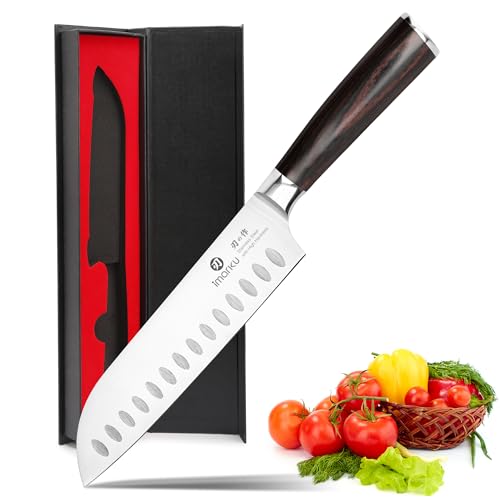
Pros
- Versatile size for everyday prep
- Hollow edge designed to reduce sticking
- Textured Pakkawood handle
Cons
- Care and storage requirements are not specified
- Skip it if you need documented maintenance guidance

Pros
- Compact 5-inch blade
- High-carbon stainless steel
- Pakkawood handle
- Versatile for chopping, slicing, and dicing
Cons
- Shorter blade may not suit larger cutting tasks
- Skip it if you prefer a full-size chef’s knife

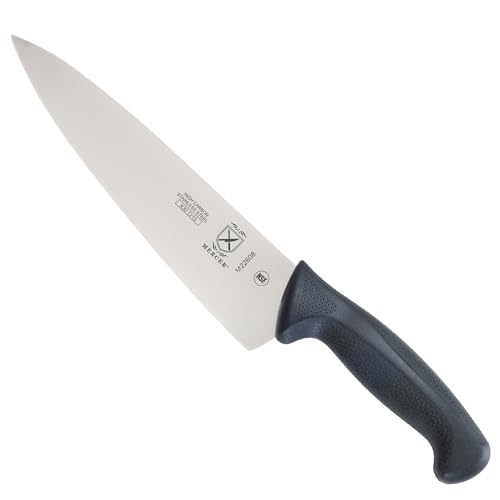
Pros
- Protective sheath included
- Ergonomic plastic handle
- Nonstick blade coating
Cons
- Manufacturer advises against dishwasher cleaning
- Skip it if dishwasher-safe knives are essential
How to Choose the Best Santoku Knife
Choose a blade length for your prep space
A 7-inch blade gives you more edge for repetitive chopping and slicing, while a 5-inch blade can be easier to maneuver for small portions or detailed work. The lineup includes both sizes: the 5-inch imarku Santoku Knife 5 Inch is the compact option, and the other four have 7-inch blades. If you have a small cutting board or limited drawer space, consider whether the shorter blade suits your usual ingredients before choosing by size alone.
Match the edge design to the food you cut
These knives are described as having different features intended to help food release from the blade. The two imarku 7-inch models and the HOSHANHO 7 Inch Japanese Chef Knife have hollow or grooved blade designs, while the 5-inch imarku describes an anti-stick surface and the Home Hero Santoku Knife with Sheath has a nonstick coating. Such features may be useful when slicing moist or starchy ingredients, but they do not eliminate the need to clear food from the blade. If you often cut sticky foods, compare the specific design and care directions rather than assuming all santoku edges work alike.
Consider steel and the edge angle
Steel type and sharpening details can affect what maintenance a knife needs, but the listed specifications do not make the models directly interchangeable. HOSHANHO specifies 10Cr15CoMoV steel, laminated construction, a hardness rating of 62 HRC, and a 15-degree edge angle. The 7-inch imarku with a pakkawood handle specifies a 15-to-18-degree-per-side edge, while the compact imarku gives the same angle range. Before buying, consider how you sharpen knives and check that your sharpening method suits the knife’s stated edge.
Pick a handle you can grip comfortably
Handle material matters for feel and cleanup. The first imarku 7-inch model has an integrated stainless steel handle, while the HOSHANHO and two other imarku models use pakkawood handles. Home Hero uses a plastic handle. If you prefer a continuous all-steel design, the integrated-handle imarku is the direct match; if you favor a wood-look grip, compare the pakkawood options. Handle shape and comfort are personal, so check the seller’s current product details if grip dimensions matter to you.
Check cleaning and storage before you buy
Care preferences can narrow your choices. The manufacturer describes the integrated-steel imarku as dishwasher safe, but advises hand washing the Home Hero and says not to put it in the dishwasher. Care instructions for the other models should be checked with the seller or manufacturer. Home Hero includes a protective sheath, which can help with covered storage; for any knife, make sure your drawer, block, or other storage method protects the edge and keeps it secure.
How We Compared These Products
We compared the manufacturer’s stated blade size, steel and edge details, handle construction, food-release features, and care or storage information. The emphasis is on how those differences may suit distinct prep habits, grip preferences, kitchen space, and cleanup routines.
Which Option Fits Your Kitchen?
For compact prep: The vegetable-chopping guide can help you compare broader knife options, while the Japanese chef knife comparison offers more context on blade and grip styles. Within this group, consider the imarku Santoku Knife 5 Inch for its shorter blade and stated anti-stick surface. Its compact size is a plus for controlled, smaller prep, but it offers less blade length for larger batches. Who should skip it: cooks who prefer a longer blade for frequent, high-volume chopping.
For an all-steel handle and simplified cleanup: The imarku Santoku Knife 7 Inch combines a 7-inch blade with an integrated stainless steel handle, and its manufacturer describes it as dishwasher safe. That may suit cooks who favor a seamless handle and want the option of dishwasher cleaning. Its all-steel grip may not be your preference if you want a pakkawood or plastic handle. Who should skip it: anyone who prioritizes a wood-look or plastic grip.
For covered storage on a tighter budget: The Home Hero Santoku Knife with Sheath is a 7-inch option with a protective sheath and a plastic handle. Its trade-offs are that the maker advises against dishwasher cleaning and describes the blade as coated. Who should skip it: cooks who want a dishwasher-safe knife or prefer an all-steel or pakkawood handle.
For a pakkawood grip: Compare the HOSHANHO 7 Inch Japanese Chef Knife and imarku Santoku Knife 7 Inch. HOSHANHO specifies laminated 10Cr15CoMoV steel and a 15-degree edge; the imarku describes a hollow edge and a pakkawood handle. These details help distinguish their designs, but neither is the choice for someone who specifically wants an integrated all-steel handle. Who should skip them: buyers who prefer a shorter blade or an all-steel grip.
Frequently Asked Questions
What is a santoku knife useful for?
A santoku is a general-purpose kitchen knife commonly used for slicing, dicing, and chopping. The models here are described for work with ingredients such as vegetables, fruit, meat, and fish. For bones or other tasks that call for a specialized knife, choose a tool designed for that work.
Is a 5-inch or 7-inch santoku better?
Neither size suits everyone. A 5-inch blade can be easier to maneuver for small portions and detailed cuts; a 7-inch blade gives you more edge for larger ingredients and repeated prep. Match the length to your cutting board, storage, and typical batch size.
Can these santoku knives go in the dishwasher?
The manufacturer describes the integrated-steel imarku B0GVDB4ZPY as dishwasher safe and advises against dishwashing the Home Hero model. Do not assume the same care instructions apply to the other knives. Check the current manufacturer guidance, and hand wash if you are unsure.
Do hollow edges stop food from sticking?
Hollow scallops or grooves are designed to create space between the blade and food, and brands describe them as helping food release. They may reduce sticking during some cuts, but no edge design guarantees that food will never cling.
How should I store a santoku knife?
Store the knife so its edge is protected and it cannot move loosely among other utensils. The Home Hero model includes a sheath; the other models’ included storage accessories are not specified here, so check the seller’s current details if a sheath or particular storage solution is important.
Is a santoku a good choice for cutting meat?
The manufacturers describe these knives for slicing or cutting meat, along with other everyday ingredients. For routine boneless meat prep, a general-purpose santoku may fit; for bones, use a suitable specialized knife instead.
For more on blade care, see our guides to manual knife sharpeners and electric knife sharpeners. A cutting board comparison can also help you choose a surface for everyday knife work.



Write Your Review
No reviews yet. Be the first to share your experience!