

A dull knife can make everyday prep feel less controlled, but choosing a sharpener brings its own trade-offs: electric convenience, adjustable belt systems, or a compact manual tool. This guide to the best professional knife sharpener compares the sharpening approaches and supported features that matter for your blades, counter space, and cleanup preferences.

Pros
- Three stages cover sharpening, refining, and polishing
- Supports straight-edge, serrated, and ceramic knives
- Non-slip feet and magnetic collector simplify handling
Cons
- Large 12.2-inch footprint needs counter space
- Sharpening time varies with blade condition
- Who should skip it: cooks needing a compact sharpener


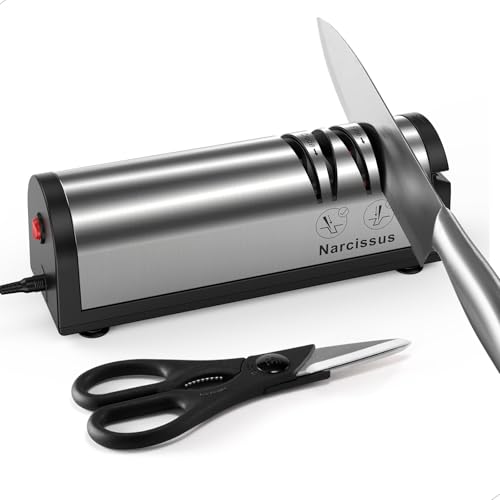
Pros
- Two-stage sharpening and polishing
- Scissors sharpening slot
- Magnetic dust collection box
- Compact countertop footprint
- Extended manufacturer service coverage
Cons
- Designed around several straight-blade knife types
- Requires correct knife angle and wall contact
- Who should skip it: Users needing serrated or specialty-blade sharpening
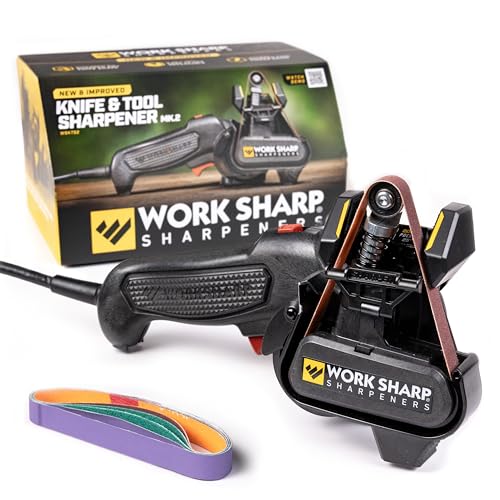

Pros
- Two selectable edge angles
- Diamond sharpening and honing abrasives
- Guides help control sharpening angle
- Works with straight-edge and serrated knives
Cons
- Who should skip it: cooks who prefer manual sharpening

Pros
- Five sharpening surfaces in one compact tool
- Built-in 20° and 25° angle guides
- Supports serrations, fish hooks, and broadheads
- Only 4.6 ounces
- Includes three-year warranty
Cons
- Manual sharpening requires user technique
- Who should skip it: Users wanting powered sharpening

Pros
- Flexible belts handle varied blade shapes
- Two speeds support lighter and heavier tasks
- Edge guide supports sharpening to the tip
- Three-year warranty
Cons
- Powered abrasive belts require careful handling
- Less suited to users seeking manual sharpening
- Who should skip it: cooks seeking nonpowered sharpening
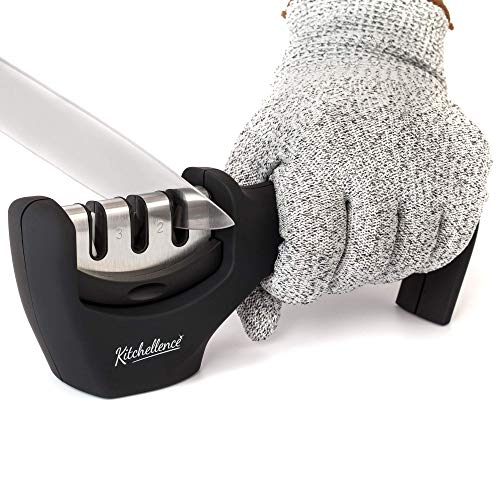
Pros
- Three-stage sharpening process
- Included cut-resistant glove
- Right- and left-handed handle design
- Non-slip base
Cons
- Manual pull-through operation
- Skip it if you prefer electric or specialized sharpening systems

Buying Guide: Best Professional Knife Sharpener
Match the sharpening method to your routine
Electric pull-through sharpeners guide a blade through designated slots, which can suit cooks who want a repeatable process without learning freehand sharpening. The Presto 08810 specifies blade-thickness selectors for different blade types, while the Narcissus Knife Sharpener uses a two-stage electric design. Belt-driven models such as the Work Sharp MK2 Electric Knife Sharpener use flexible abrasives and take a different approach, with more control over speed but more technique to manage.
Manual tools avoid a motor and cord. The Work Sharp Guided Field Sharpener is designed for portable use, while the 4-in-1 Kitchen Knife Accessories uses pull-through slots. Choose based on whether you prioritize convenience at the counter, portability, or a simpler tool to store.
Consider edge angle and blade guidance
Sharpening angle affects the edge you create, so check whether a sharpener supports the angle you want and whether its guides suit your knife. The Chef’s Choice Professional Electric Knife specifies 15- and 20-degree options. The Chef’sChoice 15XV EdgeSelect Professional Electric is designed to convert traditional 20-degree edges to a 15-degree edge. These are distinct models with different stated angle features.
Work Sharp Ken Onion Mk2 Electric Knife Sharpener specifies an adjustable 15-to-30-degree guide. If you own knives with different intended edges, compare the adjustment range and guide design with the knife maker’s care instructions rather than assuming one setting fits every blade.
Check abrasives and sharpening stages
Coarse stages are intended for duller edges or repair, while finer stages refine or polish. The Hrevzon Electric Knife Sharpener 100% Diamond Abrasives lists three stages, including coarse, fine, and polish, and specifies diamond abrasive wheels. Chef’s Choice models also specify diamond abrasives, while the Work Sharp Guided Field Sharpener combines diamond plates, ceramic rods, and a leather strop.
More stages or abrasive types do not automatically make a sharpener right for your knives. For routine touch-ups, a simpler setup may be enough. If you need to address damaged edges, check the maker’s instructions and confirm the sharpener is intended for that task.
Verify compatibility with your knives and other tools
Most listed models focus on kitchen knives, but supported blade types vary. The Presto 08810 specifies kitchen and sport knives, including Santoku knives. The Hrevzon listing states compatibility with straight-edge, serrated, and ceramic knives, while the Chef’s Choice Professional Electric and Chef’sChoice 15XV list straight-edge and serrated knives.
For scissors, axes, or garden tools, consider the Work Sharp MK2 Electric Knife Sharpener or Ken Onion Mk2, whose listings name several of those tool categories. Do not assume a kitchen-only pull-through slot can handle scissors or specialty blades. Verify compatibility for each blade you plan to sharpen.
Plan for counter space, storage, and cleanup
An electric model needs a place to operate and store, as well as access to an outlet. The Work Sharp Guided Field Sharpener is listed as a compact, 4.6-ounce manual tool for a pack or tackle box, but its field-oriented design may not be as convenient as an electric model for sharpening a full set at home.
Some designs include features intended to make cleanup more manageable. The Narcissus Knife Sharpener and Hrevzon model list magnetic collection boxes for metal shavings. That does not mean all residue disappears, so consider where you will sharpen and how you will clean the tool and surrounding counter. For other compact kitchen equipment comparisons, see our guide to the best knife set on a budget and our advice on storing and choosing a stand mixer.
How We Compared These Products
This comparison is based on the published product listings, including stated sharpening stages, abrasive types, angle guides, supported blade categories, and cleanup or storage features. Customer feedback information was limited, so it does not establish a recurring pattern or independently verified performance. We researched and compared the listed specifications; no firsthand product evaluation is documented here.
Which Option Fits Your Kitchen?
If you want a guided electric routine for common kitchen knives, compare the other practical prep tools in our kitchen guides and consider the Presto 08810 Professional EverSharp Electric Knife. Its blade-thickness selector and guided three-stage system may suit cooks who prefer not to set an angle freehand. Who should skip it: anyone seeking a manual, cordless sharpener or a listed adjustable angle range.
If you need one system for kitchen knives and a wider set of tools, the Work Sharp MK2 Electric Knife Sharpener lists two speeds and support for knives, scissors, axes, and garden tools. Its flexible belts make it a different choice from fixed-slot electric sharpeners. Who should skip it: cooks who want a small manual tool or only need a straightforward kitchen-knife sharpener.
For sharpening away from a counter or outlet, the Work Sharp Guided Field Sharpener is a compact manual option with diamond plates, ceramic rods, and a strop. Its listing also specifies built-in angle guides. Who should skip it: anyone who prefers an electric, slot-guided process for routine home sharpening.
Frequently Asked Questions
Can one sharpener work with every kitchen knife?
No. Compatibility depends on the model and blade. Check the listing for your knife type, especially if you have serrated or ceramic blades, and follow the knife maker’s sharpening guidance.
What is the difference between a pull-through and belt sharpener?
A pull-through model uses slots to guide the blade through sharpening stages. A belt sharpener uses a moving abrasive belt; the Work Sharp models listed here specify flexible belts, and some also provide speed adjustment. The choice is between a more guided slot process and a belt system with adjustable operation.
Do I need a 15-degree or 20-degree edge?
That depends on the knife’s intended edge and how you use it. Some listed sharpeners support both angles or a range, but do not change an edge without checking your knife maker’s guidance and the sharpener instructions.
Can these sharpeners handle serrated knives?
Some listings explicitly include serrated blades, including the Hrevzon model, the Chef’s Choice Professional Electric, and the Chef’sChoice 15XV. Confirm the product instructions for your specific serrated knife, since sharpening methods can differ from those for straight edges.
Can an electric sharpener sharpen scissors?
Some can, but not all. The Narcissus listing includes a scissors slot, and the Work Sharp MK2 models list scissors among supported tools. Check the instructions for the exact model before using a slot or belt on scissors.
How should I choose between a manual and electric sharpener?
Choose electric if you value a powered, guided countertop process and have room to store it. A manual model avoids a motor and cord and can be easier to pack away, though it requires you to perform the sharpening strokes yourself.




Write Your Review
No reviews yet. Be the first to share your experience!