

Small rice cookers save counter space, while larger multicookers handle batch meals but occupy more storage. Materials, controls, cleanup, and steaming design also change how useful each appliance feels after dinner.
This best rice steamer cooker guide compares eight listed models for portion size, cooking tasks, countertop fit, and maintenance. Use it to narrow choices based on cooking habits rather than capacity alone.

Pros
- Dishwasher-safe nonstick inner pot
- External steam tray allows simultaneous cooking
- Automatic keep-warm mode maintains serving temperature
- Compact three-pound design saves counter space
Cons
- Fixed single-switch control lacks delay timer or custom settings
- Small capacity limits large-batch meal preparation

Pros
- Includes colander, cup, multi-purpose locking paddle
- Lid paddle doubles as carry handles
- Dishwasher safe components simplify cleaning

Pros
- Large 20-cup cooked capacity for batch meals
- Integrated slow cook and saute-then-simmer presets
- Includes steam tray and ceramic-coated inner pot
- Switches automatically to keep-warm mode
Cons
- Bulky footprint takes up significant countertop space
- Minimum 4-cup cooked yield limits single-portion cooking

Pros
- Six one-touch cooking programs
- Compact 2-quart capacity
- Dishwasher-safe removable parts
- 12-hour delay timer
- Cool-touch handle
Cons
- Capacity may limit larger batch cooking

Pros
- Coating-free stainless steel cooking pot
- Dishwasher-safe inner pot
- Automatic keep-warm mode
- Included steaming tray
- Compact countertop footprint
Cons
- One-touch control offers limited cooking customization
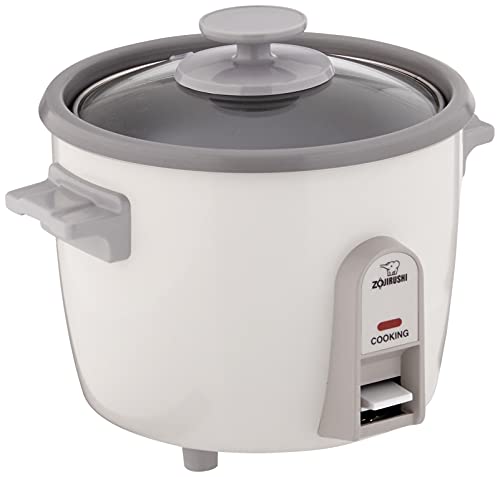
Pros
- Single switch control simplify cooking
- See-through glass lid track cooking progress
- Stay-cool handles and knob aid transport
- Nonstick inner pan speed cleaning
Cons
- Small capacity limited to small households
- Cup measurements differ from standard US cups

Pros
- Dishwasher-safe accessories and ceramic-coated inner pot
- Fuzzy logic automatically controls seven-step cooking process
- Includes 24-hour delay timer and keep-warm setting
- Eighteen cooking presets for diverse grains and meals
Cons
- Quick cook function limited to white rice
Capacity and kitchen space
Capacity affects both meal planning and storage. Product listings count capacity differently, so compare uncooked and cooked figures carefully instead of assuming every cup means the same serving size.
The Aroma Housewares ARC-363-1NGB produces 2 to 6 cups cooked, and Zojirushi 3 Cup Rice Cooker/Steamer ( White) uses a 3-cup uncooked capacity. These fit smaller portions and limited cabinets. Aroma Housewares Professional Plus ARC-5000SB 20 produces 4 to 20 cups cooked, making it more suitable for larger batches but less compact. COMFEE’ Rice Cooker with 6 Functions yields up to 8 cups cooked, while Cosori Rice Cooker 10 Cup, Fuzzy Logic offers a larger format.
Pros vary by size: small models simplify storage and portion control, medium models balance flexibility, and large models reduce repeated cooking. Cons follow the same pattern: small units limit batch cooking, while larger units need more counter and cabinet space. Who should skip it: anyone whose usual batch size does not match listed capacity.
Cooking programs and controls
Controls matter when you cook more than white rice. One-touch designs reduce setup, while programmable menus support different grains and meal types but require more settings to learn.
Aroma Housewares ARC-363-1NGB and Aroma Housewares 6-Cup (Cooked yield ) use one-touch operation and automatic keep warm. COMFEE’ Rice Cooker with 6 Functions adds programs for white rice, brown rice, steam, slow cook, quinoa, and oatmeal. Cosori Rice Cooker 10 Cup, Fuzzy Logic lists 18 functions, texture options, a 24-hour delay timer, and 24-hour keep warm. Instant Pot Duo 6 Qt 7-in-1 Electric Pressure adds pressure cooking, slow cooking, yogurt, sautéing, steaming, warming, and rice cooking.
Pros of broader controls include more meal options and planning flexibility. Cons include a larger learning burden and more functions than a rice-focused cook may use. Who should skip it: buyers wanting one simple switch should avoid paying storage and attention costs for unused programs.
Steaming and additional cooking tasks
A steaming tray or basket lets you cook food above rice, which can reduce separate cookware. Check whether listed accessories match your intended foods and whether you need a rice cooker, multicooker, or microwave solution.
Aroma Housewares ARC-363-1NGB and Aroma Housewares Professional Plus ARC-5000SB 20 support simultaneous steaming above rice. Aroma Housewares 6-Cup (Cooked yield ) includes a steam tray. Cosori Rice Cooker 10 Cup, Fuzzy Logic includes a stainless steel steamer basket. Joseph Joseph M-Cuisine Microwave Rice Cooker uses a microwave workflow and includes a colander, measuring cup, and rice paddle. Instant Pot Duo 6 Qt 7-in-1 Electric Pressure includes a steamer function but serves as a broader pressure cooker.
Pros include coordinated rice and vegetable preparation, fewer pans, and broader meal use. Cons include accessory storage and a less direct workflow than a dedicated pot or microwave bowl. Who should skip it: cooks who only make plain rice and have no use for steaming or extra programs.
Inner pot material and cleanup
Cooking surface affects cleaning preferences and material priorities. Dishwasher-safe parts can reduce scrubbing, but that claim may apply only to listed removable components, not the electrical base.
Aroma Housewares ARC-363-1NGB lists a dishwasher-safe nonstick inner pot. COMFEE’ Rice Cooker with 6 Functions lists a nonstick inner pot and dishwasher-safe accessories. Aroma Housewares 6-Cup (Cooked yield ) uses a food-grade 304 stainless steel inner pot and lists it as dishwasher-safe. Cosori Rice Cooker 10 Cup, Fuzzy Logic uses a ceramic-coated inner pot and lists dishwasher-safe accessories. Instant Pot Duo 6 Qt 7-in-1 Electric Pressure uses a stainless steel inner pot and lists the lid, inner pot, and accessories as dishwasher-safe.
Pros of nonstick and ceramic-coated surfaces include easier release, while stainless steel avoids a nonstick cooking surface. Cons depend on your care routine and preference for coatings or metal. Who should skip it: buyers who need a fully dishwasher-safe appliance should verify base and part instructions before purchase.
Microwave, electric, and countertop workflow
Joseph Joseph M-Cuisine Microwave Rice Cooker is a 2-liter microwave rice cooker and steamer, so it differs from electrically heated models in setup and appliance dependence. Electric options require an available outlet and counter location, while microwave use can leave the counter clearer.
Pros of the microwave design include compact workflow and dishwasher-safe listed components. Cons include dependence on microwave cooking and fewer stated automatic programs. Who should skip it: cooks wanting automatic keep-warm operation or electric multicooker functions.
How We Compared These Products
We compared published product specifications, listed functions, materials, capacities, accessories, cleaning claims, and available rating information. This guide uses product research and does not claim firsthand product use, performance measurements, or independent durability findings.
For more category context, see rice cooker comparisons and the guide to rice cooker by zojirushi.
Which Option Fits Your Kitchen?
Small portions and limited storage: Joseph Joseph M-Cuisine Microwave Rice Cooker suits cooks who want a microwave-based rice and grain workflow with dishwasher-safe parts. Zojirushi 3 Cup Rice Cooker/Steamer ( White) fits buyers who prefer a compact electric cooker with single-switch control. Skip either if you need large batch capacity.
Simple daily cooking: Aroma Housewares ARC-363-1NGB 3 Uncooked/6 Cups offers one-touch operation, simultaneous steaming, automatic keep warm, and a dishwasher-safe inner pot. Aroma Housewares 6-Cup (Cooked yield ) suits buyers who prefer a 304 stainless steel inner pot with one-touch operation.
Batch cooking and varied meals: Aroma Housewares Professional Plus ARC-5000SB 20 offers up to 20 cups cooked and includes slow cook, sauté-then-simmer, and steaming functions. Instant Pot Duo 6 Qt 7-in-1 Electric Pressure suits cooks who want rice cooking alongside pressure cooking, slow cooking, yogurt, sautéing, steaming, and warming. Choose based on counter space and whether broader functions justify a larger appliance.
Frequently Asked Questions
What capacity should you choose?
Match listed cooked and uncooked capacity to your usual batch. Small households may prefer 2 to 6 cooked cups, while meal prep may call for a model listed at 8, 10, or 20 cooked cups.
Can these cook foods besides rice?
Several can. Product listings specify steaming across multiple models, while COMFEE’ lists brown rice, quinoa, oatmeal, and slow cooking. Instant Pot Duo lists seven functions, and Aroma Professional Plus lists jambalaya, slow cooking, sauté-then-simmer, steaming, and cake.
Which models support steaming?
Aroma ARC-363-1NGB, Aroma Professional Plus ARC-5000SB 20, Aroma 6-Cup, COMFEE’, Cosori, Joseph Joseph, and Instant Pot list steaming or a steam accessory. Zojirushi product data lists a rice cooker and steamer designation but does not specify a separate steam tray.
Are all parts dishwasher-safe?
No. Listings identify particular parts. Verify current care instructions for lid, pot, tray, basket, and accessories, and keep electrical bases away from water.
What is difference between nonstick, ceramic, and stainless steel pots?
Nonstick and ceramic-coated pots provide coated cooking surfaces, while stainless steel provides a metal surface. Product data does not establish long-term coating durability or comparative release performance, so choose based on surface preference and care instructions.
Is Instant Pot a dedicated rice cooker?
It includes a rice-cooker function, but its listed design focuses on seven cooking functions, including pressure cooking and slow cooking. Choose it when broader meal preparation matters more than a rice-only footprint.



Write Your Review
No reviews yet. Be the first to share your experience!