

A dull kitchen knife can make routine chopping feel awkward, but sharpening tools vary in how much control they give you and how much room they take up. This guide to the best manual knife sharpener compares compact pull-through designs, rolling sharpeners, and guided systems so you can match the tool to your blades, sharpening habits, and storage space.

Pros
- Five sharpening surfaces in one compact tool
- Built-in 20° and 25° angle guides
- Supports serrations, fish hooks, and broadheads
- Only 4.6 ounces
- Includes three-year warranty
Cons
- Manual sharpening requires user technique
- Who should skip it: Users wanting powered sharpening

Pros
- Four sharpening stages for varied blade maintenance
- Handles straight and serrated blades
- Left- and right-handed ergonomic grip
- Lightweight 0.68-pound design
- Coarse slot supports damaged-blade repair
Cons
- Manual sharpening requires repeated blade passes
- Skip it if you prefer electric sharpening

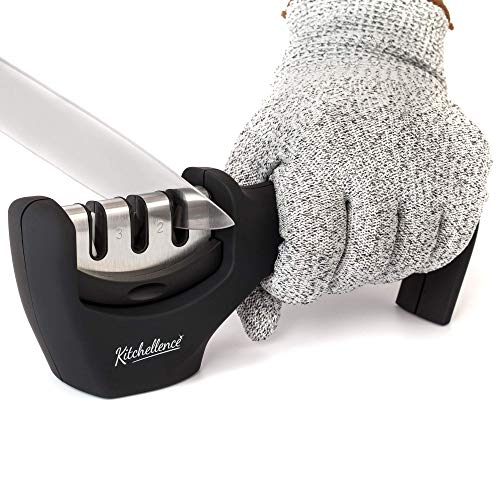
Pros
- Three-stage sharpening process
- Included cut-resistant glove
- Right- and left-handed handle design
- Non-slip base
Cons
- Manual pull-through operation
- Skip it if you prefer electric or specialized sharpening systems

Pros
- Wide adjustable angle range
- Multiple diamond grits included
- Accommodates several knife types
- Weighted benchtop base
Cons
- 7.5 lb base is not compact
- Who should skip it: cooks seeking a lightweight, portable sharpener


Pros
- Adjustable sharpening angle
- Diamond-coated ceramic stones
- Sturdy handle and non-slip grips
- Works with kitchen and chef's knives
Cons
- Not suited to sharpening angles outside 14 to 24 degrees
- Who should skip it: shoppers needing broader angle adjustment

Pros
- Adjustable sharpening angles
- Includes coarse and fine diamond plates
- Supports serrated knives
- Handles curved blades
- Guided manual operation
Cons
- Manual sharpening requires user effort
- 3 lb weight may limit portability
- Who should skip it: shoppers wanting an electric sharpener
Buying Guide: Best Manual Knife Sharpener
Choose a sharpening style you will use
Pull-through tools have slots that guide the blade, making them a straightforward option for routine kitchen upkeep. Guided systems use a clamp or support to hold a repeatable angle, but generally take more setup and storage space. A rolling design offers another approach: the AIERLIAN uses a magnetic support and rolling abrasive discs, while the Work Sharp Professional Precision Adjust Knife uses a benchtop base and clamp.
Consider where you will sharpen and how much control you want. A compact handheld tool can fit a crowded drawer, while a bench system may suit someone who sharpens several knives and wants to set an angle deliberately.
Match the angle range to your knives
Angle affects the shape of the edge, so avoid choosing an angle setting simply because it is the lowest. The Sharp Pebble 5 Precision Adjust offers five settings from 12° to 24°, and Work Sharp’s Professional Precision Adjust Knife spans 15° to 30° with a digital angle indicator. The AIERLIAN provides 15° and 20° supports; RazorSharp’s tool adjusts from 14° to 24°.
Check your knife maker’s recommended edge angle before buying, especially for Japanese-style knives or blades with an existing bevel. If you cannot confirm the intended angle, a sharpener with a suitable fixed guide may be simpler than trying to change the edge geometry.
Check straight-edge and serrated compatibility
Many pull-through sharpeners are intended mainly for straight edges. Serrations need a different contact shape, often a narrow rod that can reach the individual scallops. The Orange Ninja has a dedicated serrated slot, while the Work Sharp Precision Adjust Elite includes a conical ceramic rod for serrated blades. The Sharp Pebble 5 Precision Adjust is for straight-edge knives only, not serrated knives or scissors.
Do not assume that a general-purpose label means every blade is compatible. Confirm the product’s stated limits for your bread knife, scissors, cleaver, or specialty blade before purchase.
Consider abrasives and the amount of edge work
A coarse abrasive can address a damaged or very dull edge, while finer surfaces can refine or polish it. Several products combine stages: KITCHELLENCE describes a repair, sharpening, and polishing sequence, and Work Sharp’s field sharpener includes coarse and fine diamond plates, ceramic, and a leather strop. The Professional Precision Adjust Knife includes multiple diamond grits, ceramic, and a strop.
More stages can offer flexibility, but they also add parts and steps. For occasional maintenance on ordinary kitchen knives, a simpler tool may be easier to store and use. For repairing and refining edges at home or outdoors, consider whether the listed abrasives and accessories match the work you expect to do.
Account for grip, stability, and storage
A guided handle or stable base can help you keep the sharpener in position while drawing a blade through or sharpening against an abrasive. The KITCHELLENCE and Orange Ninja are described with ergonomic handles; the Work Sharp Professional Precision Adjust Knife has a weighted base and clamp. These designs differ in footprint and setup, so think about available counter or drawer space as well as how you prefer to hold the tool.
For a pack or tackle box, the Work Sharp Guided Field Sharpener is designed as a portable option and includes a lanyard hole. For a home setup, a larger guided system may be more suitable if you have a dedicated place to keep it assembled or stored.
Think about cleanup and care
Sharpening creates fine metal and abrasive debris, so consider how easy it will be to access the sharpening surfaces and clean your work area afterward. The product descriptions do not establish that these sharpeners are dishwasher-safe, so do not put one in a dishwasher unless its manufacturer explicitly allows it. Check the care instructions for the exact model, and plan to wipe the tool and surrounding surface as directed.
How We Compared These Products
We compared the sharpeners by their stated sharpening style, angle options, abrasive stages, blade compatibility, portability, and included sharpening accessories. The goal is to clarify practical differences, such as whether you need a compact field tool, a serrated-blade option, or a guided system for repeatable angles, rather than treating one design as right for every kitchen.
Which Option Fits Your Kitchen?
For camping, fishing, or a compact kit: The rolling sharpener style differs from a pocketable field tool. Consider the Work Sharp Guided Field Sharpener if you want diamond plates, ceramic, and a leather strop in a portable manual tool. Its 20° and 25° guides are specified for maintaining an edge, and it includes a hook groove and broadhead wrench. Pros: compact format and several sharpening surfaces. Cons: its fixed guides offer less angle choice than adjustable bench systems. Who should skip it: cooks seeking a dedicated benchtop setup or a broad selection of angle settings.
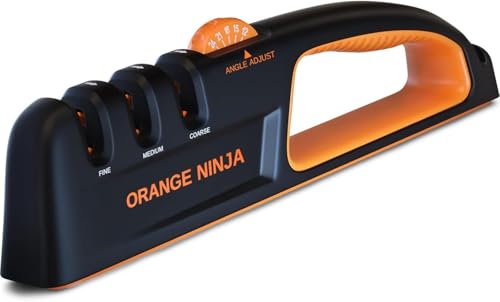
For a kitchen drawer and mixed blade types: The manual alternative to an electric sharpener is the Orange Ninja Serrated & Kitchen Knife Sharpener, which has coarse, medium, fine, and serrated slots. Pros: separate slots address straight and serrated blades, and the handle is described as suitable for left- and right-handed users. Cons: it uses preset slots rather than an adjustable angle system. Who should skip it: owners who need a specific angle setting or a clamp-guided sharpening process.
For repeatable angles at home: The Work Sharp Professional Precision Adjust Knife offers a benchtop clamp, angle settings from 15° to 30°, and a digital angle indicator. Pros: multiple diamond grits plus ceramic and a strop support work from repair through finishing. Cons: its 7.5 lb base and more involved setup are less convenient for a crowded drawer or quick touch-up. Who should skip it: anyone who prioritizes a small, lightweight sharpener or wants a simple pull-through tool. For different sharpening formats, see our guides to electric knife sharpeners and guided professional-style sharpeners.
Frequently Asked Questions
Can a manual sharpener work on serrated knives?
Some can, but not all. Look for an explicitly stated serrated slot or a narrow sharpening rod, such as the rod included with the Work Sharp Precision Adjust Elite. The Sharp Pebble 5 Precision Adjust is specified for straight edges only.
Can I sharpen scissors with these tools?
Compatibility varies by model. RazorSharp’s product name and description include knives and scissors, but the Sharp Pebble 5 Precision Adjust specifically excludes scissors. Check the exact model’s instructions rather than assuming a knife slot is suitable for scissors.
Which angle should I choose for a kitchen knife?
Use the angle recommended by the knife’s manufacturer when possible. The listed sharpeners offer different settings, and an angle that does not match the existing bevel may change the edge. If you are unsure, verify the knife’s guidance before choosing an adjustable model.
Is a pull-through sharpener or guided system easier to store?
A compact handheld sharpener generally takes less storage space than a benchtop clamp system, though the exact footprint varies. The Work Sharp Guided Field Sharpener is designed for portability, while the Professional Precision Adjust Knife has a weighted base and clamp intended for a bench setup.
Do more sharpening stages mean better results?
Not automatically. Multiple abrasives provide options for different steps, such as repair and polishing, but the right choice depends on the knife’s condition and the sharpening routine you want. A simpler sharpener may be more practical for occasional upkeep.
How should I clean a manual knife sharpener?
Follow the manufacturer’s care instructions for the specific model and remove sharpening debris as directed. Do not assume that a sharpener is dishwasher-safe; use only the cleaning method explicitly permitted by its manufacturer.





Write Your Review
No reviews yet. Be the first to share your experience!